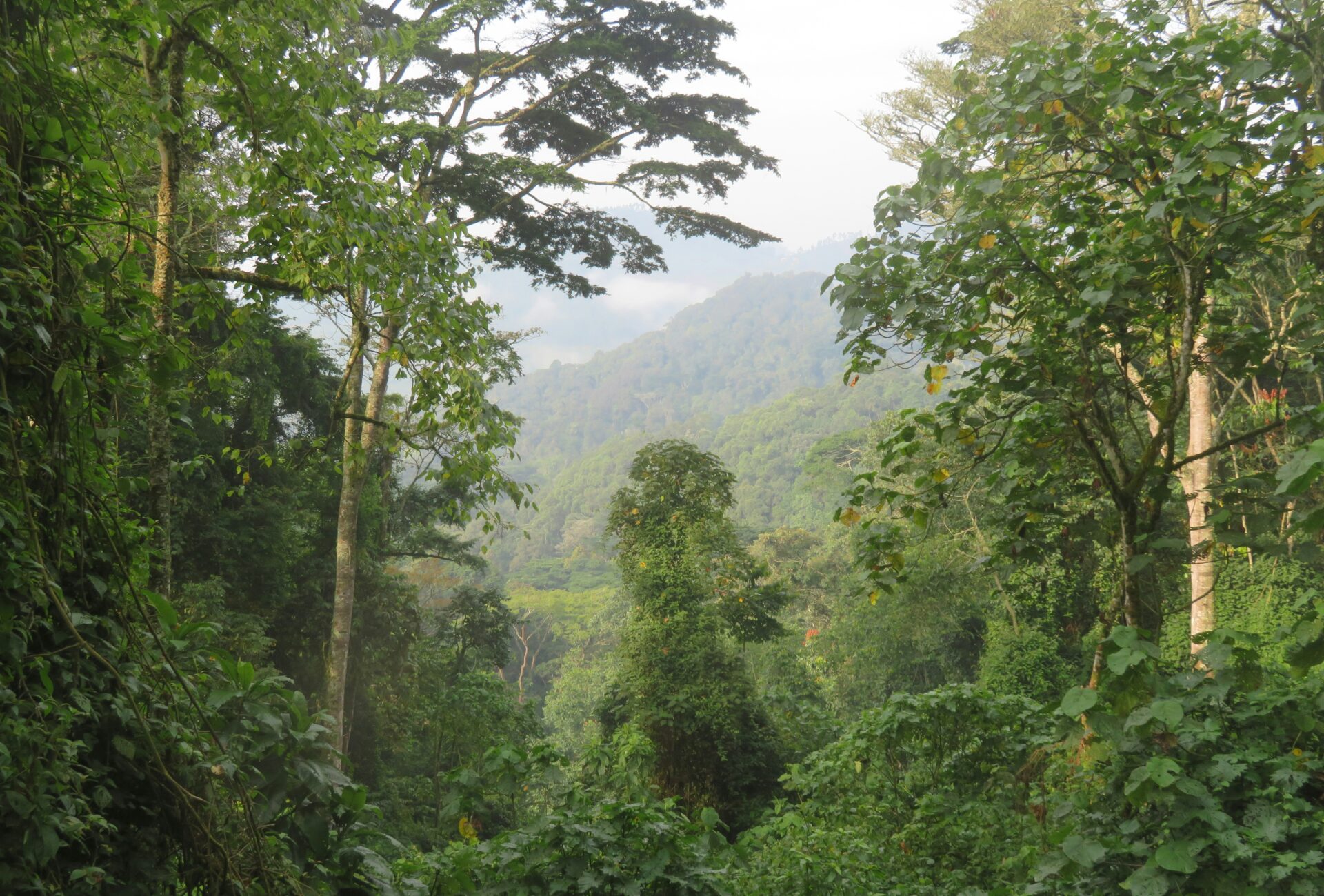
Brenda Boonabaana grew up about 20km from the Bwindi Impenetrable Forest, a sprawling habitat for endangered mountain gorillas in southwestern Uganda, near the borders of Rwanda and the Democratic Republic of the Congo. Bwindi was designated a national park and achieved protected status in the early 1990s and has since become a major source of tourism revenue for Uganda.
The youngest of three daughters, Boonabaana was raised by her mother and grandmother on a small farm. She recalls hearing stories about the forest and its abundant resources from her grandmother, who remembered the wild pigs hunted by the men of her community when she was a child, and how they were roasted on firewood gathered by the women. As she grew up, Boonabaana watched the influx of tourists and the changes they brought with fascination.
Now an assistant professor of geography and the environment and UT Austin researching sustainable tourism and development, Boonabaana’s understanding of her field — and of the complexities involved in creating truly sustainable tourism industries — is informed by both her training and her life experience.
“The beauty of sustainable tourism, which is anchored in the sustainable development agenda, is that it thrives on three pillars,” she explains. “Environmental integrity, people and culture, and economic stability.”
All three pillars must be balanced, she says, for tourism industries to provide continuing benefits to the communities in which they operate.
There was another equally crucial early influence on Boonabaana’s career trajectory: her name. Many families in Uganda do not have a single last name shared from parent to child. Instead, a different last name is chosen for each child. Boonabaana’s older sisters’ last names translate approximately to “God protects” and “God is there,” whereas Boonabaana means “whether boys or girls, they are all children.” This was her mother’s defiant response to a prevailing sentiment of the time: that girl children were less valuable than boys and that a third female child was a terrible misfortune. With her name a daily reminder of both the discrimination faced by women and her mother’s support despite it, Boonabaana says she became determined to “undo that kind of damage and become a role model for my community.” She excelled in her education and turned her research focus to Uganda’s growing ecotourism industry and how it was impacting the social status of women.
Establishing Bwindi as a protected national park drastically restructured resources and opportunities for people living in the surrounding communities, Boonabaana says. Over the past 15 years, she has conducted hundreds of interviews with local women and men to find out how the tourism industry that grew around Bwindi Impenetrable National Park has shaped their lives.
With access to the forest limited by conservation efforts, locals were barred from hunting and collecting timber. Men who had previously worked in mining and lumbering in the forest were also displaced. And government enforcement of the new regulations, with heavy military presence, caused tensions.
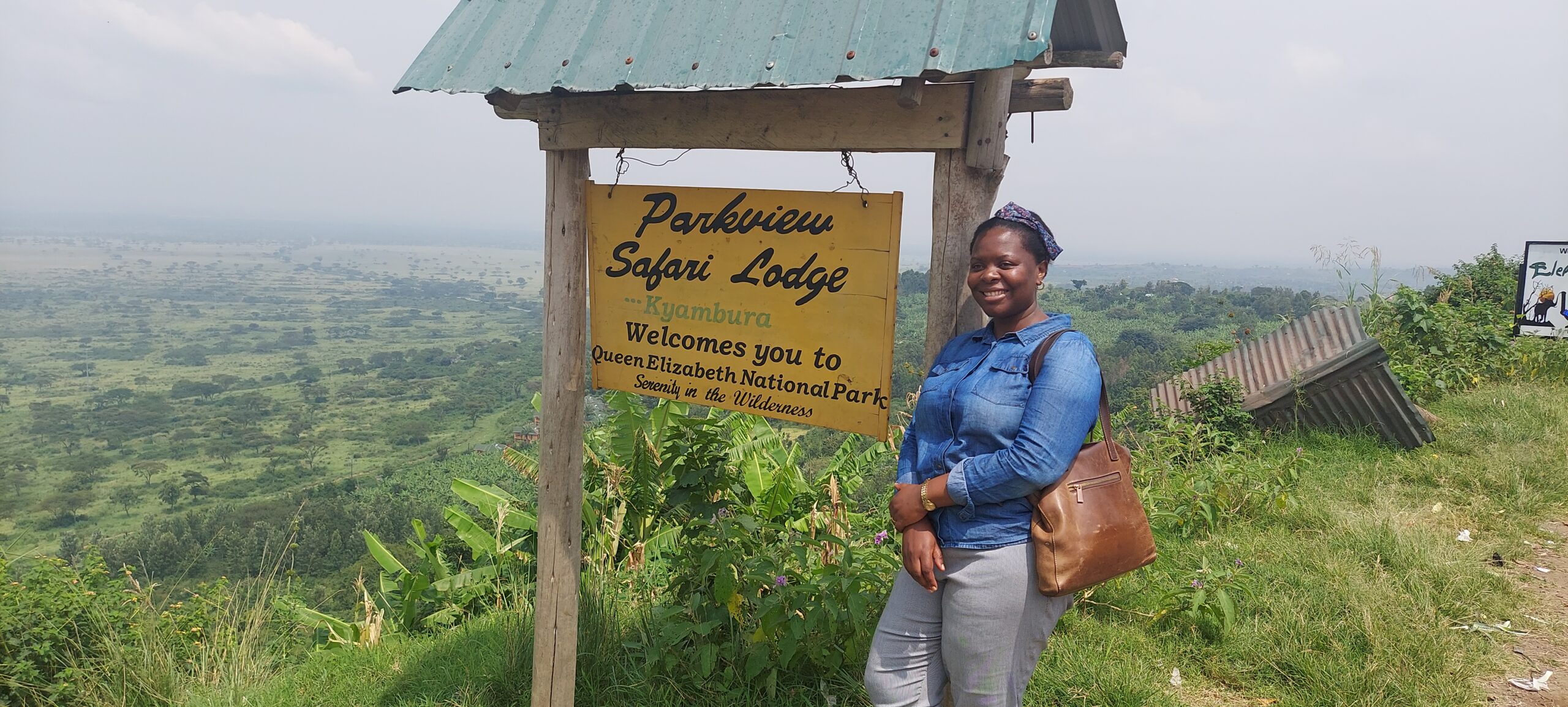
“It’s difficult to tell economically disadvantaged people to protect animals and not cut down trees when they’re hungry,” Boonabaana says, “or when they don’t have fuel.”
To help locals adjust to life without forest access, and thus protect its lucrative park resource, the Ugandan government, along with outside aid organizations, channeled funding into offering alternatives, one of which was tourism work. If people could use their earnings form the nascent industry to purchase food and fuel in stores, the reasoning went, they wouldn’t be tempted to illegally seek them in the forest. If their earnings where high enough, they might even come to view the arrangement as superior to the days of collecting sticks for firewood. Because women handled food preparation within households, they were prioritized in these aid efforts.
Traditionally, women’s rights in the region were limited and their activities tightly controlled. Most didn’t work outside the home or own property. (Boonabaana’s mother and grandmother were notable exceptions, taking on typically male roles after the demise of their marriages.) The tourism industry upended these norms. Women could now work in hospitality jobs and fields that catered to tourists’ desire to experience local culture, such as producing crafts and engaging in dance performances. Those who did often became primary earners for their families.
Women’s newfound financial autonomy improved their households’ living standards and allowed them greater freedom of movement, but there were also unexpected impacts to communities’ social dynamics. One involved competition for tourist dollars. Boonabaana describes a situation in which dance performances had to be temporarily halted due to escalating conflicts between rival dance groups, for example.
The most notable issue, however, was the effect that shifting gender roles had on men and on men’s treatment of their female partners. While they benefited financially from their wives’ employment, Boonabaana explains, many men’s self-esteem took a blow. They were no longer the sole controllers of household spending. Some worried about threats to their marriages as a result of women’s increased interactions with other men in the tourism industry, such as dance group managers. As men’s success lagged, many became depressed. Alcoholism increased, and with it, domestic violence.
“As women were now shining, men were no longer the men they thought they were,” says Boonabaana, noting how the prioritization of training and assistance for women may not have best served either gender. ‘Men should have been integrated into this so that there was a more balanced equation. It was a missed opportunity. And now the women are shouldering the negative emotions that are coming from men’s isolation and lack of financial independence.”
This is one of the reasons Boonabaana interviews both women and men when conducting fieldwork — both in her tourism research and in a more recent project focusing on helping farmers adapt to the challenges of climate change. While her research focus emphasizes impacts to women’s status and empowerment, these women’s lives are often intertwined with those of their male partners. The lesson form Uganda’s tourism development is that both genders’ needs to be included for women to succeed.
As Uganda’s forest-adjacent Bantu communities grappled with the benefits and costs of the tourism industry, its Indigenous Batwa population was experiencing entirely negative impacts.
The Batwa didn’t just rely on forest resources; the forest was their home. Unlike communities situated near the edges of the forest, such as the one Boonabaana’s grandmother was raised in, the Batwa didn’t supplement their hunted and foraged goods with agriculture. They didn’t have to. Everything that sustained them was readily available in the forest. When they were evicted by Uganda’s government to make way for tourism, they found themselves landless and without practical alternatives. The process, says Boonabaana, was neither gradual nor gentle.
“The government came with a lot of force, with soldiers and guns,” she says. “There was a lot of shock.”
No compensation was offered to the Batwa for the loss of land, she explains. They were advised to find schools and jobs: to quickly adapt to a way of living they had no experience with and no interest in. Despite efforts by NGOs to provide assistance, Batwa life expectancy has plummeted since their eviction from Bwindi.
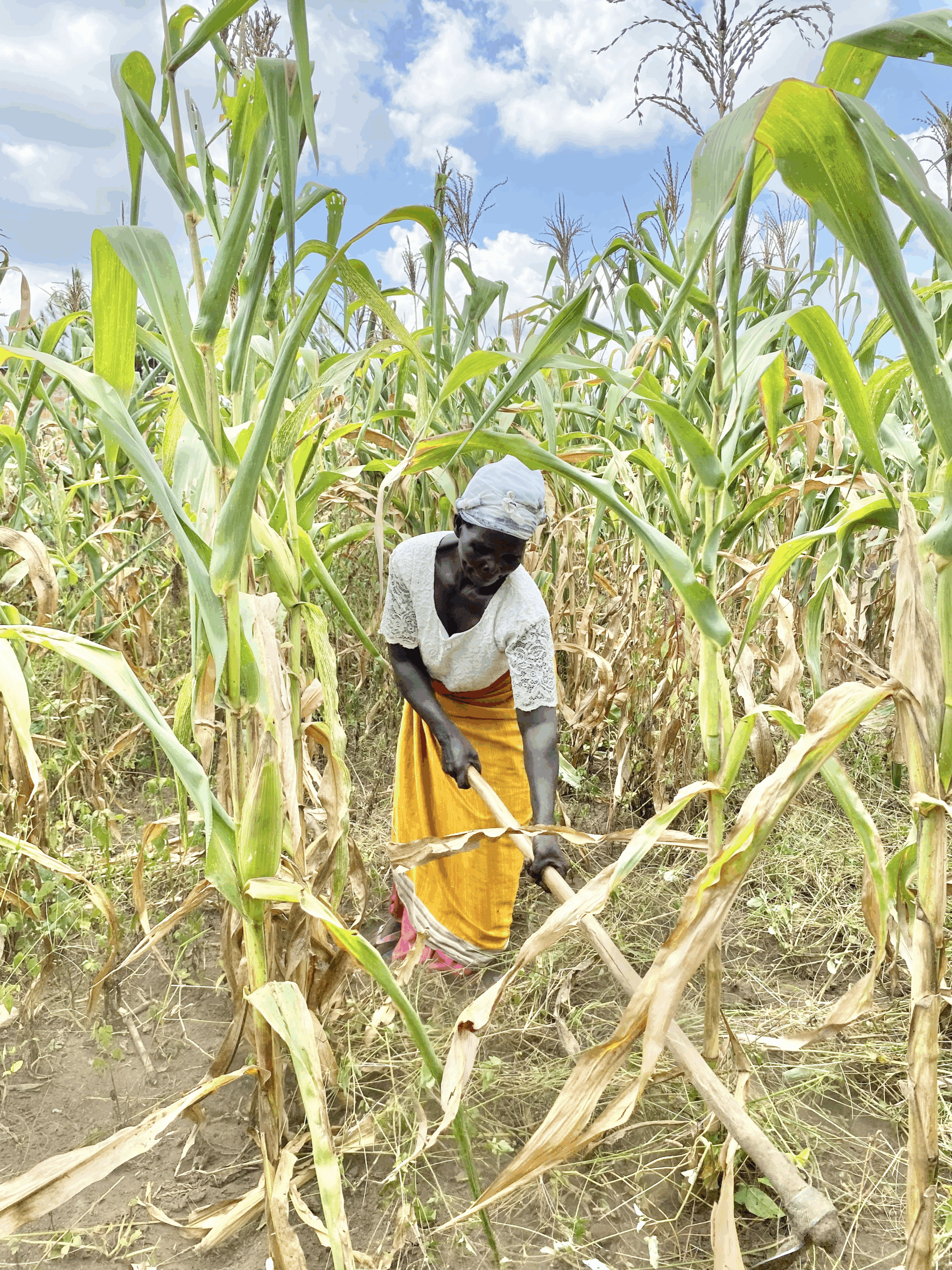
“We failed to understand their realities,” Boonabaana says about Uganda’s abrupt relocation of the Batwa. “We didn’t prepare them for the challenge. The government should have been at the forefront of protecting these people. There should have been more engagement with experts who study Indigenous people.”
Boonabaana hopes that lessons learned from her and others’ research can improve future sustainable development efforts. The more successful aspects of Uganda’s ecotourism industry are due in part to the government seeking input from sustainability experts from the very beginning. Limiting the number of visitor permits granted helped them avoid the pitfalls of overtourism experienced by nations with older, less methodically planned tourism economies, allowing the country to benefit financially without destroying the resource its tourism was built upon.
In her most recent research, which focuses on women smallholder farmers in regions of eastern Uganda hit hardest by climate change, Boonabaana is also employing knowledge gained from previous qualitative work to test novel interventions. In collaboration with the Climate Adaptation and Resilience (CLARE) organization, she and her colleagues are providing training and smart phones with a climate app designed to help mitigate the impacts of climate change to a subset of female farmers. The research will follow women and their male partners over the course of several years to track effects of the interventions on both climate change resilience and women’s empowerment.
Boonabaana’s work can also help inform travelers hoping to protect not just the places they visit but the people who inhabit them. For one, she says, use your money wisely. Boonabaana stresses that the higher cost of Uganda’s forest permits is necessary to prevent overtourism while also providing reasonable compensation for those working in the industry. But don’t be reckless with your generosity: She has also observed that tourists often come to the Bwindi Impenetrable Forest well-informed and with good intentions, “but they’re so fired up that sometimes they overdo it.” There’s a tendency for people from more affluent countries to assume they can easily fix a region’s problems with money. Money can indeed be helpful, but it needs to be spent in a thoughtful way, Boonabaana says, with thorough consideration of potential downstream impacts. As an example, Boonabaana notes that tourists often sponsor local children’s educations. But the children they sponsor are those of the women most visible to them through the tourism industry, such as dancers. The piecemeal philanthropy risks overlooking other equally deserving children and creating fierce competition for any jobs that might result in tourist sponsorships.
Overall, Boonabaana says, our goal should be maximizing the longterm health of both natural resources and communities. “Sustainability is about keeping this for the future, for others who are not yet born,” she says. “No one made the gorillas, we all found them there, and so we should be good stewards.”