It’s a well-known truism that money can’t buy happiness. Just think of the clichéd miserable lottery winner or an oil-rich nation suffering from the “resource curse.” But what if that unhappiness is a phase rather than a permanent state? Is it possible to “reverse the curse”? And if so, how?
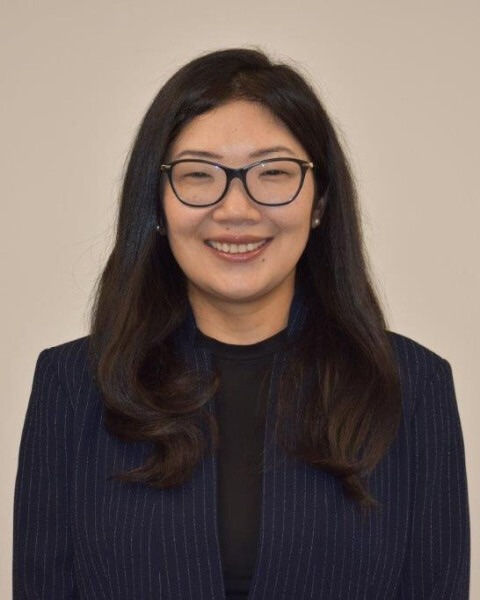
These are the questions that interest political scientist Delgerjargal Uvsh. A professor of Slavic and Eurasian studies at UT Austin, Uvsh is also a researcher working on the “resource curse,” the longstanding theory in social science that developing countries with abundant natural resources, such as oil and gas, will typically experience worse political and economic outcomes than their comparatively resource-poor neighbors. These nations, the theory goes, frequently have lower economic growth, less democracy, and generally poorer development while experiencing more corruption, more autocracy, and greater state interference in the economy. Think of OPEC countries with authoritarian regimes, or the diamond-rich Democratic Republic of the Congo’s long history of exploitation and civil war.
It’s an old theory, at least by the standards of social science, and continues to be influential (and debated). But Uvsh is less concerned with the resource curse itself than with what comes next.
“How do countries get out of this? When is it possible to reverse the resource curse, and when is that most likely to happen? That’s what I’m interested in exploring right now,” she says.
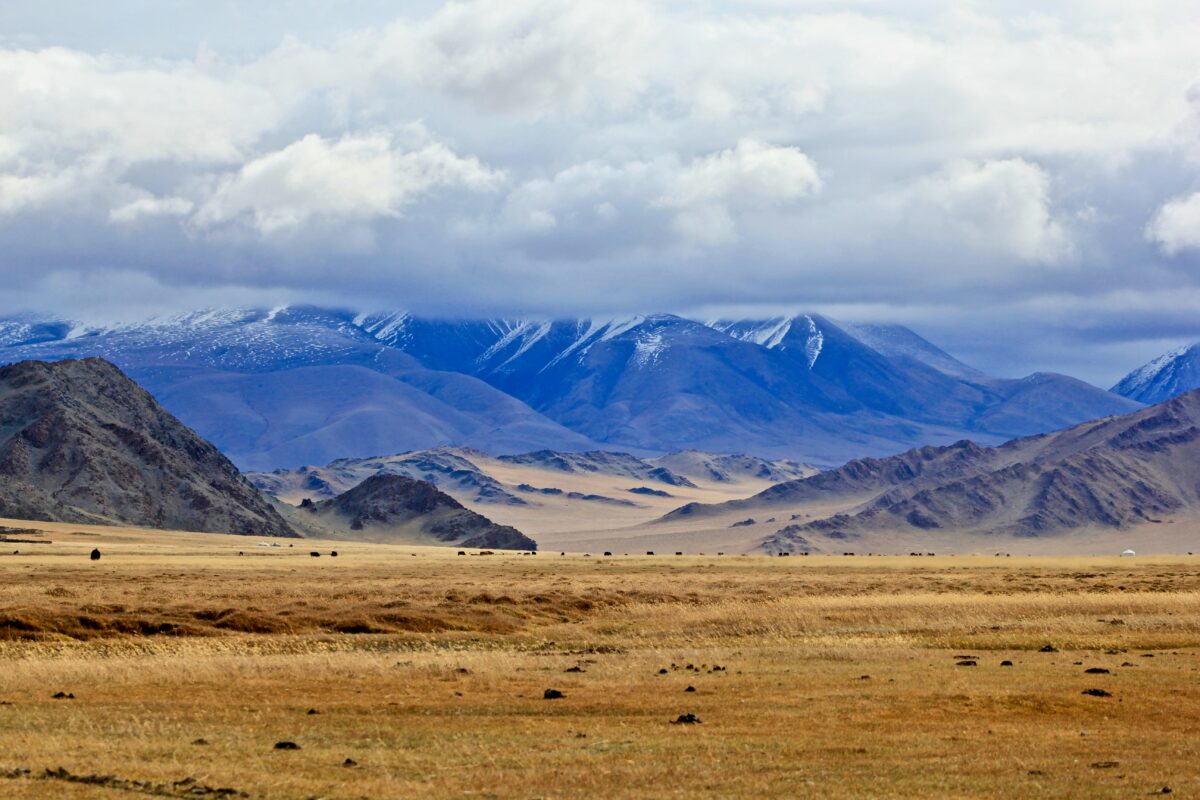
Uvsh’s interest in resource-rich nations is itself a natural one. She was born and grew up in Mongolia’s Gobi Desert just as the country was emerging from its Soviet past and transitioning to a democratic government. The questions that confronted Mongolians then continue to influence her research now. “My formative years in Mongolia were shaped by this curiosity about, ‘Is Mongolia on the right path politically, economically, and policy-wise? Are we going in a direction that will benefit the country as a whole or not?’ That is what we would hear on the news, what my parents and relatives were talking about,” she remembers. “So, it was natural for me to be curious about how changes happen in these post-Soviet countries.”
It turns out the answer, at least for Mongolia, is closely tied to the country’s natural wealth. Its deep deposits of copper, gold, and coal helped fund its transformation from one of the poorest former Soviet nations to an “oasis of democracy” and continue to support a huge portion of its economy. But while Mongolia’s enduring democracy is remarkable, the country hasn’t proven immune to the resource curse. It experiences a high level of corruption, and the Mongolian government has not always been transparent about how revenues from natural resources are handled or spent.
So how can a country like Mongolia reverse elements of the resource curse? In her current book project, Uvsh outlines one possible answer. It all has to do with “negative shocks,” or sharp and sustained declines in government revenues from resources that can lead to economic crises.
“In almost all cases of natural resource-dependent countries,” she explains, “they inevitably go through a decline in natural resource revenue. When it comes to oil and gas in particular, these times of negative shocks, particularly times of long-lasting negative shocks, are the exact moments when positive changes can happen. These moments of tough times can be used as opportunities to make policy changes because it’s then that governments are most willing to listen to business owners or other non-government actors. They are, in some ways, in a fiscally patient position.”
Mongolia’s recent history offers a helpful example of this theory in practice. In the early 2010s, commodity prices were high and money was flowing into the country, Uvsh says. Then, beginning around 2014, prices fell, with serious implications for government budgets across the nation. Tellingly, this period coincided with Mongolia taking steps to diversify its economy, such as increasing its support of the cashmere industry, small business owners, and female entrepreneurs.
The negative shock effect can be seen outside Mongolia too. Take the oil-and-gas-producing regions of Russia. “When the governments of these regions were faced with what they consider permanent negative shocks — when they thought the lost oil and gas revenue wasn’t coming back and there was a political story behind that — they worked really hard to expand their tax base,” Uvsh says. “They established things like one-stop windows that make state business interactions easier and state organizations that facilitate dialogue between the government and businesses. We see this increase in initiatives that the governments took because they needed to tax these businesses. That incentivized them to be more open, to be more inclusive, and to listen to these businesses more intently than in positive shock times.”
It may sound counter-intuitive that something called a negative shock could have such positive downstream effects, but Uvsh sees her findings as analogous to other parts of day-to-day life.
“On a personal level, when there’s something negative going on, we can look at it as an opportunity to change our lifestyle,” she points out. “So, I think this is a very intuitive finding that tough times force us to think about the longer term and can require us to make painful changes that we didn’t have to make when times were good.”
It’s the longer term thinking here that’s essential, Uvsh says, because short-term negative shocks can actually further entrench resource-curse-type governmental behavior. In the case of Russia’s oil-and-gas regions, for example, short-term shocks see upticks in corruption, state inspections, and general government interference in business.
“We can think of these instances as the government trying to hang on until their revenue comes back, and in order to do that sometimes they may have to resort to more extractive behavior from the business community,” she explains.
In addition to her work on the resource curse and negative shocks, Uvsh approaches her main theme — the causes of change in post-Soviet nations — in other ways. There’s her work on Mongolian political parties, for one, which she sees as both foundational to the country’s democracy and as exhibiting warning signs of instability. And then there are the undergraduate and graduate courses she leads, which expand far beyond Mongolia and Russia to encompass almost 30 present-day countries across two continents.
“We look into the experiences of the 28 countries that were either part of the Soviet Union or were satellites to it to understand how the political regimes and institutions have developed since the fall of the Soviet Union,” Uvsh says. “And we do a lot of comparison between different countries and different modalities that these countries have gone through in order to transition to different political regimes from the communist regime.”
Her emphasis on comparisons marks Uvsh as a scholar in the comparative politics subfield of political science, she says. It’s also one of the most important things she hopes students take away from her teaching and her work.
“These scientific-inquiry techniques are something we spend considerable time on,” Uvsh says, “because I want my students to be better thinkers and readers of science, to think about their own reflections, conclusions, and observations in a comparative term and be aware of why they’re reaching the conclusions they do. If they change their lens with another one, will that change their conclusion? How? The idea is that these are skills that they can then use for any question about any topic, whether it’s about politics, economics, or health.”
While the future for Mongolia and other resource-rich nations is far from settled — Mongolia itself is currently experiencing ongoing political uncertainty related to allegations of government corruption, and global resource markets remain unstable — Uvsh is certain that the social science techniques she practices in her own scholarship and shares with students will continue to expand our understanding of both the resource curse and what comes after. And she’s certain of this, too: The resource curse, like everything else, can change for the better.