For almost a century, UT Austin’s Plan II Honors Program has been working a kind of educational alchemy. In go some of the nation’s brightest and most promising young minds — about 175 a year, give or take — full of ideas and ambition and ready for shaping. Spun through a challenging four-year curriculum that spans the arts, humanities, and natural sciences, students emerge transformed not into jewels or gold but into something infinitely more precious: well-rounded human beings, the culmination of a true liberal arts education.
Once transformed, they tend to transform others and the world around them. Plan II alumni include Pulitzer Prize winners, tech leaders, NFL coaches, Texas Supreme Court justices, members of Congress, and more. Their variety speaks to the diversity of the human project and to the incredible effectiveness of the program that unites them.
They also know how to enjoy a great party.
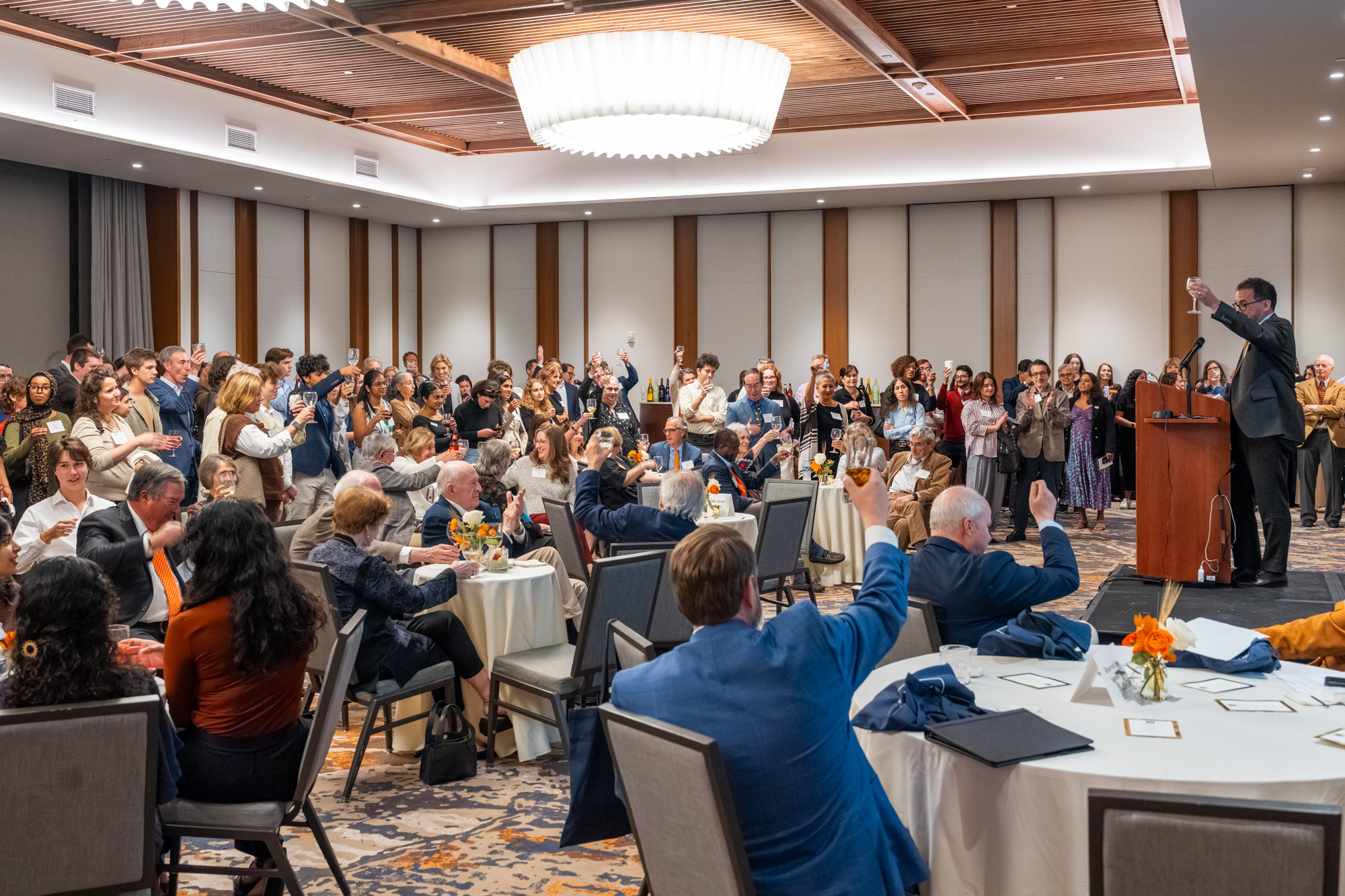
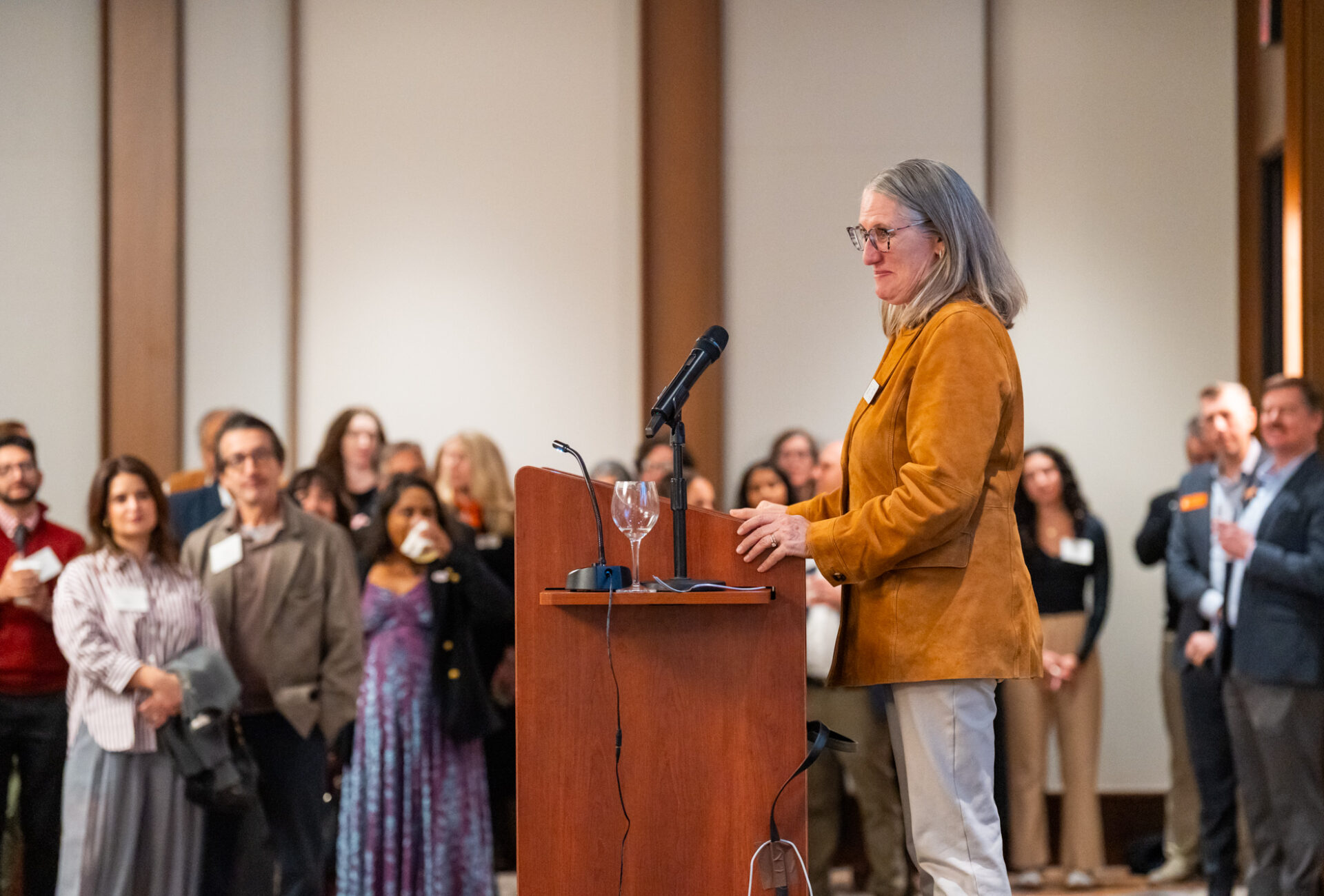
On a Thursday evening in October, Plan II students, staff, and faculty past and present gathered to celebrate the program’s 90th anniversary. Over sparkling drinks and platters of hors d’oeuvres, the crowd enjoyed music from a three-piece band before university leadership took a moment to praise Plan II’s storied history and continued success. Speakers, including program director Janet Davis and COLA interim dean David Sosa, referenced the Texas Constitution, the Barnam & Bailey circus, and their own liberal arts experiences to help explain what it is that makes Plan II so unique.
But the ultimate argument for the program — and the best explanation for its 90 years at the heart of the College of Liberal Arts — could be found not behind the podium but at the cocktail tables where alumni young and old traded memories and updates, united by a shared dedication to learning in general and the honors program in particular.
“Plan II is a program, but it’s also a community,” Davis says, “and one of its amazing aspects is its ability to foster intergenerational conversations through this interdisciplinary experience.” Watching graduates from the 1950s through the 2020s swap stories of seminars and language courses, it was easy to see what she means.
To understand today’s Plan II, one first has to consider its origins in the mid-1930s. “We were born as a program during a period of extraordinary divisiveness,” Davis says, “full of unrest, financial catastrophe with the Great Depression, the rising tide of militarism in the world, and the looming shadow of war.”
It was in this extremely challenging context that H.T. Parlin, then dean of UT’s College of Arts and Sciences, launched his “new plan” for higher education. In contrast to what Parlin saw as the university’s over-emphasis on specialization and professional training, Plan II would draw on an older model of liberal education, one that would prepare students not for any specific job but instead to face a rapidly changing world. Almost a century on, that mission hasn’t changed.
“Anniversaries are points for us to stand back and think about everything that’s happened over the course of this 90-year period, which is an incredible period in our history,” Davis says. “And we can say now that the blueprint Dean Parlin created has truly stood the test of time.”
That’s not to say that the blueprint hasn’t been slightly tweaked over the years — Parlin likely couldn’t have imagined the sheer range of courses, internships, and other opportunities that Plan II students can now access — but the heart of the program has needed no adjustments.
“It’s about intellectual delight,” says staff director Anne McCreary, one of the organizers of the 90th anniversary event, when asked what’s at the core of the program. Joshua Russell, a recent Plan II graduate and the program’s new alumni coordinator, has a similar definition: “It’s giving students both the structure and the malleability to incubate curiosity — specifically curiosity, not just aspiration.”
At the 90th anniversary, Davis joked that this curiosity was a constituent part of “PlanIIiness,” “the inexplicable ‘you know it when you see it’ essence of being a Plan II student, marked by indefatigable curiosity, creativity, expansive interests, and a passion for jumping in and participating in everything.”
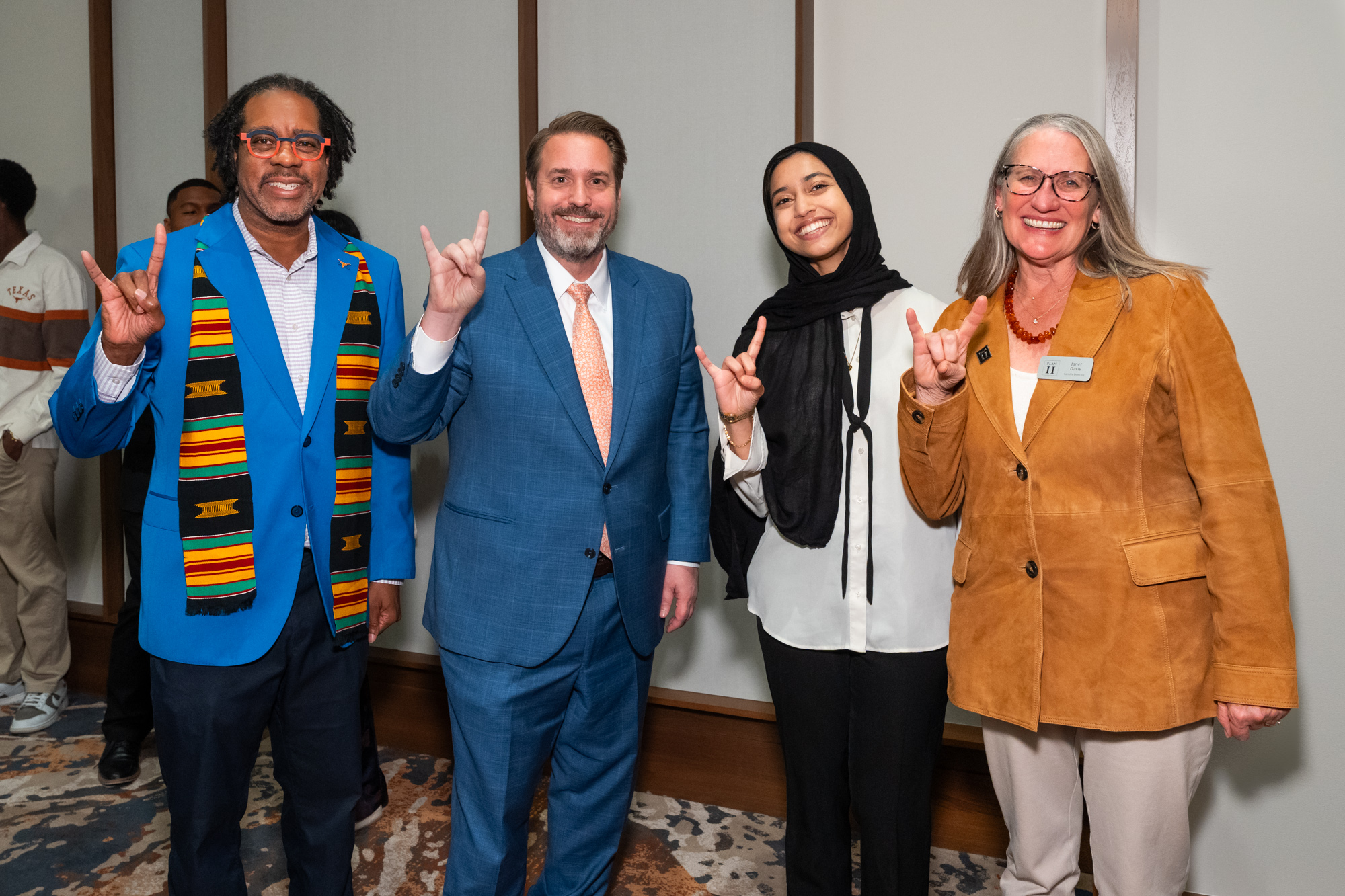
Take Russell as an example. When he first applied to UT, he thought he wanted to study physics and English. Instead he ended up in Plan II, where he was encouraged to pursue all his diverse interests and to explore new and creative ways to bring them together. “I was writing poetry in my biology class, I wrote a love poem in my physics class,” he remembers, “and the professors were always excited to talk about that intersection.”
But curiosity, expansive interests, and a passion for learning don’t mean that all Plan II students and graduates are experts imbued with the wisdom of the ages. If anything, they can often be left feeling acutely aware of all that they still don’t know. It’s a mark of “PlanIIiness” that this is experienced not as a crushing ignorance but instead as the beginning of a never-ending process of discovery.
“Plan II showed me that no matter how much you know, there’s infinitely more to learn,” current Plan II student Amina Syed told the crowd of her peers at the 90th anniversary celebration. She then quoted the poet C.P. Cavafy’s “Ithaka”: “As you set out for Ithaka / hope your road is a long one… Don’t hurry the journey at all. / Better if it lasts for years.”
As students past and present moved across the AT&T Center ballroom greeting old friends and making new connections, photos from across Plan II’s decades playing on a slideshow behind them, it was clear that the journey has no end in sight. The devotion Plan II alumni show their program is well known — as Sosa pointed out to the crowd, Plan II alumni are generous donors, overrepresented on college advisory boards, and constant presences on campus as informal advisors and course instructors. Some families have seen generations pass through the program, and many alumni continue to count fellow graduates among their closest friends and colleagues.
“We have incredible alumni who are very engaged,” says McCreary, and the 90th anniversary event was, in large part, an effort on the part of the program to communicate to alumni and students alike that their beloved program is going strong.
“How do you show every one of your students, your faculty, and your alumni that you’re still committed to excellence in education?” she asks. “Part of the answer is this anniversary event, which is not just a party but a moment of community, of bringing all these people together.”
And if anniversaries are an excellent time to look back and appreciate how far you’ve come, they’re equally profound moments to consider what lies ahead. What does Plan II look like at its 100th anniversary? Its 180th?
“We’ve had 90 years of evidence that this interdisciplinary education in the humanities, the natural sciences, the social sciences, and the fine arts works beautifully, so we want to preserve it,” says Davis. “Having said that, we’re also reckoning with the incredible challenges of our current historical moment, and our program has the flexibility to be capacious and to grapple with all of these challenges. I see us always being both forward thinking but also deeply rooted in what has worked for decades.”
In his address to the 90th anniversary gathering, interim dean Sosa shared a similar answer. “There’s no question that we can look back on the past nine decades and see a glorious record of accomplishment and significance,” he said. “It is also, fortunately, easy to look at both our present and future and say with confidence that Plan II is and will continue to be great.” And we can all raise a glass to that.