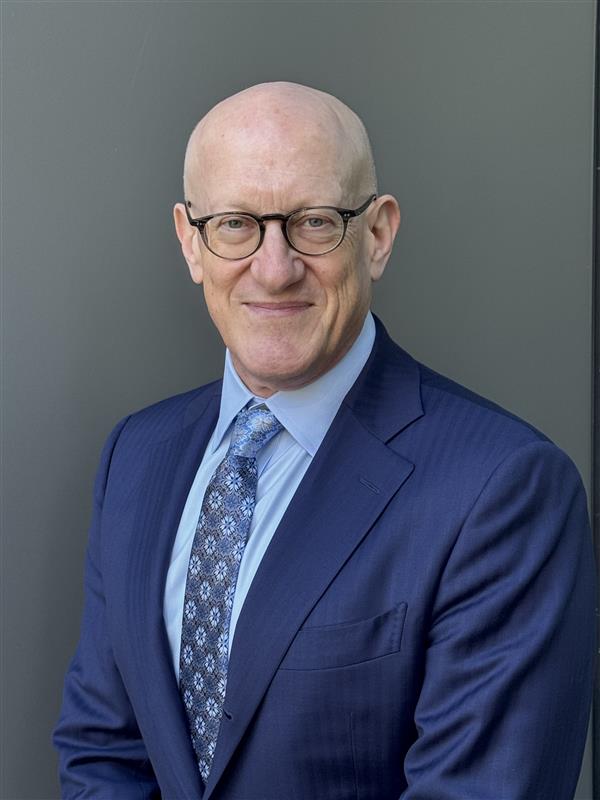
Bruce Meyer is an award-winning physician and nationally respected hospital administrator. Over his more than 10 years as a tenured professor at UT Southwestern Medical Center, Meyer rose to become the center’s executive vice-president for health system affairs. Later he served as the president of Jefferson Health, one of the country’s fastest-growing academic medical centers, before becoming the chief population health officer at Highmark Health, a $30 billion health organization headquartered in Pittsburgh. And it all started, he says, with Shakespeare.
“I was not a fantastic candidate to get into medical school,” Meyer says. “I’m pretty sure I got into medical school, honestly, because of Shakespeare at Winedale.”
The story goes like this: The son of a Holocaust survivor and physician, Meyer was born into a medical family — his father was a sixth-generation doctor, a tradition that has since continued a few generations further. But Meyer didn’t immediately want to become a physician. Instead, he spent his high school years in Texas performing Shakespeare in University Interscholastic League (UIL) dramatic interpretation and duet acting competitions, eventually landing an internship with Shakespeare in the Park in New York City.
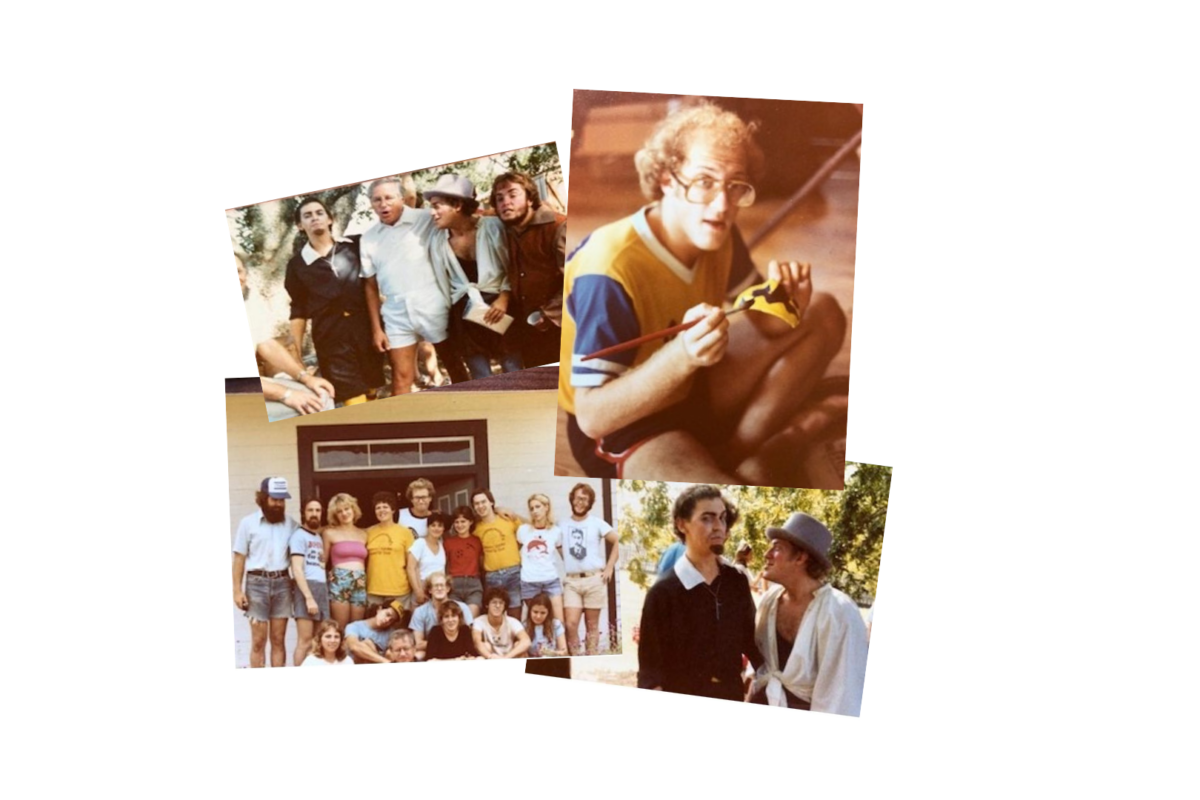
After a year at another university, a combination of factors brought Meyer to The University of Texas at Austin as a transfer student. He was too late to join the celebrated Plan II program, which only accepts incoming freshman, so instead he pursued a degree in the English department, where his years of UIL Shakespeare made him a natural fit for the Winedale program. After being introduced to the legendary program director James “Doc” Ayres, Meyer went on to spend several semesters performing in the converted hay barn that serves at the center of the Shakespeare at Winedale universe, including memorable turns as Edgar / “Mad Tom” in King Lear, Touchstone and Jaques in As You Like It, and a very near-sighted drunk in Twelfth Night.
So, when he decided he wanted to join the family profession and become a doctor after all, Meyer spent his admissions interview at UT San Antonio talking not about medicine or anatomy but about his time studying the Bard.
“The faculty member that I interviewed with was a pathologist named William White,” Meyer remembers. “He happened to love Shakespeare, and he saw on my application ‘Shakespeare at Winedale.’ He didn’t know what it was, but he asked me about it, and we spent 45 minutes talking about Shakespeare plays. Even after I got in, he and I would periodically have lunch together and talk about Shakespeare. I probably wouldn’t have gotten into medical school if he hadn’t seen something in my Shakespeare experience that would make me a good doctor.”
Founded by Ayres in 1970, Shakespeare at Winedale is best known for its summer program. Admitted students spend the hottest months of the Texas year at the rural Winedale Historical Center, about 90 minutes from UT Austin’s main campus, studying and performing a set of three plays in the program’s famous barn-cum-Shakespearean-stage. Over the years the program has expanded to include Camp Shakespeare, a two-week camp for 10- to 16-year-olds, and an outreach program for elementary school students in the Central Texas region.
Every iteration of the program has a tendency to foster deep loyalty, with alumni — including Meyer — regularly returning to catch a new performance or even step back onstage themselves at reunion shows. And like all great traditions, the Winedale experience sometimes runs in families. Several alumni children, including Meyer’s, have participated in Camp Shakespeare, and his youngest hopes to join as soon as he’s old enough.
But it isn’t just the fun of Winedale that keeps alumni like Meyer committed to the program. Nor, in his case, is it gratitude for helping him with that admissions interview all those years ago. It’s something both deeper and simpler: Shakespeare at Winedale is an intensive and immersive experience, almost like bootcamp, that can be transformative for some participants, and it transformed Meyer.
“Part of what I learned was how to meet people where they are and feel comfortable in my own shoes doing that,” says Meyer, a self-identified introvert. “I’ve had progressively larger leadership roles at multi-billion dollar institutions and won teaching awards at five different institutions. I’m certain none of that would’ve occurred without Shakespeare at Winedale.”
By giving Meyer and his fellow players the encouragement to take big risks and to experiment with their characters, Winedale also gave Meyer tools that have been instrumental in his medical career. To this day Meyer sees the interaction between physician and patient as analogous to that between performer and audience. Just as a player on stage needs to know the backstory and motivations for their own character, they also need to understand their relationships to all the other characters in the play for the whole performance to make coherent sense to an audience. The same can be said of a good doctor, who must both understand a patient’s needs and their family and community context and be able to communicate with them in a way that they understand.
“I say this all the time to medical students, but at the end of the day as a doctor, you’re a storyteller,” Meyer says. “But if the people you’re telling that story to don’t believe it, they’re not going to follow your advice, and your advice is the treatment regimen. Medicine is a science, but healing is an art, and the art is understanding the person who’s coming into your room, their family dynamic, their support system, and their level of education, so that you can talk in a way that people can relate.”
Meyer’s story is, he says, proof that the kind of liberal arts education exemplified by the Shakespeare at Winedale program is necessary, not just for what it can offer students professionally but for what it can offer them as people.
“To me, one of the tragic things in the world is that we de-emphasize liberal arts to a tremendous degree,” Meyer says. “And I say that as somebody who’s a double-boarded MD and has an MBA. I’ve run a $9 billion health system, a $7 billion health system. I’ve done healthcare as a business, and if it weren’t for my liberal arts background, I wouldn’t be good at what I do.”
Now Meyer and his family are deepening their support for the Winedale program by making a significant gift commitment in its support. When asked “why now?” Meyer’s answer is simple.
“I have a 9-year-old,” he says, “and I want to make sure that Camp Shakespeare’s available to him when he turns 11. But I also want to make sure that other kids get that opportunity too. Our goal with liberal arts programs shouldn’t be to make the wealthy the only people who have access. Giving back is the idea here; I’m trying to give back at the level of our means, and I would like to encourage my peers to do the same.”