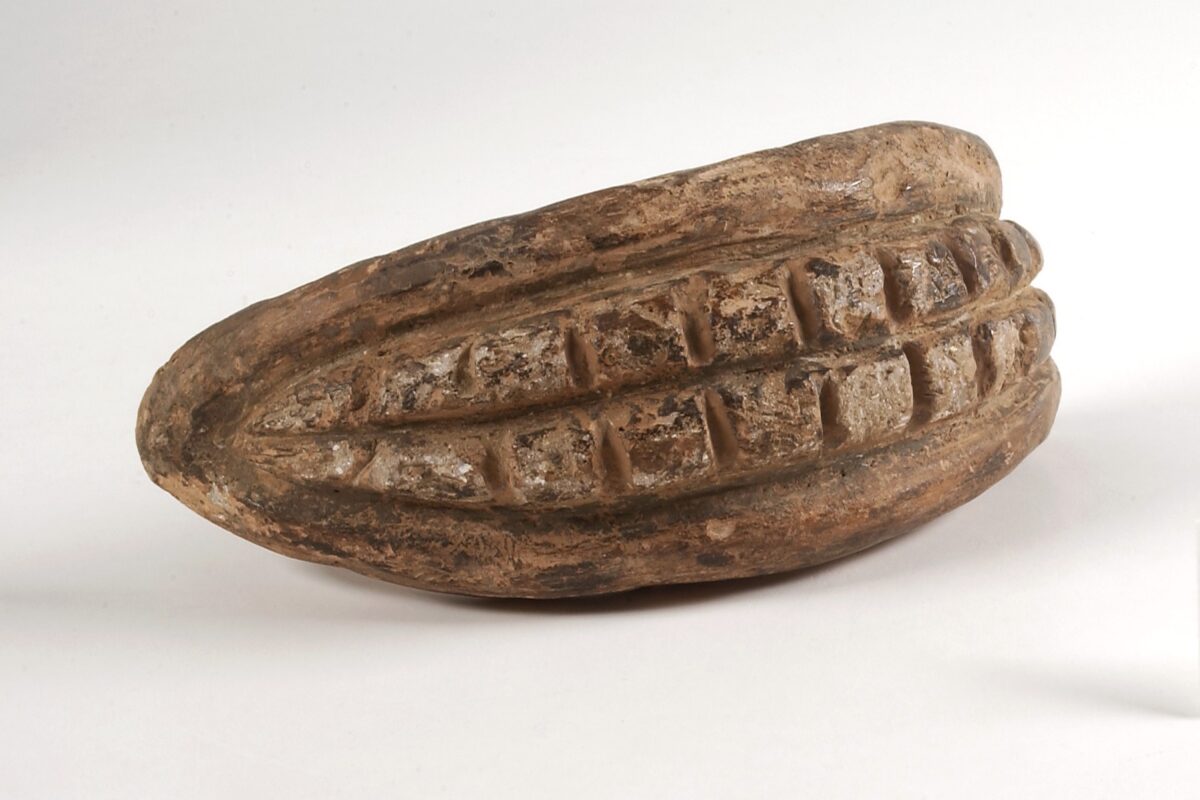
For Hannah Arulanandam, the human mouth is more than jaws and teeth: it’s a window into ancient identity. A student at UT Austin triple-majoring in anthropology, classical archaeology, and classical languages, Arulanandam is currently investigating ancient Roman edentulism, or tooth loss, for her honors thesis. But why the interest in age-old dental health?
When Hannah first arrived at UT, she didn’t yet have her sights set on studying classical archaeology at all, much less classical teeth. Instead, she intended to major in classical languages, inspired by childhood favorites like the Percy Jackson series. But one introductory class in her freshman year changed everything.
“I grew interested in teeth in my Bone ID analysis course,” says Arulanandam. As part of the class, led by anthropology professor Chris Kirk, Arulanandam and her fellow students looked at ancient dentures, dental prosthetics, and grills. “In the archaeological record, there’s an ancient Egyptian grill that was just so interesting to me,” she remembers, “and that’s when I knew I wanted to learn about teeth in relation to the past.”
Kirk’s “Bones: Advanced Identification and Analysis of the Mammalian Skeleton” course covers more than teeth and dentures. It’s designed to introduce students to osteology, the study of the structure and function of the human skeleton. Through a combination of lectures and labs, students learn about skeletal anatomy, the identification of remains, bone biology, and skeletal pathology. They also learn about the ancient dental prosthetics that fascinated Arulanandam.
But, again, why teeth? “Teeth are more than biology; they are social markers. Smiles can reveal class, health, and even migration patterns,” Arulanandam explains. And when considered in an archaeological context, she says, teeth can help tell stories about ancient societies that might otherwise be overlooked.
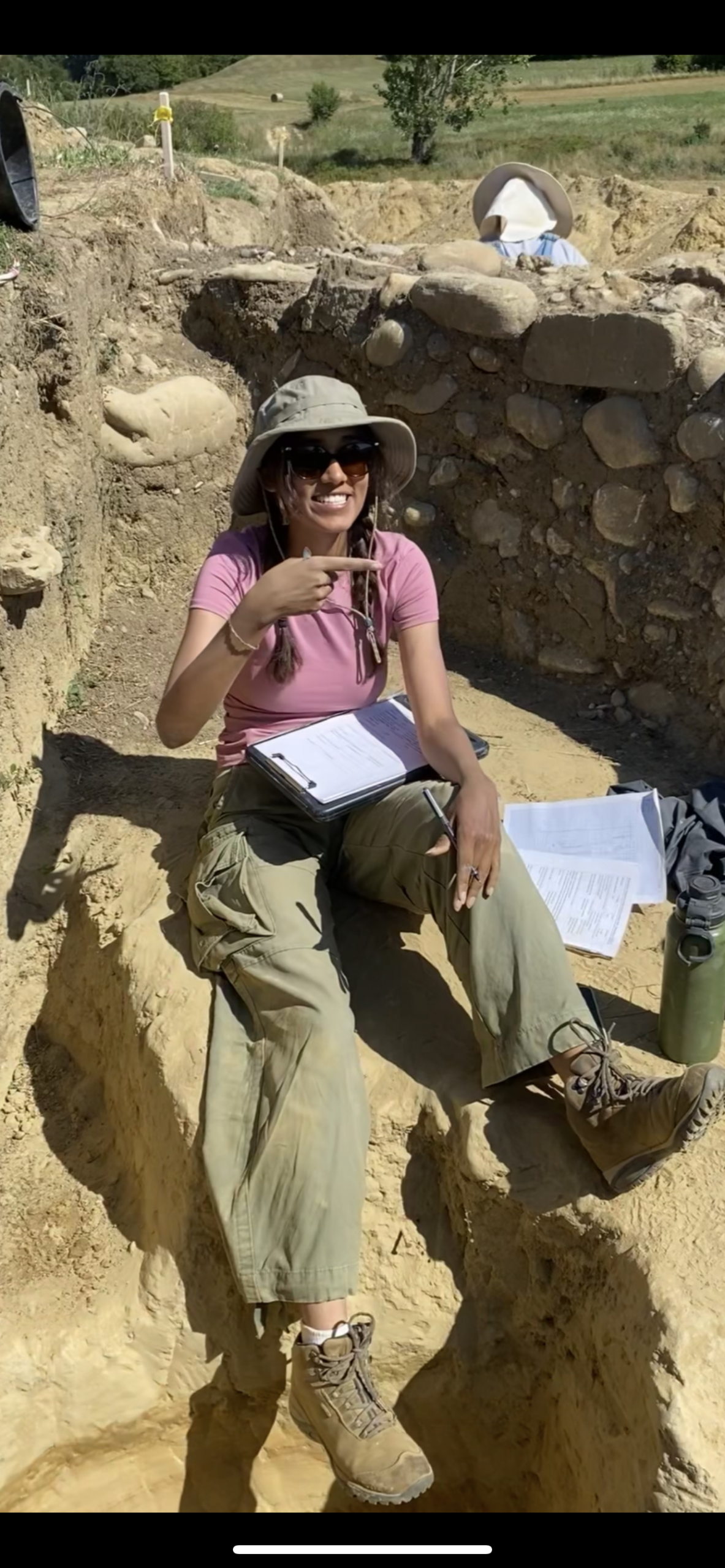
After her time in Kirk’s “Bones” course, Arulanandam began researching opportunities to experience an archaeological dig first-hand. This soon led her to the ArchaeoTek Archaeological Techniques and Research Center, which funds field schools to provide young archaeology and anthropology researchers with field, laboratory, and research opportunities abroad. Arulanandam quickly applied to participate in one of these trips, and the summer after her freshman year she travelled to the small town of Patakfalva in Transylvania, Romania, for her first fieldwork experience.
Once in Patakfalva, Arulanandam spent a month working with a team of archaeologists to safely excavate the oldest portions of a medieval graveyard and relocate ancient remains to a more secure resting place. She also researched the bones and teeth of the human remains, along with other artifacts found in the graveyards, with a focus on understanding past populations’ behaviors, health, and way of life. One of her most exciting finds was the remains of a bronze crown with turquoise beads and fabric that had been buried with a small child. In the archaeological record, she says, bronze crowns are sometimes found buried with young children as a way to honor them in death.
Working on the graveyard excavation “was one of the most gratifying experiences of my life,” Arulanandam says, due to the way it demonstrated “the gratifying work that takes place when you construct research goals to benefit the community you are working in.”
After her experience in Romania, Arulanandam’s fascination with archaeology continued to grow, as did her opportunities for further travel and study. She later visited Spain for a two-week archaeological field school.
Each trip deepened her understanding of both the past and its meaning for the present. They also prepared her for her honors thesis even before she selected her topic. As Arulanandam reflected on artifacts ranging from the bronze crown she uncovered in Transylvania to the ancient Egyptian grills and Roman dentures she studied in class, she began to see teeth as a bridge between biology, culture, and history. Her academic interest in ancient Rome helped refine her topic further.
“I knew I wanted to integrate all my majors when writing my thesis,” says Arulanandam. “I’m a Latinist at heart, so I knew I wanted to focus my research on the ancient Mediterranean.” Thus her final project: an investigation into edentulism in ancient Rome and its connection to Roman ideals of wisdom, eloquence, and public life.
The Romans respected age but prized oration, Arulanandam explains, and these two values were often in tension. So how did the Romans think about tooth loss, a natural product of aging that can significantly alter a person’s ability to speak in public? To answer this and related questions, her research examines Roman dental prosthetics, dentures, and even early orthodontics to support her argument that teeth were central to Roman aesthetics and values, shaping how wisdom and eloquence were embodied.
After finishing her thesis and graduating from UT this spring, Arulanandam hopes to once again go abroad in search of educational opportunity, though her exact destination is yet to be determined. She’s has applied for a Fulbright award to study abroad in Germany and for a program in Austria to teach English to elementary school children. After that she hopes to attend graduate school to become a classical archaeologist and continue bridging the past and the present.