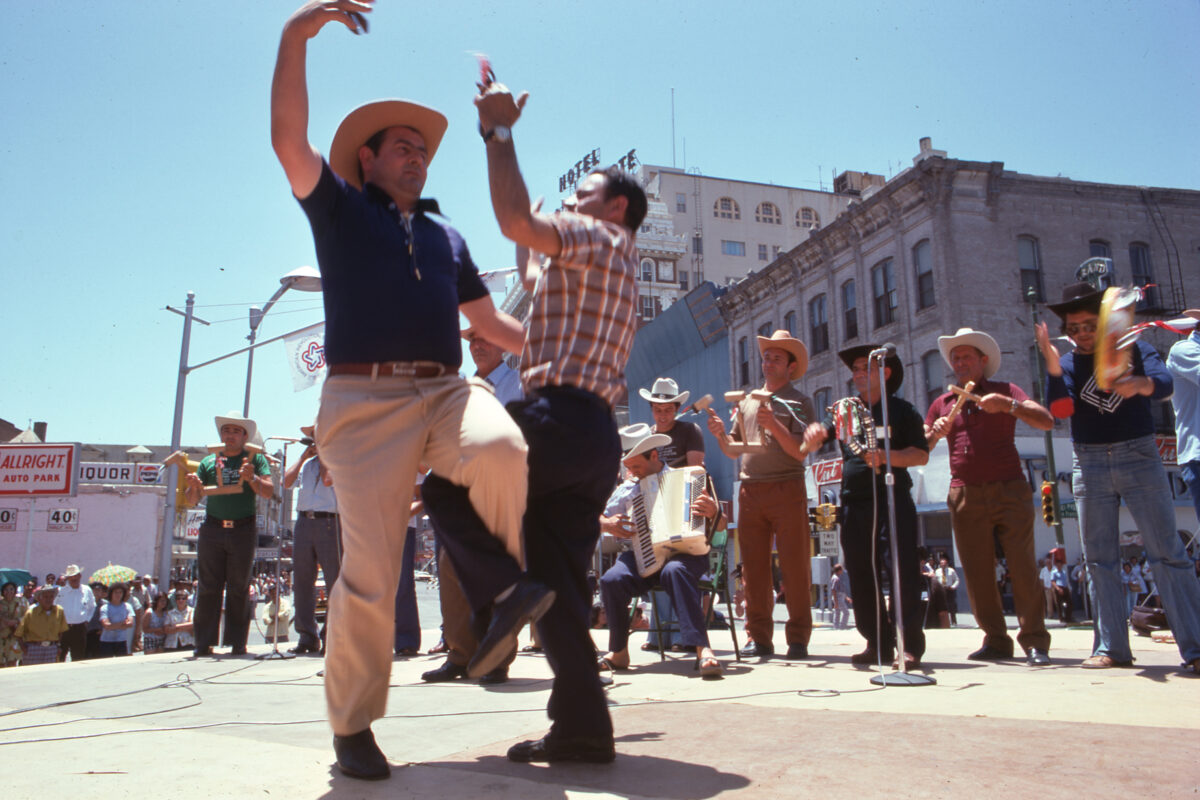
Every September for the past three years, downtown Bryan, Texas, has transformed into a one-day Italian street festival, with crowds turning out for pasta-eating contests, live music, gelato, and the promise of “true New York pizza.”
To outsiders, an Italian festival in the heart of the Brazos Valley might be unexpected. But Bryan’s Festa Italiana is, in fact, a window into an overlooked story: that of the Italians who settled there and in other parts of Texas beginning as early as the 16th century and peaking in the 19th, when they filled a need for cheap labor.
That story is the focus of an oral history project that launched at UT Austin’s College of Liberal Arts last fall. The project, “Italians in Texas,” is led by Paola Bonifazio, chair of the Department of French and Italian, and Valerie McGuire, associate professor in the Italian Studies program, and examines the experiences of Italians and Italian Americans in Texas in the 20th century. The research team is collecting interviews from people who came to Texas from Italy or whose family did. The researchers began their work in the Brazos Valley during the fall 2025 semester and will expand to other counties over the next year or two. The interviews, which will be posted on a project website, will serve as a valuable resource for future researchers studying Texas’ Italian population.
The project also offers an invaluable opportunity for undergraduate students. “Italians in Texas” is part of COLA’s Undergraduate Research Apprenticeship Program, or URAP, which allows students to spend a semester getting hands-on experience in research under the mentorship of experienced faculty. In fall 2025, 64 College of Liberal Arts undergraduates took part in one of URAP’s 14 cohort projects.
In addition to their project work, all URAP participants also attend a weekly seminar on research methodology in the liberal arts. That structure benefits both students and professors, Bonifazio says, with the students gaining skills that they can apply both to their specific project and to future research work.
Simone Mericle, a junior with double majors in Italian studies and in radio, television, and film, was one of three undergraduates in the inaugural “Italians in Texas” cohort, which also included a graduate assistant. She learned about the project when McGuire discussed it in a class and was immediately intrigued. “I’ve never done research before, and I didn’t know anything about Italians in Texas,” Mericle says.
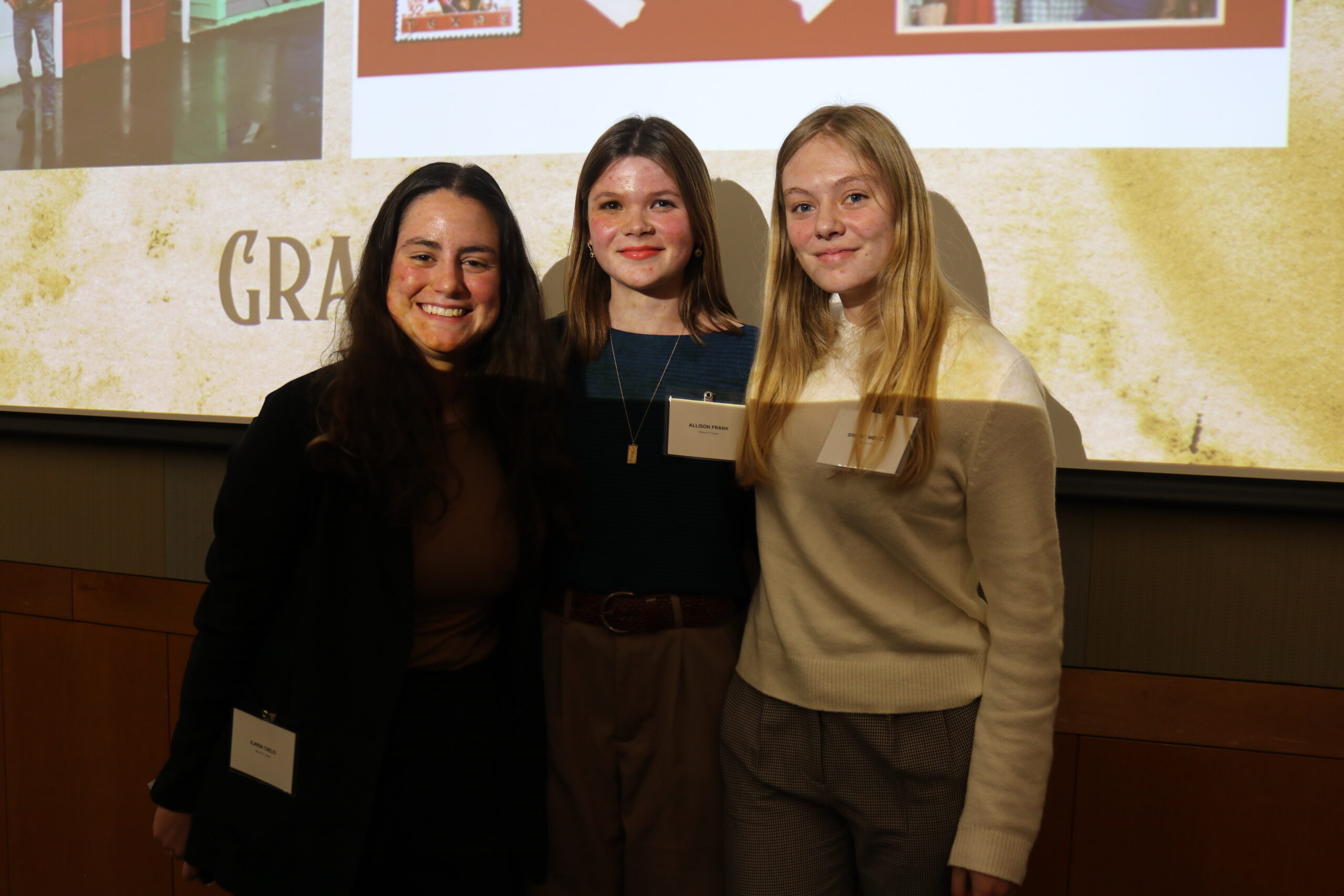
The project was also an opportunity to gain experience in documentary filmmaking, one of her interests. Mericle, who recorded and edited interviews for the project, notes that filmed records of the interviews often reveal things about the subjects’ personalities that transcripts alone could not. “I’ve learned that part of oral history is not just what they say but also watching their dynamics,” she says. “Sometimes a husband and wife are interviewing together, and it’s interesting to see their relationship.”
Mericle was also struck by the enthusiasm so many interview subjects have for genealogy. For many first- and second-generation Italian immigrants, who met significant discrimination in their new home, the goal was to assimilate even at the expense of their cultural heritage, she notes. “But now there’s this resurgence in people going back and tracing down their families and genetic history” as those immigrants’ descendents find pride in that heritage, she says. That pride was on full display at the Bryan Festa Italiana, where the team found many people eager to share their families’ stories, Mericle adds. “That, and people just really like talking about themselves.”
Bryan saw an influx of Italians in the 19th and early 20th centuries, the majority of them Sicilians looking to escape the turmoil of post-unification Italy. Many came to the U.S. in response to ads placed in European papers by landowners looking for cheap farm labor, Mericle explains. Initially, many settled in the New Orleans area, where they faced harsh discrimination and violence. So they continued west to Texas, where land was cheap and the hot weather was similar to what they were used to in Sicily. By the early 1900s, Sicilians made up 60% of Bryan’s total population of 5,000, Mericle found in her research.
Ilaria Cielo, a senior with a double majors in Italian studies and biomedical engineering who also worked on the “Italians in Texas” project last fall, was attracted to the project in part due to her personal background: She was born in Vicenza, Italy, and moved to the United States as a young child. Her family lived in New York and Washington before settling in Texas.
“I was really interested in learning more about Italian history and Italian migration to the United States,” Cielo says. “I think that a lot of people who immigrate feel the sentiment of not belonging to either country. Since I moved to the U.S. at such a young age, I don’t feel Italian enough to be Italian, but I also don’t feel American enough to be American. There’s this very intricate balance, not really associating with either identity.”
This question of identity can also be complicated for many Italians and Italian Americans, Cielo has learned through her work. “I didn’t know that there was such a difference between being from Northern Italy versus being from Sicily,” she says. When the research team was canvassing for interview subjects at the Bryan festival, she says, many of the people they approached would ask, “Oh, do you accept Sicilians?” “They would almost never refer to themselves as Italians,” Cielo explains. “That was something that I didn’t realize before, that being born in different regions reflects how you feel about yourself and how you feel about your country. There are a lot of cultural differences.”
While her URAP course ended in December, Cielo is continuing to work on “Italians in Texas” as an independent project this semester and will use material from the project in her Italian honors thesis. She plans to go on to graduate school, although she’s not sure yet whether that will be in Italian or engineering.
Whichever field she pursues, Cielo will bring to it valuable skills gained from URAP. “Being a part of this project has taught me how to work with other people and exchange ideas and be able to share different opinions and observations about the same thing, since we all come from different experiences,” she says. It’s also taught her about the differences between research in STEM and in the humanities. “This project has expanded the way that I think about people, the way that I think about stories, and how I think about gathering data. It’s very eye-opening.”
The URAP structure, McGuire says, offers humanities students the kind of lab-like experience typically associated with STEM fields. That’s worked particularly well for “Italians in Texas,” she notes. “Oral history is extremely time consuming. There are the interviews, the editing, the transcripts, the recruitment,” she explains. And before any of that work could even begin, the team needed to apply to the university’s Institutional Review Board for the required approvals to proceed. Because the students have been involved every step of the way, McGuire says, “they have a better sense of what it means to do actual research in the humanities,” unlike the more typical undergraduate experience of writing papers that rely on research done by others. “Most of the time, those essays don’t capture an important step of the research process, which is the collecting of the materials and the thought that goes into developing key research questions,” she says.
The URAP cohort model also offers a counterpoint to the “old-fashioned image of the scholar in the humanities as a lone wolf: working alone in the archive, writing your book, doing research on your own,” Bonifazio says. While that stereotype isn’t completely off base, she continues, collaborative research — including oral history projects — are becoming increasingly common in the field. In the case of “Italians in Texas,” it’s not just students who benefit from this approach. “It creates space within the college for valuing and giving visibility to collaborative work within the humanities,” she says. “That’s very important.”