
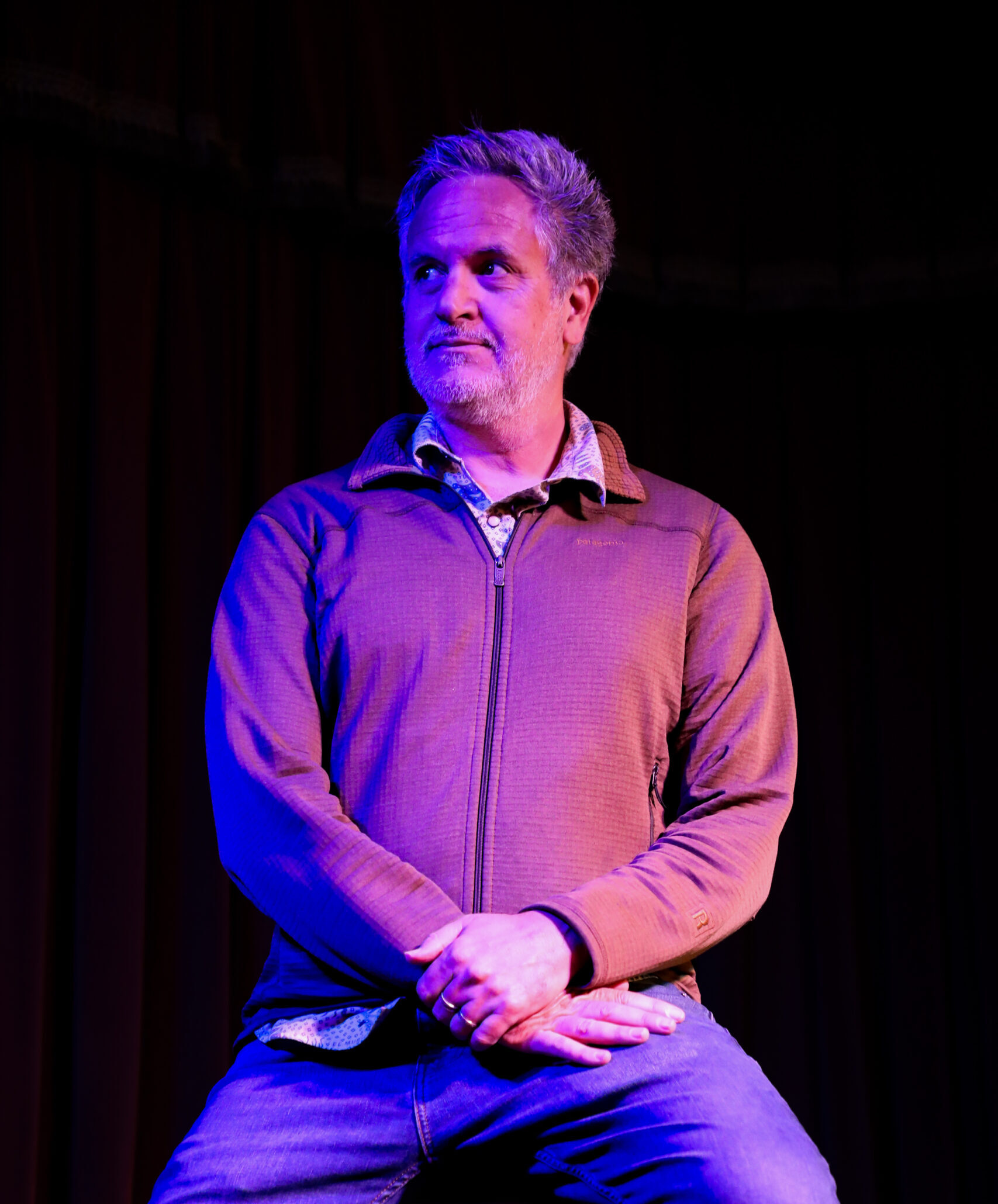
In 2018, Jason Borge arrived in Rio de Janeiro to deliver a paper on the American jazz musician Booker T. Pittman. He sent an invitation to Pittman’s stepdaughter, Eliana, to attend the panel. It was a shot in the dark, a courtesy. Borge, a professor of Latin American literary and cultural studies at The University of Texas at Austin, never imagined that Eliana would show up, or that she would offer him the opportunity to burnish Pittman’s legacy.
Pittman, the grandson of Booker T. Washington, died in 1969 in São Paulo, Brazil, and was soon forgotten by most of the jazz world, his name appearing only in scattered footnotes and his recordings gathering dust in archives from Kansas City to Buenos Aires. It was in these archives and footnotes that Borge repeatedly came across Pittman’s name during the research and writing of his previous book, Tropical Riffs: Latin America and the Politics of Jazz, a wide-ranging examination of the various ways that jazz, a fixedly American artform, had been received, assimilated, and rejected throughout Latin America.
Intrigued, Borge began chasing fragments of Pittman’s life, trying to resurrect a man who had spent decades as one of South America’s most accomplished saxophonists before slipping into obscurity. “I ran into his name a lot, but everyone said something different about him,” Borge recalls. One source said Pittman arrived in South America in the late 1940s; another placed him there a decade earlier. Some called him a clarinetist, others a saxophonist. The biographical sketches contradicted each other in basic ways. “I felt like I had to put the record straight,” Borge explains. “And that if I didn’t write it, nobody else would.”
The fragments of Pittman’s life suggested something remarkable. By all accounts, he could play. In 1933, a prominent Parisian jazz critic named him one of the top three alto saxophonists in the world. He had jammed with Count Basie in Kansas City nightclubs and later led bands in Buenos Aires and Montevideo. For the better part of two decades, he was more than a fixture in Rio’s music scene; he was, writes Borge, “the single most influential jazz musician working in South America…he was the Satchmo of another universe.” And he carried a name that should have guaranteed him a place in history: He was the grandson of Booker T. Washington, one of the most significant Black intellectuals of the early 20th century. How does someone like that simply vanish?
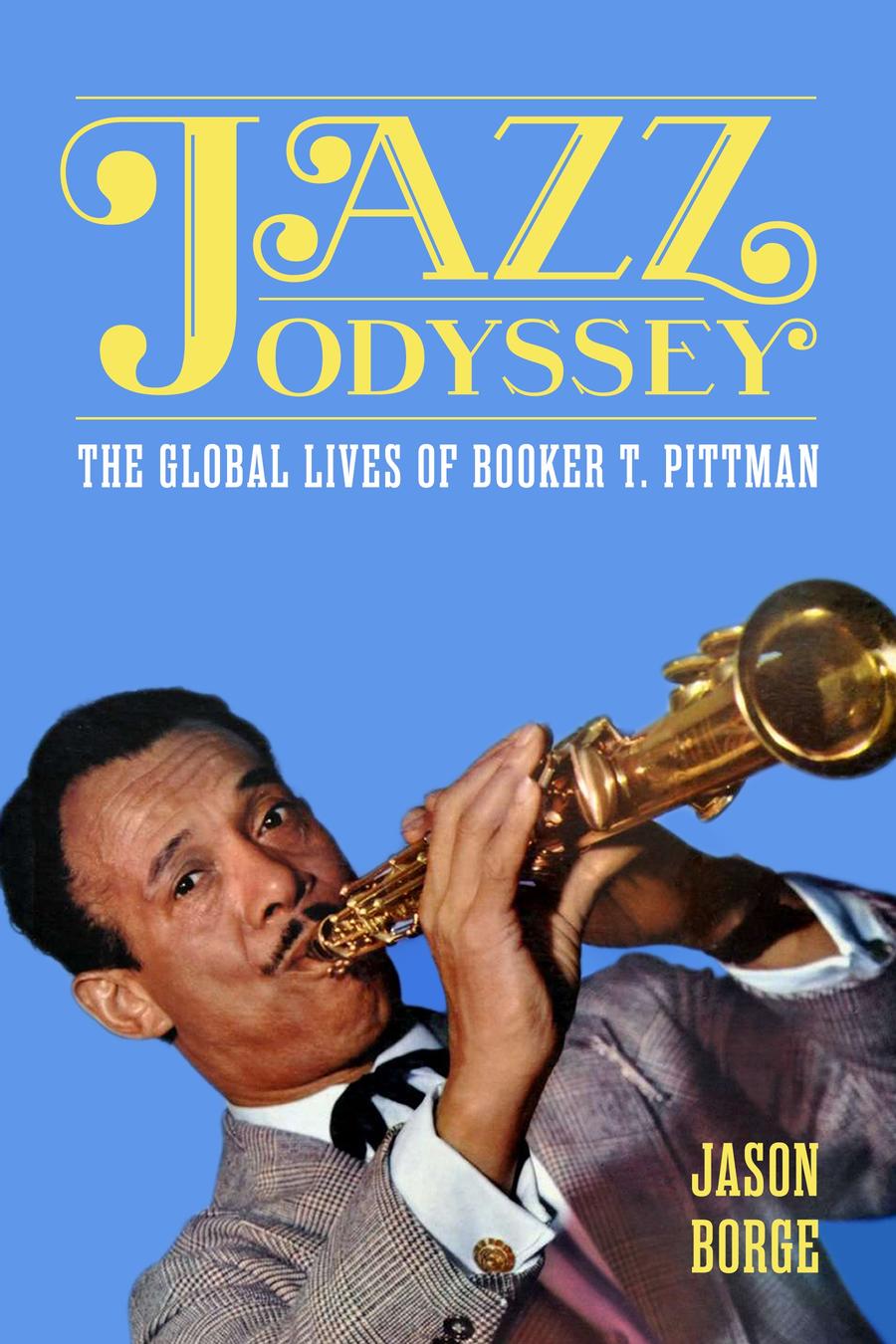
Borge wanted to know, and no sooner had he arrived in Rio than he received a phone call from Eliana, Pittman’s stepdaughter and a well-known Brazilian singer and actress. She invited him to dinner that same evening and within hours was showing him photographs, sharing memories, and insisting with the certainty of someone who believed in fate that “you are meant to write this.” For Borge, the moment represented something rarer than scholarly good fortune: It was access to living memory. That resource, with all its complications, would become the foundation for his new biography, Jazz Odyssey: The Global Lives of Booker T. Pittman.
Borge’s task, which was to understand how a musician of such talent and influence could vanish from jazz history, would require him to exhaustively dig through archival documents housed all over the world. He’d also have to look beyond the music and the archives to consider who gets remembered and why.
A big part of the answer, Borge learned, was geography. Pittman’s career unfolded thousands of miles from the places, like New York and Paris, that mattered most to jazz historians. While other Black American musicians — including luminaries like Sidney Bechet and Josephine Baker — fled Jim Crow America for Paris, Pittman chose Latin America, a region largely invisible to the critics and record executives who built jazz’s canon. It was a good choice in terms of the influence he could have on the regional scene—“Black American musicians of Booker’s talents could dazzle and flourish as local celebrities,” Borge writes—but distance from New York and Europe meant distance from the magazines, record labels, and other mechanisms that transform musicians into legends.
The answer was also personal. Pittman’s family history, Borge says, proved an immense burden to him. His grandfather’s legacy, of course, but also that of his father, William Sidney Pittman, who was a prominent Black architect in Texas and a less-than-ideal dad. In his biography, Borge documents how the younger Booker grew up under his father’s “anger, alcoholism, and imperiousness.” The toll was profound. Booker Pittman inherited not just a famous name but also “the insidious pressure to carry on his grandfather’s legacy [and] his mother Portia’s lofty expectations for him to study classical music just as she had,” Borge writes, all while navigating his father’s volatility and “the routine injustices of growing up Black in the Jim Crow South.”
Booker T. Washington’s famous 1895 Atlanta Compromise had offered Black Americans a strategic path forward during a particularly low point of American race relations: stay put, work hard, build economic power, and prove your worth through contribution rather than confrontation. “Cast down your bucket where you are,” he famously said.
Pittman, however, cast down his bucket in Kansas City, then Paris, then Rio, then Buenos Aires, then Montevideo, then rural Brazil, then Rio again. He was always moving, driven by what Borge describes as Pittman’s “centrifugal force.” If Washington preached rootedness, Pittman embodied perpetual outward motion, forever pulling away from home, family, nation, and expectation. As Borge describes it, it was exile layered upon exile, each move taking him further from any recognizable center.
Pittman fled and kept fleeing. He became the opposite of everything his grandfather represented: bohemian where Washington was disciplined, peripatetic where Washington was rooted. For years, Pittman battled addiction, disappearing into small Brazilian towns for months at a time and nearly dying twice from alcohol abuse. It wasn’t until the 1950s, when he married Ofélia Pinto Lima in Rio de Janeiro, that Pittman finally found stability. Ofélia had a teenage daughter, Eliana, and Pittman embraced the role of stepfather with unexpected devotion. As Borge writes, “he took her under his wing as much artistically as paternalistically, mentoring her not just as a father figure but as a fellow musician, shaping her into the celebrated performer she would become.”
While life with Ofélia and Eliana brought Pittman much-needed consistency, it was during his most turbulent period that he produced some of his most remarkable music. “He had this kind of fast-talking, flighty, almost errant quality to his solos,” Borge says. “There’s a romantic quality in those solos, but there’s also a restlessness.” When Borge tracked down Pittman’s early recordings, which were scattered across YouTube and tucked into obscure compilations, he heard something extraordinary. The solos had a quality he kept trying to describe, an unsettledness, as if Pittman’s perpetual movement had embedded itself in the notes themselves.
For his own part, Borge wanted to understand that quality from the inside, so he did something unusual for a scholar: He bought an alto saxophone and tried to learn the instrument. The experiment had mixed results, but it taught Borge to read the fragmentary descriptions in Pittman’s memoirs about playing in Dallas nightclubs or Buenos Aires theaters differently. “There were a couple of times when I could imagine a scene more fully because I had learned how to play,” he says.
In 2019, Borge also traveled to Argentina and Uruguay, visiting archives and concert halls where Pittman had performed decades earlier. He pored through Brazilian newspapers from the 1950s and ‘60s, building a chronology one clipping at a time. He interviewed Eliana repeatedly, though he learned in some instances to trust the written record more than family memory. The hardest parts were the gaps, entire years when Pittman essentially disappeared, holed up in rural Brazil or wandering through small towns. The archive couldn’t follow him there.
Instead, Borge had to engage in what the scholar Saidiya Hartman calls “critical fabulation,” or responsible speculation, armed with the information he did have. Hartman’s method allowed Borge to bridge the gaps, connecting what was known about Pittman before he vanished with glimpses of the remote Brazilian towns he’d fled to, informed by Borge’s own understanding of the music Pittman was playing and the landscapes he was inhabiting.
By 2020, Borge thought he understood Pittman intellectually. He was writing chapters about Pittman’s relationship with Eliana — describing how, in the late 1950s, the musician had become a father figure and artistic mentor to her — when the COVID-19 pandemic hit and Borge found himself parenting his own Brazilian niece who was stranded with him and his wife during lockdown. As the past and present bled together, Borge began to understand Pittman’s experience of surrogate fatherhood not just intellectually but emotionally. “It helped me understand,” he explains, “how he might’ve felt and how these sorts of paternal instincts really start to kick in.”
The woman at the center of that original father-daughter dynamic had become central to how Borge could tell the story of Pittman’s life. Eliana was an essential collaborator for Borge, and her participation raised questions central to the work of biographical recovery. At 80, she remains a vital presence in Brazilian cultural life, a celebrated performer who recently starred in a Netflix series about the Bossa Nova era. And for her, Booker Pittman is more than history: He was an important part of her own life story.
For Borge, a cultural historian accustomed to working with documents and secondary sources, the collaboration represented both opportunity and methodological challenge. “Eliana invariably proved willing to provide me with all the documents and memories at her disposal,” Borge says. “She clearly wished the book to be written as much as I did, not as a hagiography but rather as an honest portrayal of the flawed but talented and dedicated man who had helped to raise her and served as her artistic mentor.”
The University Press of Mississippi published Jazz Odyssey in January, and for Borge that represents something more than an academic milestone. Whatever popular recognition may or may not come, Pittman’s life is now part of the permanent record, saved from the oblivion that nearly claimed him.
On a research trip to Brazil, Borge and his wife visited the cemetery where Pittman is buried. “We have a house which is just right over the hill from it, and so we went there just to look at it,” he says. The grave is modest and few people visit. The tombstone inscription reads simply: “Booker Pittman / Famoso músico americano / Jazz aqui.” As Borge notes in the biography, Eliana and her mother embedded a pun in that final line: “jazz aqui” means “there is jazz here,” but it also hints at “jaz aqui,” “he lies here.”