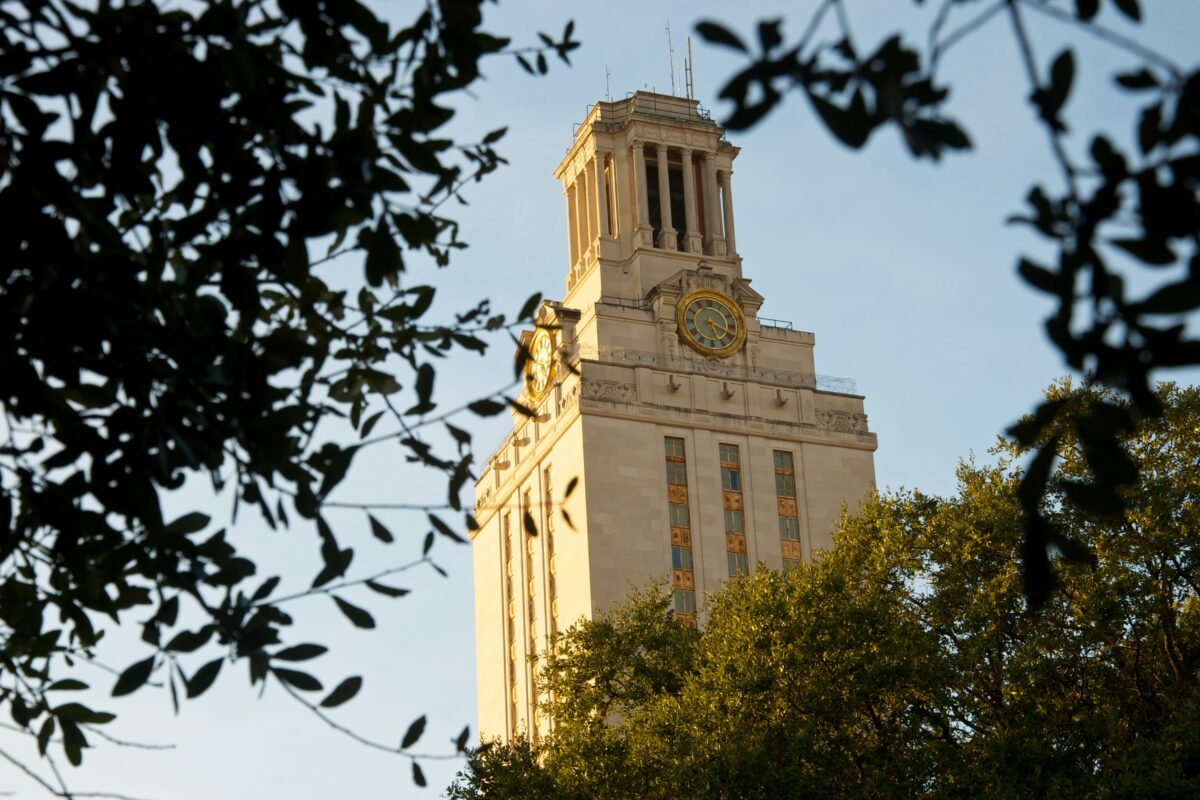
At the College of Liberal Arts’ 2026 commencement ceremony, interim dean David Sosa addressed the assembled graduates as well as their family, friends, and professors. Below is an excerpt from that speech. Congratulations, COLA Class of 2026!
Graduates, it is my privilege today to address you as Dean, and in that role to say something about the value and purpose of the degrees you’ve earned.
I have been a professor at UT Austin, in the Department of Philosophy, for 29 years. And I want to distill one key item: The fundamental purpose of the College of Liberal Arts is one of liberation. Viewed properly, the College of Liberal Arts is in fact a college of liberating arts.
To get at what I mean by this, I want to tell a little story from when I was young. My father, Ernest Sosa, is an academic philosopher as well. When his son said something to him, the response was often, well, different.
So, I was about eight, and I was upset about something that hadn’t gone my way. I remember announcing to my dad that I’d been unlucky, that I’d had bad luck.
He smiled sympathetically, but instead of commiserating with me, or offering reassurances, he followed in the tradition of Socrates. He pushed me to clarify my claim: “What do you mean by bad luck?”
I tried again. “I mean… something bad happened, and it didn’t have to.”
He said, “Do you mean it was like a coin flip?”
I said no, it wasn’t about chance.
“So do you mean it was unfair? You didn’t deserve it?”
That felt closer, but still not quite right. It wasn’t about getting what I deserved; it was just bad luck!
And so it went. Eventually, I realized I didn’t know what I was talking about. The phrase felt like it made sense, but on reflection it didn’t. Once I saw that, something shifted for me. Ironically, I felt clearer.
Over five decades later, I still remember that clarity. What has stayed with me is the sense of freedom I got from having been pushed to think critically. That is what I mean by “liberation.”
The phrase “liberal arts” comes from the Latin “artes liberales” — the arts that make for freedom. That terminology is not just a historical curiosity. A liberal arts education is a liberating education. And what does such an education liberate us from?
From a kind of poverty. Not material scarcity, which must certainly also be a central concern of any good society, but from a scarcity of intellectual resources. Like material poverty, this other kind of poverty can trap us and limit us.
What the liberal arts offer are varieties of interpretation, schemes for questioning, and frameworks for engaging the world. Having multiple forms of understanding is a deeper way of being free than almost any other.
As graduates, you are entering a world that will too often demand speed and tolerate superficiality, that will encourage certainty and simplicity, rewarding reaction over reflection. You will encounter incentives not to be thoughtful.
But your education has given you resources to resist all that. You have the capacity to pause, to ask important questions, to consider carefully. Rely on what you’ve learned when you’re making decisions about work, about family and community, when you’re thinking how to live. Think hard, perhaps most of all, when you’re angry, or confused, or tempted by slogans.
You don’t need to remember every fact you learned here. What matters is that you remember what it’s like when an idea opens up a problem instead of closing it down, when you’ve found a new way of looking at things.
The liberal arts make more of the world available to you. It articulates and expands your field of view, and givse you intellectual tools for going on.
You have now had these experiences.
Please look back upon your time in college as a coherent process of expanding your capacity to reason and to understand. This is a gift you’ve given yourself, and that others have been good enough to support you through; we’re delighted to have been part of it.
What I hope you see is that you have done much more than earn a degree. You have developed virtues of mind that will enable you to flourish.
The College of Liberal Arts at UT will now always be your College: know that we admire you and we respect you.
Congratulations to each and every one of you!
— David Sosa, Interim Dean of the College of Liberal Arts and David Bruton Jr. Regents Chair in Liberal Arts