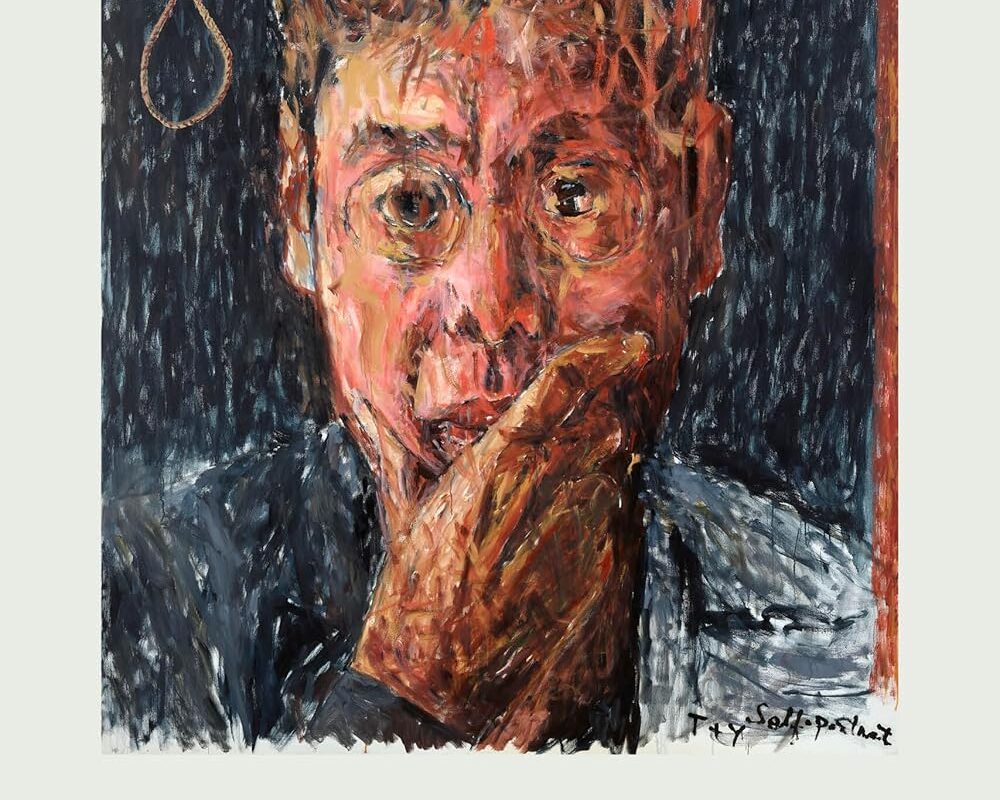
Kirsten Cather, a scholar of modern Japanese literature and film at UT Austin, has a knack for difficult subjects. Her first book tackled major obscenity trials in modern Japan to examine how law and culture intersect. Her second, Scripting Suicide in Japan, focuses on the writings left behind by 20th- and 21st-century Japanese students, artists, and authors who died by suicide while challenging the stereotypes surrounding suicide in Japanese literature. Here she interrogates what it means to hear from voices on the edge of the void, to stay with these writers “in their moment of writing.” If we push aside our assumptions about what they tell us in order to listen more closely, Cather asks, what will we find?
This question leads her to examine many creations related to suicide in Japan. There are the writings themselves, of course — the suicide notes and the autobiographical work of creatives who went on to die by suicide — but also sites across Japan made famous by their association with suicide and memorials set up to the dead. The analysis of each site, letter, and death requires a sensitive approach, and Cather’s commitment to understanding is evident on every page. In their award to Cather for Scripting Suicide in Japan, the judges of the Association of Asian Studies’ John Whitney Hall Prize explicitly cited her “rare sensitivity and rigor” in this “interdisciplinary, hauntingly beautiful study of mapping, noting, and mourning that honors the voices of the dead and asks what it means to read and write beside them.”
Earlier this spring I met with Cather to discuss her book and the writing and teaching processes that shaped it. Along the way we cover samurai stereotypes, YouTube scandals, and the difficult but necessary work of talking about suicide out loud. Read on for an edited and condensed version of our conversation, and for more on Cather’s work you can read Scripting Suicide in Japan on Open Access.
Kirsten, congratulations on the book and the awards! You have been getting a lot of positive attention for this work, and it’s extremely well deserved.
To jump in with the obvious acknowledgement: Suicide is an extremely complicated and difficult topic. Where did the idea to focus on suicide — both suicide sites and writings of and about suicide — come from? The question of suicide is an enormous one; how did you get started working in this field?
It was a little bit out of naivete: I started writing about this because I was teaching on the topic of suicide in Japanese fiction while I was writing my dissertation on censorship and living in D.C. I had a chance to teach at George Mason and University of Maryland, and they said, “You have to do something that’s going to interest the kids today.” And something that had always puzzled me was what I would say is the overrepresentation of suicide in translated works of Japanese literature and film. It was so omnipresent. And then there were the overly simplistic conclusions people draw about it: It’s celebrated, it’s honorable. There’s a samurai tradition. It’s part of “the” cultural psychology of “the” Japanese. And I thought, surely there’s a better way to think about this.
So, I think like most books, it grew out of a dissatisfaction I found in the existing work. It was often a version of the celebrated honorable samurai — which, for contemporary Japan, that link is quite difficult…
Right. For one thing, there’s hundreds of years and a huge cultural distance between the samurai past and now.
Yeah. And I would say that there were honor suicides in Western cultures too. The gentleman given the bottle of whiskey and the pistol and left alone for a few moments.
So I just started probing and trying to think it through. At first the project was very much about fictional representations of suicide, but then I realized that I really wanted to figure out the even more difficult question of when real life and fiction entwine in uncomfortable ways. I soon realized that one of the problems was that people made overgeneralizations about Japanese stereotypical culture, or they regarded these suicide notes and other writings about suicide very cynically, like “this person was looking for posthumous fame.” Surely if you are writing about something as dire as self-death and then go on to die by suicide, you’re doing something more complicated than just seeking monetary rewards. But there’s a lot of antipathy towards suicide and people who die by suicide. So you would see that strain [in the reactions to these writings], or you’d see the very naive, “Oh my gosh. We can see into their soul in the very moments of before they died.”
As if the writer of a suicide note becomes perfectly open and vulnerable to produce a work of total self-disclosure.
Yes, and unintentional self-disclosure at that! Just a subconscious slip of the pen, like “whoops, I just revealed to you my deepest thoughts.” I found that very frustrating.
Eventually I realized I really did want to think about real life and representation and the moments when those things collided. I thought the autobiographical fiction would be the easiest, and that ended up being the hardest part, which is interesting. I thought, fiction’s a safe refuge. I can talk about it; I’m very used to talking about it. And I thought the suicide notes would be the more difficult representations, but it was trickier when a writer so obviously implicated fiction in the project of self-writing their self-death.
I also realized that, not that I didn’t care about their motives for dying, but I didn’t think that the traces these writers leave behind were useful to investigate that question.
And that is the inevitable question anybody looks at after somebody dies by suicide. What was the motive? What was happening? What would lead somebody to make this ultimate decision? And in this book you’re pointing out both that ultimately we can’t know and that there are other questions to ask that are more interesting.
I think so, because I think — I hope — my approach brings us to a more compassionate place of discovery by trying to put us in the shoes of that person in their moment of writing. That was the thing that, when that clicked for me, a lot unlocked. And it took me a long time to discover and get comfortable with that sort of positionality, if we want to call it that. I couldn’t figure out a way to explicitly say, which I do in my introduction, that I want us to stay in the moment of writing. And sure, there are limits to that approach, but the other approaches have been so overdone and so critiqued, and we haven’t found other ways of doing this.
Tell me more about that decision to say “I want to stay in this moment,” because it structures the book. You say you came to that a little bit late in the process. When did you realize that’s what you wanted to do?
I don’t remember exactly when, but I do remember one piece that led me there. This wonderful colleague of mine who teaches at Georgetown pointed me to a short piece on these suicide maps made in the 1920s by Kon Wajirō, who was an early ethnographer. This is in chapter three of the book, and it’s about a suicide map that he makes of Inokashira Park, an area where I lived for a year before I had even thought about this place as a former suicide hotspot.
You read “suicide map” and you think, there’s not going to be anything ethical about this approach. He’s mapping suicides and he also has a map of picnics. There’s one essay that he writes and literally it’s a 5-minute sketch of “they were eating hard boiled eggs, and these lovers were entangled hands on the bench…” and then the companion essay becomes the suicide map. My initial reaction was, no, you cannot do that. But then I read a piece where he stages the struggle he was having to talk about and research this topic in a way that captured this moment of disappearance, this moment of self-willed self-absence. Like, “I’m disappearing myself from the equation, but there are traces that remain.”
His essay was key for me. Something about it really got me on this idea of traces and capturing and the ethical compulsion surrounding them. The compulsion to mark one’s own perspective, this absence, and then the project of us left behind to capture that in a way that doesn’t just simplify. I was like, this is him struggling with exactly what I’m struggling with. And then I thought, well, make that obvious in the book, make it more obvious how I’m constantly making my presence a little more felt, which is not something we’re always taught to do in academia.
That partly answers a question I was going to ask you about whether there was something you found as part of your research process for this book that changed the direction of the final book.
Going to actual locations.
Was that it?
Yeah, it was. Getting away from books and texts that sterilize the subject and physically visiting these sites was really powerful and illuminating.
I went to historical sites like Inokashira Park and Kegon Falls, though I couldn’t go visit the volcano of Mt. Mihara in the end because the pandemic hit, unfortunately. But those visits forced me to come more nose-to-nose with the idea that there were physical bodies that were dying at these real-life sites. And I did try to go to the apartment complex of the more recent suicide of the filmmaker, and I felt like a ghoul. Then I realized there was something really important about these visits and there’s also some importance about my maintaining distance. And I decided that the Aokigahara suicide forest is too much. It’s too visceral now. So I decided not to go there.
This may say something about me and my age and my time spent online, but whenever I think of the suicide forest I think of the influencers like Logan Paul who go and film there. The idea of the touristic draw to this place of real sadness and loss is so strange.
I wrote a short op-ed after Logan Paul’s video. I was so not ready at that point, but interestingly I found myself thinking about how Logan Paul himself got caught up in that in a very uncomfortable way. I don’t know if you saw that video before it got scrubbed from the internet, but the critique was that he shows himself, he focuses on himself. But I think there’s a real question in there that we have to face. There’s no easy answer to whether and how to represent the dead.
This ties in with my first project on censorship. As I was writing this book, things were disappearing from the web. Suicide prevention in Japan went in this direction of “let’s foreclose all representations.” But there’s another approach, which is to show the dead in all their visceral reality: “Let’s show these bodies in the hopes of de-romanticizing the act and thereby preventing suicide.” This goes back to an Edo period practice where lovers’ bodies would be displayed under bridges for days to dissuade other would-be suicides. It’s not easy. Neither is a good solution.
One thing that I was thinking about as I was reading the book — and this is projection on my part — was that suicide is such a heavy topic. It’s so freighted with all kinds of meanings, but also emotionally very difficult to sit in. What was it like for you personally sitting with this material for that long?
For so many years, yeah. It was hard. People say about me, “You’re one of the more optimistic, happy people I know. Why would you choose this topic?” But I think the compulsion to try to do this ethically helped mitigate how I was feeling. I felt I had a responsibility to these voices to try to do some kind of justice to them.
It was interesting to see which ones really got me and which ones I could read more easily. Some of them are written with levity. That is interesting too, that this person was seemingly laughing at themselves and wanting to produce things that would seemingly produce laughter. I’m nervous when we talk about intent because I don’t know what their intent was, but I was sometimes surprised by the levity, the winking at us, and the sort of self-conscious acknowledgement of even me as a reader not just decades later but sometimes a century-plus later.
And you know, you do start entertaining the idea of your own death and the deaths of people you know. Nobody who I know has been untouched by suicide at this point in their lives. So there’s some version where you think of voicing, or trying your best to voice, things that would otherwise be dead and disappeared. In my wildest dreams, that’s what literature does. It allows the preservation of these voices.
You even start for fast forwarding to like, “when I’m dead, somebody’s going to read this, and then what?”
And then they’re going to think, “What was she trying to tell us?” Which is sort of mind-bending to think about.
But I do need a happier topic for my next work. My mother, she’s Irish Catholic, she’s like, “Please, Kirsten, could you do something else? Your first book was on sex and obscenity and your second book’s on death and suicide. Can you please do something I can talk to my friends about?”
That’s hilarious. And to jump back to book ideas: It sounds like the earliest roots of this project were in a class that you were teaching. Were there projects that you considered and set aside before you settled on this one?
Not really. This one was pretty clear to me. I knew it mattered to me enough to work with it for so long, and I always want to make sure my topic’s going to matter and be of interest to a broad variety of people. I’m pretty wary of specialization. I’m a Gemini; I am always interested in everything. I dabble, and I encourage dabbling with my students. It’s the way we grow.
There was one idea I sort of toyed with. I wanted to stay in the vein of my first book and write about copyright and copyright law in Japan, thinking about copyright infringement cases. But it just didn’t interest or matter to me as much as thinking about life and death.
I can see how the stakes would be difficult to compare.
Yeah. But what I didn’t totally realize was I had really had to work on legal language in Japanese, which was like two foreign languages for me, for my first book. And then the second book had all of this medical and psychological literature that got pretty dense. A lot of it didn’t end up making it into the book, but that took longer than I thought. Everything took longer than I thought.
Everything always takes longer than we think. I have yet to talk to anybody who’s like, “It was so easy. It all just fell together.”
What drives me crazy is listening to authors of historical fiction books who have these six figure contracts for their books, and they’ll say, “And I spent two months in the archive!” People say, ahh, two months! And I’m like, are you kidding me? I’ve got like $0 for this book, and I can tell you I spent more than two months in the archive.
I was going to ask: How much time did you spend in an archive for this?
I mean, so much time. I can’t even calculate. But I never did a long stint. This was an interesting part of the second book versus the first book project. You have a lot more leisure in your second book to spread things out, but you don’t have that dedicated time of your dissertation research fellowship.
Of that dedicated year abroad, yeah. My husband’s a historian and I basically didn’t see him for almost a year because he was off at archives. I was like, “Happy for you! But…”
“Happy for you, but gosh, I miss you.” Yeah. My husband and I got married and I left two weeks later for Japan for my dissertation research, and then he came over three months later for a few months. I wasn’t willing to do that with my young kids growing up for the second book, so I just kind of stole time when I could in madcap two-week visits. Things have gotten so digitized that archives were less necessary. Instead, I’d go interview and talk to people, go to sites — that’s what you do when you go to Japan. You spend that time like that, because everything else is copyable.
Still, a lot more than two months in an archive is what I’m hearing.
And for a lot less than six figures.
Was there anything in the archive that surprised you, that you came across and thought, “oh my goodness…”
The Harry Ransom Center has the Alfred A Knopf publishing company’s archives, in which there was outright acknowledgement of, “We are gonna make a lot of money because Mishima just died by suicide and we’re in the midst of translating this work by him, so let’s get on it.” The willingness to put that on paper and then to be able to use that, that was wild.
And then sometimes what was most surprising was the disappearance of the very material in the archives. Once, I was researching suicide prevention materials put out by a Japanese organization. Because I’m totally still analog, I printed everything. When I looked back, I found that I could trace what happened to the language used to describe a “poetic suicide site,” a jisatsu meisho, that had very poeticized beautiful classical imagery, or as beautiful as you can get when you say “suicide” next to it. And then they changed the wording to something like “a site where there are numerous suicides occurring therein.” Very stiff, very buttoned up. And I was like, “oh my gosh, they actually censored themselves here,” because my theory was there was this move toward unrepresentation.
Thinking about changing how we talk about suicide in consideration of who might be listening brings me to a question about audience. When we think of an audience for an academic book, you think of other academics, and usually specifically other academics in your specific field. Were you thinking about a different audience when you were writing this book? Who did you think would read it?
My base concern was to create something that’s good for the field that people can build upon, something that opens the conversation and doesn’t close it, that offers a helpful methodology. And then when I saw the New Interventions in Japanese Studies series [at University of California Press], I thought, yes, I am trying to intervene, even though I am not a theory-heavy person. That’s not my comfort zone; my comfort zone is close readings of texts. But, oddly, I think it was an intervention, which is interesting because it’s an old-school methodology.
So, there were some meta-methodology thoughts about my field in my mind, but I also want to write what I want to read, and I want to read anything that’s interesting. I want to read things that are written in real language for real people, to make it as accessible as possible.
I was also thinking about my experience teaching a grad seminar on this topic and my experience teaching undergrads. As I’m talking I realize that everything and everyone I’d ever talked with about the book stuck in my mind, even every conference talk I ever gave. And it was shocking the way that the audiences would react sometimes. One time I gave a talk about the suicide forest and had a person say, “Why should we care about these dead bodies in the forest? Why should the Japanese government care?” And I was like, wow, ok, so some of my audience is going to be thinking that.
Let’s sit with that for a minute. That’s wild!
Like, can I just reflect your question back to you for a moment so you can hear yourself?
I do want to come back to talk about the classes in a minute, but I bet you have had a lot of strong reactions over the years. As you said earlier, this is a topic that ultimately touches all of us in some way, and people bring a lot of themselves and their own experiences, I imagine, to this material. That seems like it would shape the experience of working on a book about suicide.
Yeah. Eventually you have to have your own thing, your own rationale for why you’re doing what you’re doing, and know you can’t do all the things.
Now to go back: This is a course you were teaching for a while?
And I don’t teach it anymore. I don’t feel like I can in this climate. I feel students are in a really vulnerable place. We’re more aware of how vulnerable they are, and it started feeling not right, so I stopped.
But teaching it as a young, naïve professor in a different era, I had the students do creative projects at the very end that allowed them to digest the material in a different way. And I remember in the last class from ages ago some students brought up their own experiences with suicide – their own struggles or losses and their upbringing where even uttering the word suicide out loud was an unspoken taboo. The class just went around opening up to one another. There were tears, there were hugs, there was warmth, but what the students were saying was, “This gave me an avenue by which to approach this difficult topic, to talk about suicide.” The class really seemed to help. I know that’s not always going to be the experience, but for a moment there, it was a very lovely. But then I became a lot more self-conscious about it. I was like, this is a difficult dialogue, and I need to make sure I’m trained in how to do this. I need to make it clear that this is not therapeutic. That’s not the goal.
But it was really interesting to hear these students talk about finally tackling their thoughts and feelings, mostly about being suicide survivors, having had classmates or family members who had died by suicide. I thought, this is an interesting methodology, to think that if you start with distant, ancient Japan and you allow the students to creep at this topic, it could be helpful. But it also feels very precarious.
That makes sense to me: It’s difficult to both look back on this class as such a warm and positive experience, one that could foster a lot of connection among students and with this difficult, almost impossible subject matter, but also to acknowledge that there’s a risk in teaching it, that it might push a particularly vulnerable student in a dark direction.
I remember reading this one journalist turned suicidologist from the 1940s. He wrote these books [about suicide] and then he wrote about how one of his books had been found by a body of a suicide and how devastating it was.
But then you talk to professionals and they’re clear that not talking about it is not the solution. Of course, this difficult dialogue needs to be in the hands of trained mental health professionals. But I think back to your question of audience, and I do hope that somebody could read parts of this and think about suicide in a different way. And for me too, the writers I talk about in this book helped me think about people in my life who have died by suicide in a different way, and that was wonderful and useful.