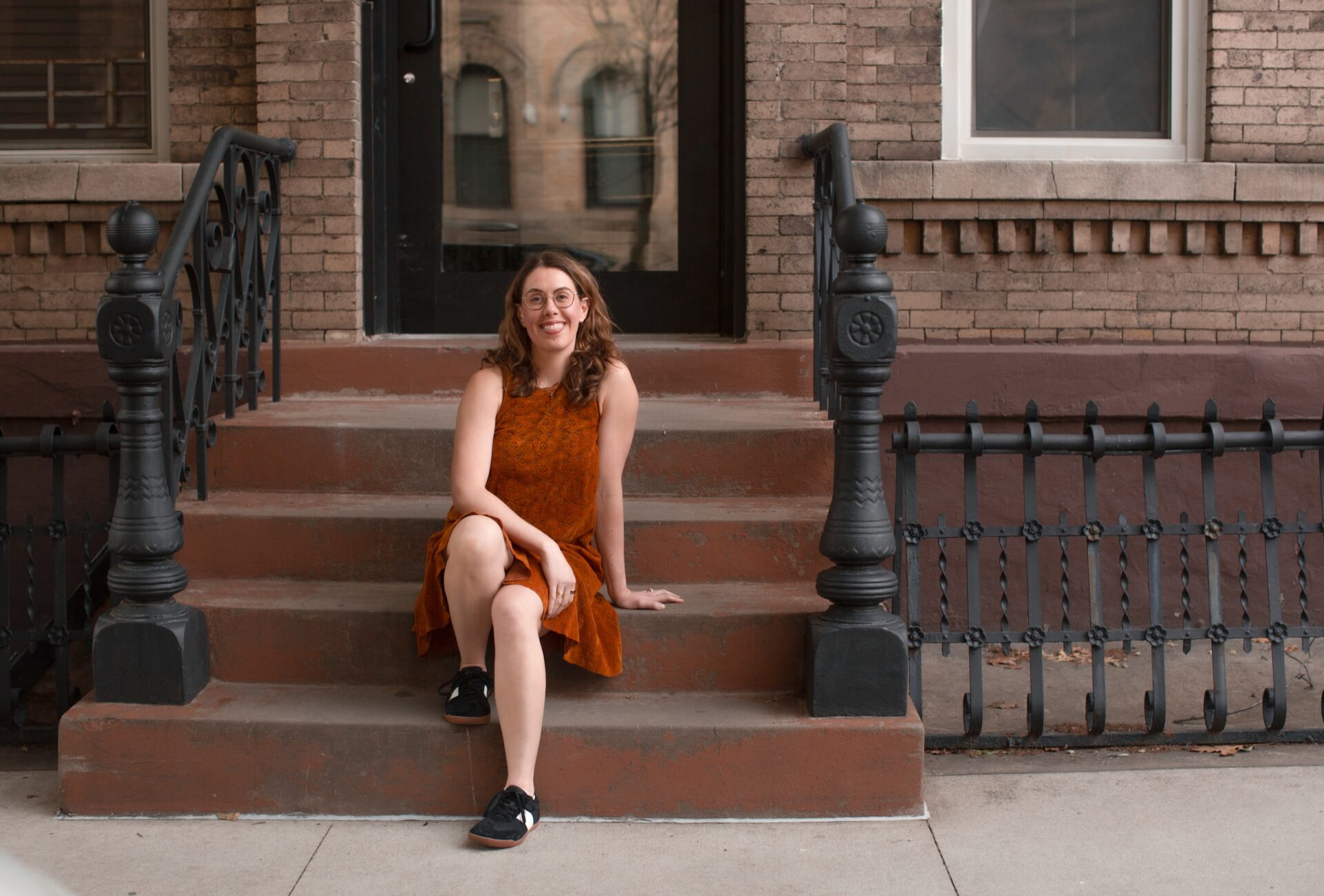
Growing up, Juliette Seive wanted to be a detective. Mostly, she jokes, because she was “really nosy,” but also because solving a mystery can be a kind of game.
“It’s a puzzle and you have to figure it out,” she explains. “There’s something about that that’s inherently very appealing to me.”
It’s fitting, then, that Seive now works on the team behind The New York Times Games, home of such household names as Wordle, Spelling Bee, and, of course, the Times’ Crossword. Every day, millions of players from across the globe visit the Games website to complete their daily puzzles and compare results with friends and strangers alike. As managing director of research, it’s Seive’s job to comb through the feedback and data from players to understand what kinds of games and experiences they enjoy and why. It’s a lot like detective work, and it’s definitely a kind of puzzle.
“People come to the Games site for a variety of reasons,” Seive says. “It could be to make your brain work, to push it to different limits. Maybe you work with words all day long and so you want to do some Sudoku. Maybe your friends are playing Wordle and you want to be part of the conversation. What I try to remind the team of every day is that people have these core reasons why they’re going to come here, and the more that we can put those to the forefront and let people play, the more they’re going to keep coming back.”
Seive’s own journey to the Times’ Games team was a roundabout one, but her liberal arts education at UT Austin proved to be the perfect opening move.
She first set foot on UT Austin’s campus the day she arrived for freshman orientation. Her family, who emigrated from Paris to Texas when she was young, didn’t know about college visits, let alone any other part of the American college application process. But as a student in a Texas high school, Seive had heard a lot about UT, and after being accepted into its Liberal Arts Honors Program (LAH) she knew she could have the best of both worlds: membership in a small, selective community of student scholars along with the resources and opportunities of a flagship research university.
From that very first moment on the Forty Acres, Seive knew she was in the right place. “It sounds silly to say, but there was a lot of energy,” she remembers. “The excitement of students coming in, the hope and potential that everyone has. I could really feel it when I was there.”
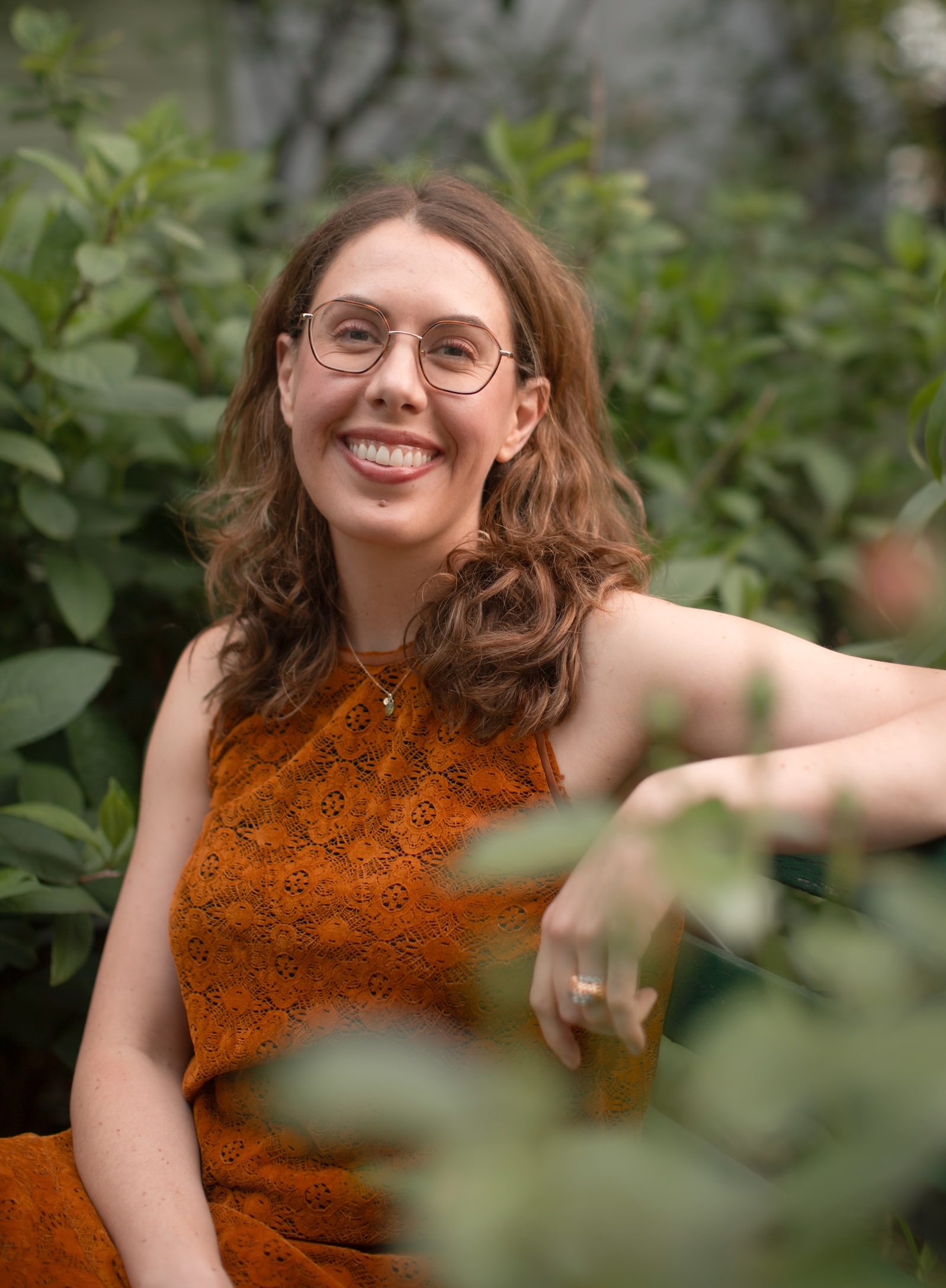
That energy propelled Seive through an incredibly busy four years. Inspired to pursue everything that interested her, she quickly began accumulating majors and certificates from across the liberal arts and beyond. She studied history, French, Portuguese, and Italian, then became interested in the places where her fields overlapped. Eventually Seive assembled a one-of-a-kind humanities major that combined linguistics, history, and computer science, complete with a thesis project building a computer model to help evaluate the treatment of race in TinTin comics.
On top of her coursework, Seive also participated in COLA-sponsored opportunities like the Normandy Scholars Program. “That program, for me, was really pivotal,” she says. “It was such an important world moment, and we were getting all these different perspectives about it and exchanging thoughts and ideas on really hard topics. I found that so critical.”
Through all of her experiences in the liberal arts, from LAH seminars to the shores of France, Seive was both exploring all that she found interesting and beginning to consider how she could apply her humanities skills outside of the classroom. In practice, that meant narrowing in on some of the liberal arts’ biggest questions — What can we learn from the past? How does language shape our understanding of the world? — and using her growing computer science and software engineering skills to try and answer them. And so, after graduating with her BA in humanistic studies, Seive immediately enrolled in the university’s School of Information for a master’s degree in information sciences.
At the I School and during internships with companies including CapitalOne and Athena Health, Seive continued refining her model building in pursuit of better understanding people. But she also began questioning what assumptions went into the models in the first place, which in turn led her to ask who exactly was making decisions about what to include and what to ignore.
“I take it back to history,” Seive says. “The books that are written and the perspectives that are told — it’s the same thing when corporations say ‘Here’s our audience and here’s what they care about.’ Someone had to write that, and then that narrative gets carried along. But I think back to my history classes where we asked, ‘Who wrote this? Why did they write it, and who did they write it for?’”
After six years at UT Austin, Seive finished her master’s degree and decided she was ready for something different. So, she moved to California and took a job with Ford Motor Company exploring self-driving cars. That role soon expanded into stints with Disney and Universal as they began to explore the possibilities of autonomous elements in their theme parks.
Then The New York Times got in touch. They were looking for someone to help revamp their newsletters, and while Seive had long promised herself she’d never move to New York, she found the job too good to pass up.
Her move to the Games team came shortly after. “They needed someone, and my name came up. But also, believe it or not, people were less interested in working on Games,” she remembers. “There was an element of fun, but it was still kind of the little sidecar. People were like, what’s really going on over there?”
To Seive, the unknown was what made the Games role so appealing. The team’s working assumption was that the Games audience was essentially identical to that of the Times generally, but no one knew for sure. Drawing on her years of experience pushing beyond assumptions, Seive quickly got to work digging into the data to help the team understand both who their current players were and what they could do to reach more.
Then the Times acquired Wordle and their player audience began to grow almost exponentially. So did their offerings: Within a few years, games like Connections and Strands were added to the paper’s existing stable of games, and the Games site was drawing billions of plays a year.
The numbers at play are hard to comprehend, but Seive says she and her team are careful to remember that each player is a person first and foremost. Even their decision to refer to players as players, rather than the industry standard “user,” reflects this focus on Games visitors as well-rounded people with human needs, desires, wants, and worries.
Indeed, Seive sees the desire to play games at all as inherently human. “At the end of the day, I think the thing that is most true in the world is that you are born and then you die. Those two things for sure happen,” she says. “And the third thing is that humans seek joy and play in their lives. No matter how long or short it is, there’s some search for that. And I feel like games are so key to who people are that it makes it a fascinating place to study people.”
This human-focused approach characterizes every aspect of the Games project. Not only does Seive’s research emphasize the humanity of the site’s players, the games themselves are human-designed and -edited. There’s a personality to them, a sense that the person setting the puzzle has a consistent, knowable perspective. And many of the games are rooted in memories of classic games as sites of connection and meaning.
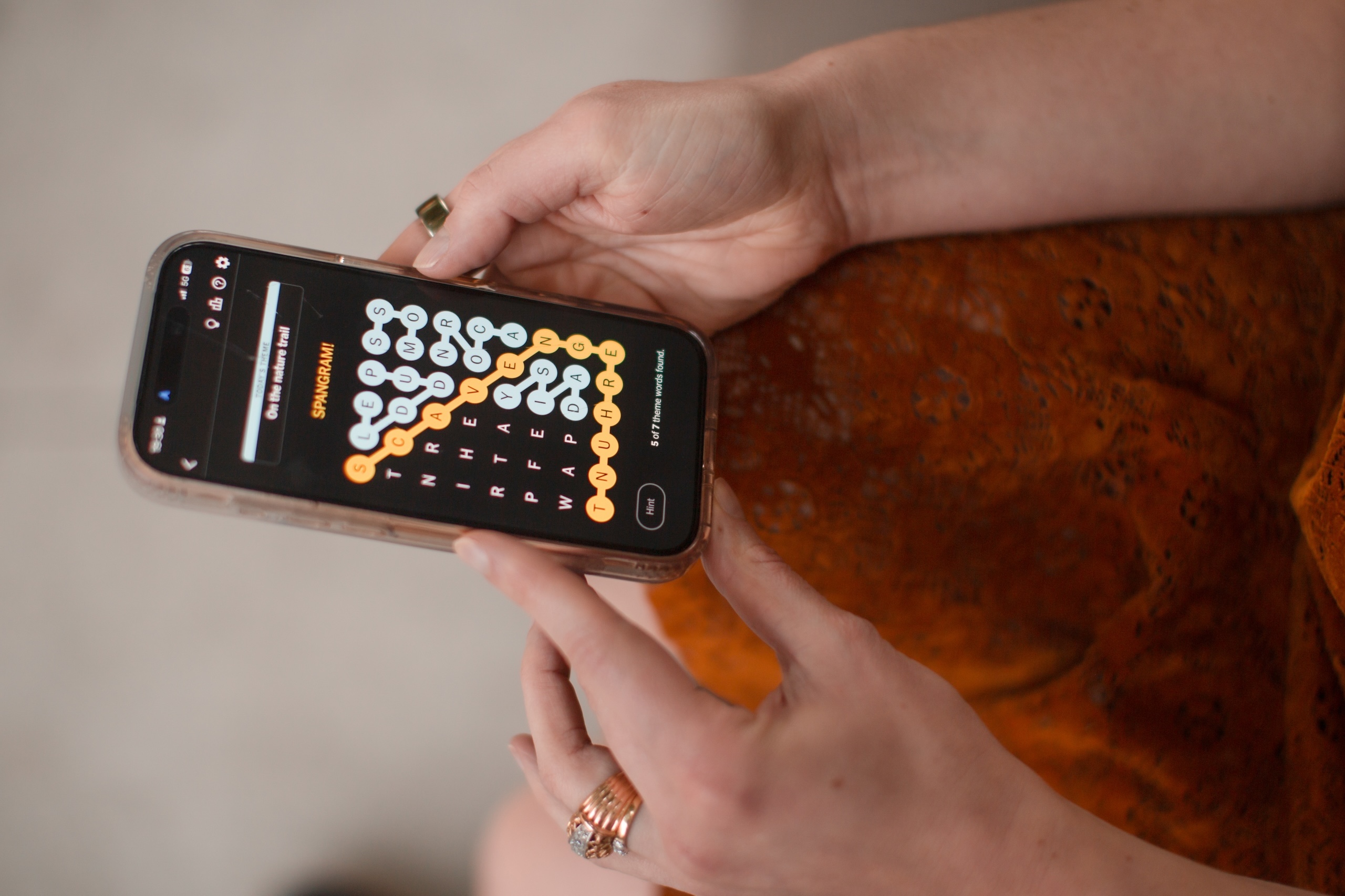
Take Strands, the Times’ version of a word search puzzle. Seive came up with the initial idea for the game after talking with her husband about games they enjoyed playing while growing up. His fond memories of playing word searches with his grandma made Seive consider the format more carefully.
“One of the big things people talk about is that they love that New York Times games are often these classic games with a twist. There’s this sense that there’s something familiar,” she explains. “And in my research I’d seen that the word game space was worth continuing to develop. So I was like, okay, a word search. I can work with that.”
Rather than a typical word search, where the words to find are provided by the game maker, Seive decided to keep the words secret and have them fill up the board with color as the words were found. Later, the team added a theme.
“Part of what I find really fun is when, as you’re solving a game, the more you figure out the more it’s like the falling of dominoes,” she says. “I was really looking to make sure that the game had that kind of momentum to it.”
In addition to the daily theme, one of the defining elements in the Strands game is the “spangram,” a word that crosses the puzzle to touch at least two sides of the grid. At first Seive wanted a word that touched all four sides, but as the game went through the development process the team pointed out that this would significantly limit the number of possible puzzles. They suggested having the spangram touch two sides instead, a change that preserved both the puzzle’s unique twist and its longevity.
These and other tweaks made during the development and release of Strands are simply part and parcel of the Games team’s collaborative process, and that collaboration is necessary to refine excellent raw ideas into games with broad appeal and near-seamless play experience. It’s also part of the inspiration for Seive’s advice to new COLA graduates.
This spring, almost a decade after she graduated with her humanities degree, Seive returned to the College of Liberal Arts to address a new generation of liberal arts students. Her advice, delivered at the commencement ceremony for the college’s Departments of History and English, pulls from both her own experience as a COLA student, eager for challenging conversations and big questions, and her years on the Games team studying people and developing new puzzles.
“I’ve been thinking so much about what advice to give, and there’s two things that have really come up for me,” Seive says. “The first one is, you never know. You never know where things are going to lead, and it’s something I know can feel so scary and intimidating. But that openness is what allows you to move through the world. There should be a sense of willingness to say, ‘This isn’t what I had planned or what I thought would happen, and that’s okay. I’m going to try to do this anyway.’”
The second? “People have so many ideas, and one thing I’ve seen a few times is the sense of, ‘That’s my idea, and I need to think about it on my own,’” Seive says. “But that’s so detrimental to the idea that you’re having. The best ideas I’ve ever had have involved multiple people.”
“This goes back to the education these students have had, but sharing ideas, talking with others, saying you don’t know, asking ‘why do you think that’ — that’s the fastest way to feel fulfilled,” she concludes. “That’s what I think we should all be in pursuit of every day.” And for the graduating class of 2026, it may be the first play in a very good game.