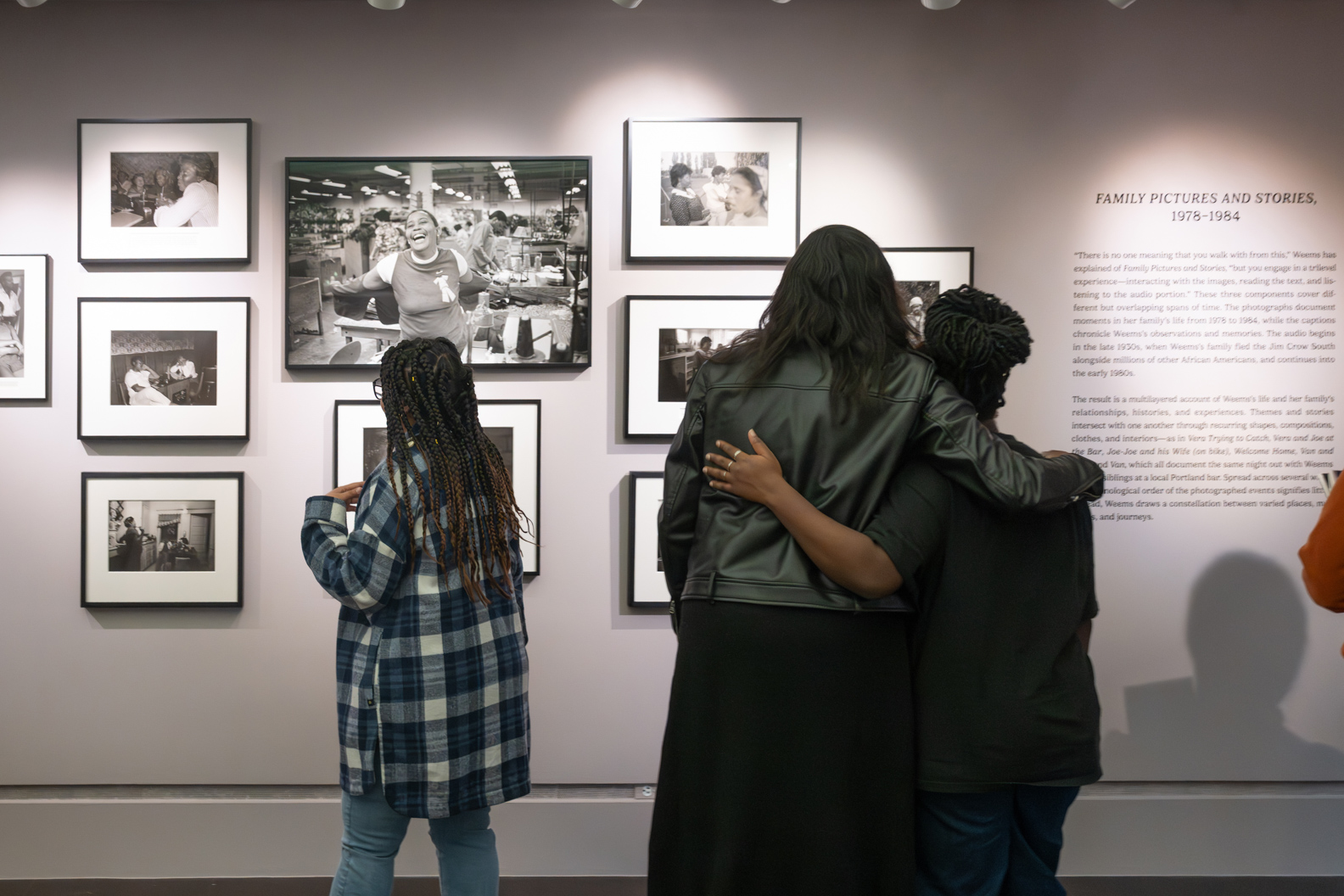
Students at UT Austin know the Jester Center for many things. It’s where thousands live, eat, and study. It houses resources like the Malcolm X Lounge and The Sanger Learning Center, along with a Starbucks and a Wendy’s. But what many students and visitors may not realize is that Jester’s second floor is also home to a gallery that regularly hosts the work of celebrated artists like Melvin Edwards, Alicia Henry, and Carrie Mae Weems — and it’s open to the public, students very much included.
That gallery, the Christian-Green Gallery, is one of a duo that make up UT’s Art Galleries at Black Studies (AGBS). Alongside its sister gallery, the Idea Lab in the Gordon-White Building, it highlights modern and contemporary works of art from Africa and the African diaspora and makes them accessible to students, researchers, and the public at large. AGBS also brings these works directly to the greater Central Texas community through hosted symposiums, collaborations with other area institutions, and more.
“I think our biggest mission is to provide people who visit the gallery with the feeling of ownership of art generally,” says Cherise Smith, AGBS’s executive director and a professor of African and African diaspora studies and art history. “We want to make everybody feel like they are welcome to have art, to be surrounded by art, and to engage with it. And that mission to make art accessible has always been part and parcel with the teaching mission of the university and of the college.”
That mission, and AGBS at large, can trace their roots back to 2005. That’s when Smith first joined The University of Texas at Austin as a faculty member affiliated with both the Department of Art and Art History and what was then the Center for African American Studies. The center was directed by Ted Gordon, son of art collectors Edmund Gordon, a famous educational psychologist, and physician Susan Gitt Gordon, and even in those early days it made a point of showing art in its conference rooms and offices. One such exhibition specifically spotlighted the work of Charles White, an influential artist and close friend of the Gordons (UT’s Gordon-White building was later named for both families).
Years later, ahead of a renovation of those offices and conference rooms, Smith had the idea to create designated gallery spaces that would enable UT’s Department of African and African Diaspora Studies to host regular exhibitions. Alongside the galleries, AGBS also built custom, climate-controlled storage to house its rapidly expanding collection of related artworks.
This combination of resources — gallery space, designated art storage, and access to world-class scholars — paved the way for a gift that would transform AGBS. Local art collectors Joyce Christian and Rudy Green, future namesakes of the Christian-Green Gallery, were looking to find a permanent home for their collection of Caribbean diasporic and African American art, and AGBS had become the ideal host.
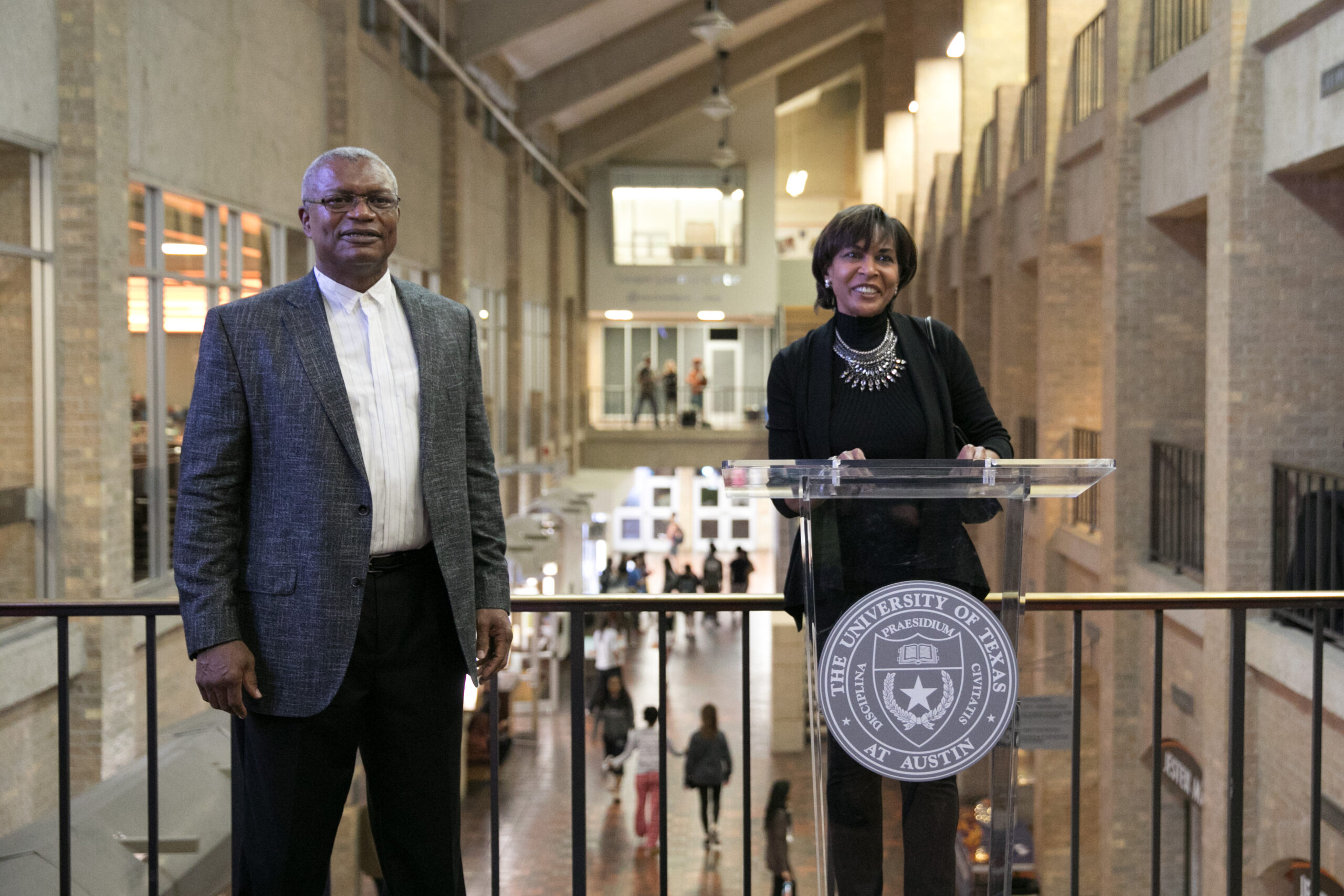
“They really liked the idea of having a dedicated art space where the work would be shown and also knowing that there were art historians at UT who were studying the art of Africa and its diaspora,” Smith says. “So that’s how the galleries came to exist. It was these collectors with the promise of donating work to us, a space that became empty, and having the scholars here to work on the art and train students to make knowledge about the artworks.”
In the decade since its official founding in 2016, AGBS has worked to bring contemporary and modern art from the African diaspora to the Forty Acres, and to bring students and faculty members closer to the art. It hosts several exhibitions a year across both the Christian-Green Gallery and the Idea Lab, and it is these exhibitions that bring the work of artists like Edwards and Weems to campus. They also bring in visitors, particularly academic visitors — over 2,000 students toured the galleries this last year.
In addition to displaying works by established artists, AGBS’s exhibitions — overseen by curator Phillip A. Townsend and a rotating cast of guest curators and research fellows — also showcase pieces from its extensive permanent collection. Building on the Gordon gift of Charles White’s works and the collections of Christian and Green, AGBS’s collection has grown to include almost 1,300 pieces of art, and it continues to expand. It is now the largest art collection in the College of Liberal Arts and serves as an invaluable resource for scholars, educators, and students across UT Austin.
“These are modern and contemporary works from all over the globe,” Townsend says, and in previous years AGBS has worked to continue expanding the collection to be even more comprehensive. When an audit of the collection showed gaps of work from women artists in Brazil and parts of the southern U.S., for example, AGBS worked to identify and acquire more such pieces.
But the ultimate goal isn’t to simply have the most complete collection possible. “The collection’s primary purpose is to be a teaching tool,” Townsend explains. He accordingly spends a lot of time reviewing class syllabi from a wide variety of disciplines to identify subject area overlaps the collection might be able to speak to, and he thinks hard about how professors may use the collection in their teaching.
“I’m thinking about how these artworks can be used or accessed by people around campus, so I’m constantly looking for things that will be exciting for students, because they’re our primary audience,” he says. “It doesn’t matter if an object is historically significant. If I know students are not going to want to see or write about it, it’s not a fit for us.”
In addition to serving as a teaching tool, the breadth of AGBS’s collection — and its teams’ extensive curatorial experience — also helps the institution to build long‑term relationships with artists, lenders, and other institutions. Take the lead-up to Carrie Mae Weems: Something Grander Still, the Christian-Green Gallery’s most recent exhibition. Like all AGBS exhibitions, it took years to plan and coordinate, but it was ultimately made possible by the reputation of the institution and its researchers.
“We at AGBS had a long relationship with Carrie. One of the things that enabled this exhibition was that Cherise and I had done a public program with her at UT a few years ago, and we’re both writing books about her work,” explains Ariel Evans, AGBS’ contemporary art research fellow and the curator of Something Grander Still. “That scholarly commitment was one of the things that drew her to be willing to do this with us.”
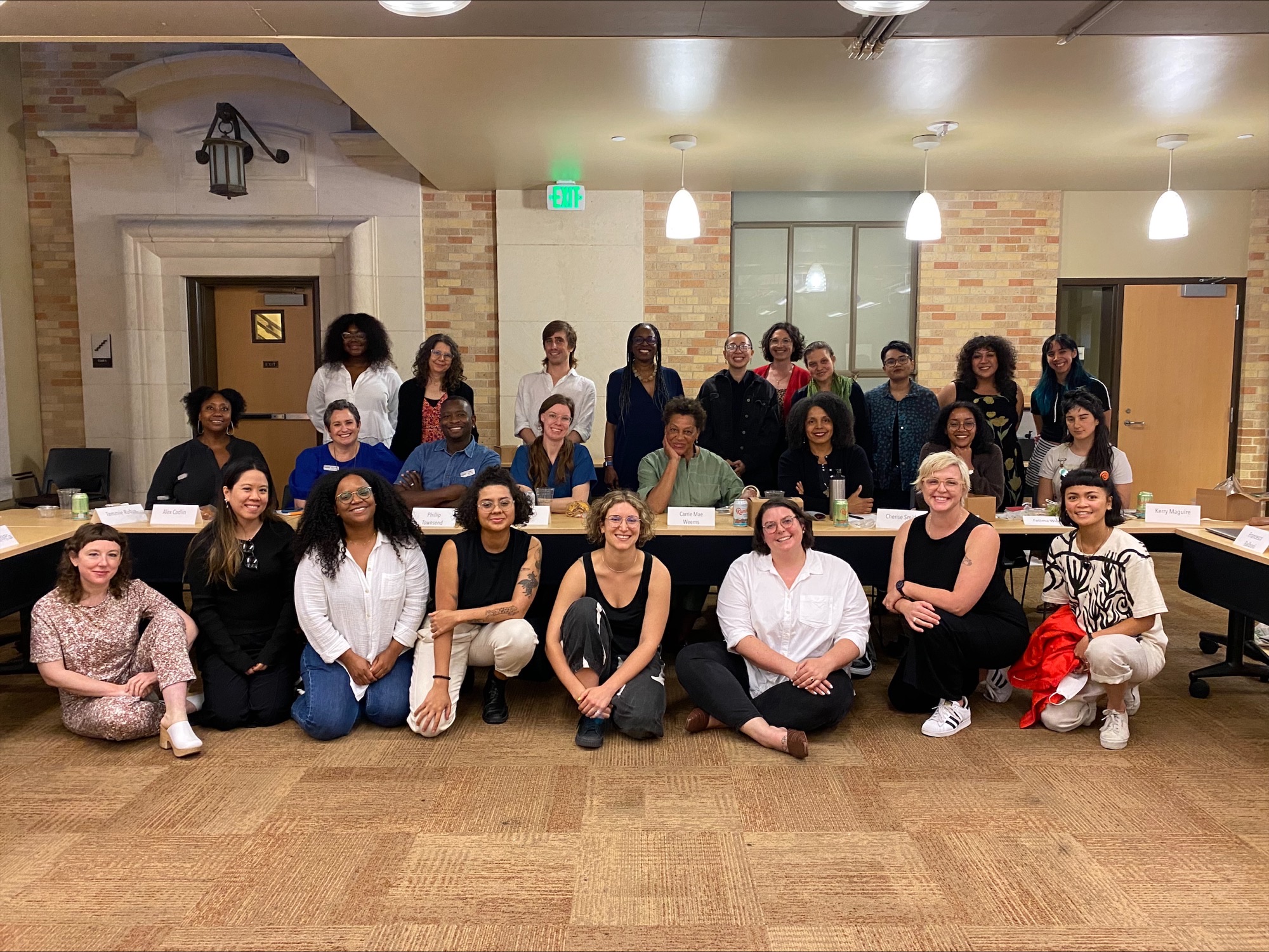
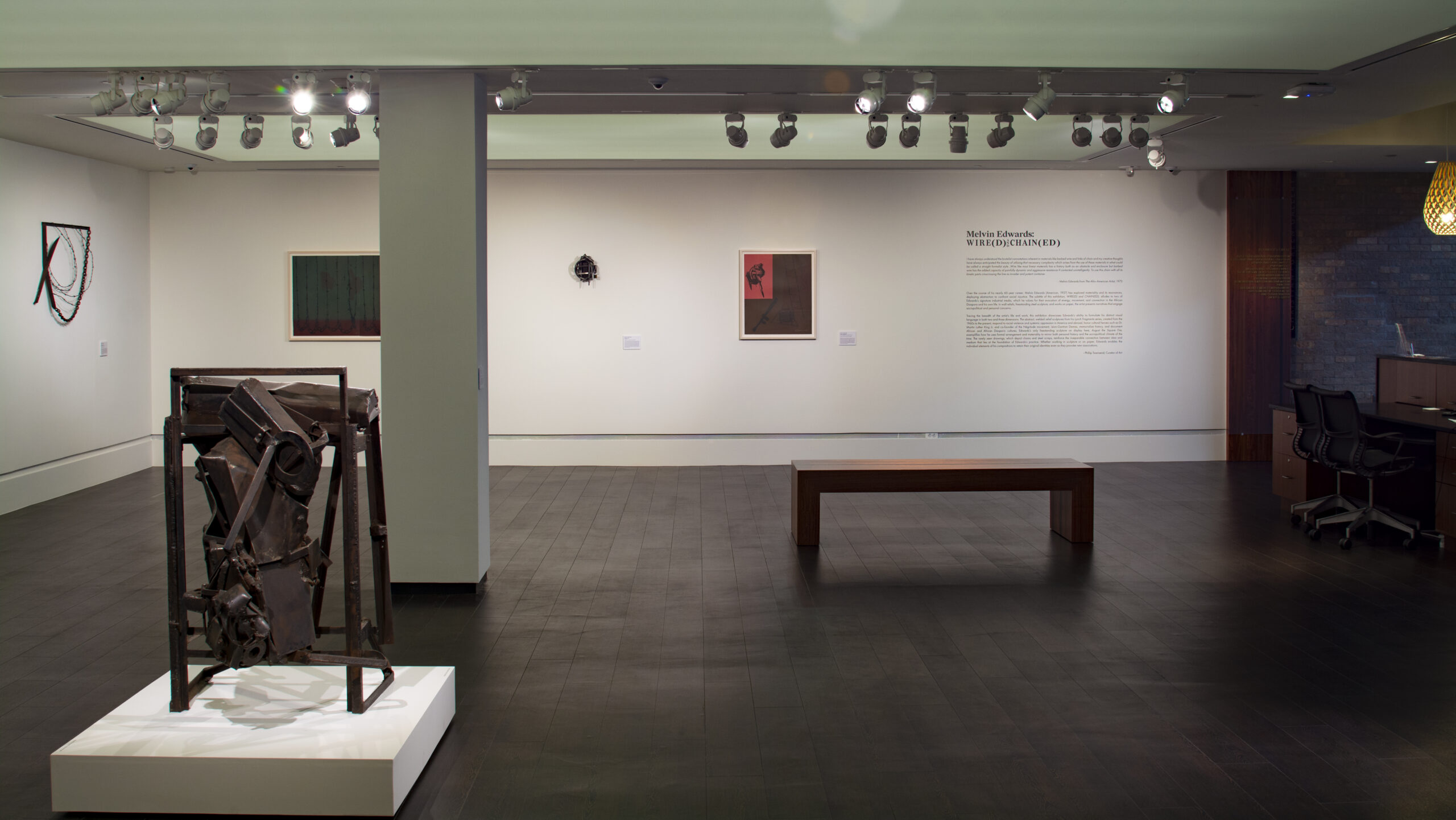
Reflecting on AGBS’s first decade, Smith says some exhibitions in particular stand out. An early show featuring drawings of the life of Rep. John Lewis alongside other photographs and ephemera from the Civil Rights Movement is still a favorite. Another highlight is a previous show on the work of artist Melvin Edwards, who was born in Texas before the state’s universities were desegregated. That background, Smith says, made his show at AGBS all the more profound.
“When Edwards was born, he couldn’t have come to school at UT,” Smith says. “So he left Texas, went on to study on the east coast, and became this internationally famous artist. He never would have thought that the Christian-Green Gallery would exist at the University of Texas, that he would show there, and that UT would be this welcoming place to study his art. Then we did an exhibition of his work here, and he had a residence with us. He gave a talk, he engaged with students, and it was a beautiful full-circle thing.”
As the AGBS team continue planning for future exhibitions, acquisitions, and student experiences, they emphasize the importance of remaining a welcoming place for the whole UT community to experience and engage with art that explores all aspects of the African diaspora.
“We’re thinking about the diaspora, and that includes people of all ages, nationalities, gender expressions — it’s a very global and a very human collection,” says Townsend. “In the exhibitions that we mount, throughout the project spaces in the Gordon-White Building, using our permanent collection, we are trying to reflect everybody on campus.”
That project continues this fall with the opening of the Christian-Green Gallery’s new show, Made in Texas, in early September. Curated by Townsend, the show will explore Texas’s place in larger conversations about regionalism, the climate, labor economies, and more through the work of Texas-born artists. The goal, Townsend says, is to open space for dialogue and draw attention to the ways in which contemporary art can challenge assumptions, foster connection, and open new possibilities.
So, the next time you find yourself walking by Jester, remember: There’s a whole world of art waiting for you just inside.