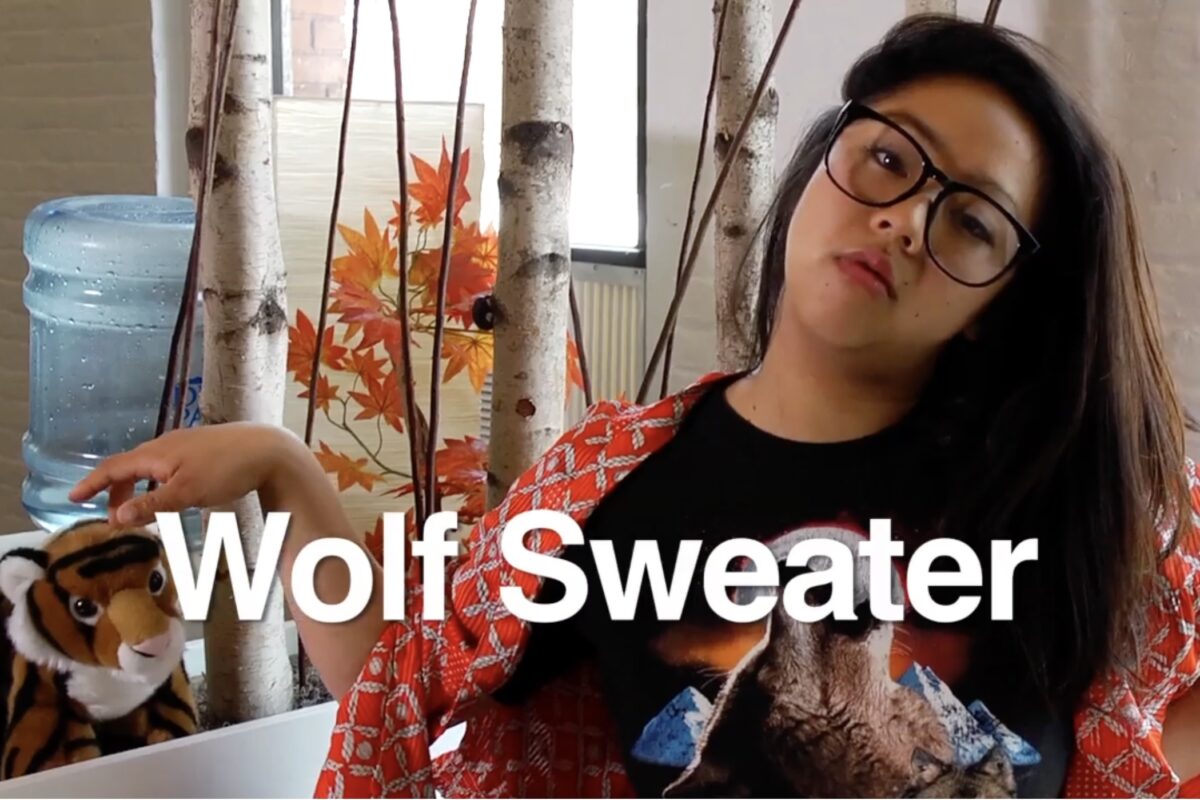
In 2011, NYU junior Douglas Widick pulled together a small group of his fellow undergraduates, along with a few recent alums, to record a music video for a funny song he’d written. “Hipsters (are roaming the campus),” as he called it, was a goof on the exceptionally high preponderance of hipsters on and around NYU’s campus in Greenwich Village.
The video (which you can watch on YouTube) is impressively executed, from the costume design to the choreography to the music to the visual humor. There’s an extraordinary refrain about hipsters wearing clothes with images of wolves on them that’s been living rent free in my head for 15 years. It’s hilarious.
The video is also, though it wasn’t intended this way, a great promotional piece for NYU. It elevates its target by paying such exquisite, if mocking, attention to it. These hipsters may be ridiculous, but they’re also so captivating you can’t help but look. Go to NYU, is the implicit message, because you’ll be surrounded by hipsters, maybe even become one yourself. NYU is also a place, clearly, where the undergraduates are capable of making a video that’s as smart, funny, and slick as the latest digital short from Saturday Night Live (and, in fact, the video’s director, Paul Briganti, went on to work for SNL).
“Hipsters” has stayed with me for so long because, from the moment I first saw it as a young comms guy, it struck me as an example of the heights that higher ed marketing could achieve, in theory, if we could loosen up some of our institutional habits and inhibitions.
There are certainly a few elements in the video, like students smoking cigarettes and a simulated hipster sex scene, that would never survive our approvals gauntlet. But you could delete that stuff and it wouldn’t compromise the overall energy of the work. It’s hard, but not impossible, to imagine a university bureaucrat seeing the video and recognizing it for the marketing gift that it is. The much harder thing to imagine is that something like it could be deliberately engineered in the higher ed marketing lab.
“Hipsters” worked because its makers were so talented and driven. Briganti went on to big things. Stephanie Hsu, who was the choreographer and a cast member, was nominated in 2022 for a Best Supporting Actress Oscar for her performance in Everything Everywhere All at Once. Most of the other members of the cast, including Widick, are now working actors and comedians with various TV and film credits. It was lightning in a bottle, spontaneously generated. It’s foolish to think that bureaucratic stiffs like me could clone it.
Still, though, I have to wonder. We have lots of talented students at UT Austin, and many of them, thanks to social media, are extremely skilled in video production and editing. They’re as tuned in to the inside jokes, campus archetypes, and subtle rhythms of undergraduate life as students always have been. It doesn’t seem implausible that if we found the right people, and gave them creative license and a few thousand dollars, they could produce a fun and smart video for us.
I don’t have the faintest clue what our students would make in this hypothetical scenario, but that’s part of what’s so tantalizing about the thought experiment. What would we find out about who we are, and what life is like for students here, that would resonate with prospective students, accepted students, and alumni? Are there burnt orange turns of phrase yet to be coined? Would Matthew McConaughey be involved somehow? Which of our faculty are the richest targets for affectionate ribbing?
I remember from my own undergraduate days that there was a professor who taught the big political theory lecture and who wore a different sweater vest to every lecture. It became such an inside joke among my crew in the class that one of my friends started tracking it, doodling little sketches of each sweater vest in turn. There’s always a wealth of material.
Maybe we should give it a try. My fear, though, is that we couldn’t really handle failure.
We couldn’t do what aspirationally creative people, or entities, absolutely have to do if they want to succeed, which is to expect and make room for failure in the process. What if we set loose the students, or some hipster alums still roaming around Austin, and they come back to us with something that really isn’t very good? Maybe it has flashes of inspiration. You can squint and see the glimmer of what it could have been, if the conditions were more optimal, but it just isn’t good enough to send out to our various stakeholders. Could we analyze that failure, distill the lessons, and try again? And again and again until we got it right? Could we behave, as marketers, in the way we teach our students to behave as learners? I don’t know.