
What science can tell us about aging well
“At 50, everyone has the face he deserves,” said George Orwell. The implication is that the way we live impacts the way we age. The facial expressions we make throughout life, for instance, will determine our wrinkles, and presumably lines forged through smiling are more becoming than those made by frowning, fretting, and scowling.
Over the course of our lives, our brains undergo an even more dramatic transformation than our faces, and with greater variability. By the time we are eligible for Medicare, some of us will have the cognitive abilities of a person decades younger, others will be exhibiting signs of dementia, and most will be somewhere in between. But how much control might we have over these outcomes? Is there a neurological analog to smiling instead of frowning? And how can we make sure the brain we have in our older years is the brain we deserve (aspirational promise) and not the brain we deserve (punitive threat)?
I ask this not rhetorically but out of a deep sense of self interest. As someone with enough distance from youth to have shed my illusions of invincibility, I worry about the future of my brain, not to mention those of my family and friends. Knowing that many liberal arts faculty are doing research to unravel the mysteries of cognitive aging, I talked with a number of them in the hopes of getting answers to such pressing questions as “How important is sleep really?” and “Should I renew my gym membership?” (Short answers: very and yes.) In speaking with these researchers, I was reassured by how much science has progressed in this field. The human brain, with its billions of neurons and trillions of synapses, may be impossible to ever fully understand, but insights gleaned in recent decades already have practical implications, and more is being learned every day.
How Old is Your Brain?
I don’t want to worry you, but if you’re over 35, your brain is literally shrinking. The loss of both grey matter (brain cells) and white matter (the axons that connect brain cells) starts not long after our brains finish fully developing and gradually accelerates to an average rate of about 5% shrinkage per decade. Individual brains may shrink faster or slower, but none are immune. Even the brain of Albert Einstein, preserved to study his genius after his death at age 76, would have been lighter on neurons post-mortem than during its relativity-theorizing heyday.
Much of this shrinkage occurs in the prefrontal cortex, the last portion of the brain to develop and the area that controls our executive functions: planning, task switching, managing information.
As a result, older adults may have a harder time organizing memories and ignoring irrelevant distractions (like the conversation at the next table). Stereotypical “senior moments,” like forgetting the location of one’s keys or struggling to find a word, aren’t indicative of memory loss so much as retrieval error. Importantly, these changes — all part of normal aging — don’t significantly impair a person’s ability to function.
Some aspects of cognitive functioning also improve with age. Episodic memory, which is the ability to recall events and experiences in our lives, takes a hit as we grow older, but semantic memory — our reservoir of worldly knowledge — expands over time.
“We know that with age there is an accumulation of knowledge,” says psychology professor Audrey Duarte. “Living a longer period of time, you’re exposed to more things, you’ve learned more words, you know more concepts.” This greater knowledge isn’t just handy for trivia nights. It can give older adults an edge in pattern recognition, complex problem solving, and other skills that rely on accumulated experience.
But while everybody’s brain changes for both better and worse, how much they change throughout our lives varies considerably between individuals. “Brain age,” as measured by MRI and compared against averages, can differ considerably from chronological age. You may have heard of so-called “super agers,” people over 80 who retain the mental sharpness of someone decades younger. MRIs of their brains show notably less shrinkage than expected for their chronological age; their “brain age” is youthful, even spry. Conversely, people with dementia, the most common cause of which is Alzheimer’s disease, exhibit more widespread and rapid loss of brain tissue, particularly in the hippocampus, a region critical for memory formation and retention. Those with advanced dementia don’t just forget where they put their keys; they forget what they had for breakfast or what year it is, they don’t recognize family members, they lose the ability to live independently.
The neuronal deterioration that results in dementia can be seen on MRI only after significant damage has already occurred, and MRIs aren’t exactly routine in annual physicals. Newer technology, like blood tests for proteins associated with Alzheimer’s, can help identify those most at risk before symptoms arise, but the real key to improving outcomes is figuring out why some people are more prone to cognitive decline in the first place.
A Lifetime of Exposures
You don’t just wake up one day with wrinkles; they develop gradually. The appearance of your older face is determined not just by your proportion of smiling to frowning but also by genetic and environmental influences. How much pollution were you exposed to? Did you smoke? Did you reapply sunscreen after swimming like the bottle instructed?
The same is true for your brain. You don’t just wake up one day with dementia. Instead, neurodegeneration is the culmination of multiple factors, some of them more within our control than others. It’s the product of what Debra Umberson describes as “a lifetime of exposures.”

Umberson, a professor of sociology, is also the director of UT Austin’s Center on Aging and Population Sciences (CAPS). CAPS is one of about a dozen centers funded by the National Institutes of Health to research disparities in health and aging across the life course, and its research aims to examine population-level data in order to determine which groups are most vulnerable to premature cognitive decline and why. Significantly, the center is highly interdisciplinary, drawing faculty from across the university who study the impacts of everything from genes to education to air quality. This is crucial, Umberson says, because the factors that influence aging are both complex and deeply interconnected.
“The bio-psycho-social pathways are so interwoven,” she says. “We try to pull them apart to understand them, but to fully understand them we have to know how they fit together.”
Umberson’s own research focuses on the impacts of social relationships, isolation, and traumatic events like losing a family member. To illustrate the complex interplay of exposures, she notes that the stress of bereavement has physiological effects — it strains the cardiovascular system and ramps up inflammation — and can also trigger behaviors, like excessive drinking and social withdrawal, that then produce further physiological effects. All of these factors have been shown to increase the risk of developing dementia, and risk factors add up over time.
“It’s not that you were born with a brain that was destined to fail,” Umberson explains. “That’s rare. What’s more common is that you had a lifetime of exposures to your social and physical environment that’s going to influence your brain aging.” And that, she says, means there is ample room for interventions.
In an era when an increasing number of people are spending an increasing amount of time alone, Umberson urges us to prioritize maintaining social connections. In addition to the protective effects of human interaction, she explains, it’s often the people around us — spouses, family members, close friends — who first notice signs of cognitive decline and who nudge us to seek medical care.
Aging research, says Umberson, has not always acknowledged that the causes of dementia are both cumulative and multifactorial. For much of its history, the field was more focused on treatment than prevention.
“A couple decades ago, you had to convince doctors and biologists that stress mattered,” she says, “and now you don’t.”
Psychology professor Andreana Haley, a CAPS member who studies the impacts of midlife diet and metabolic health on later-life cognitive outcomes, has also noticed this shift toward early detection and prevention. When her Clinical Neuroscience Lab first started looking for early indicators of cognitive vulnerability among middle aged adults back in 2007, colleagues thought it was a waste of time. Surely this population was still too young and healthy to exhibit measurable signs of future decline?
“Now everyone is all about midlife, early risk, and vulnerability,” Haley says, noting the many subtler brain changes that may be precursors of dementia. “Because you can see it, and clearly, before cognitive function is clinically impaired.”
Recently, Haley’s lab expanded its scope from early detection to intervention, focusing on the role of Metabolic syndrome (MetS) in brain aging. The syndrome is categorized by a combination of metabolic factors, including high blood pressure, high blood sugar, and excessive abdominal fat. People with MetS often have measured “brain ages” older than their chronological ages and are at increased risk for developing dementia.
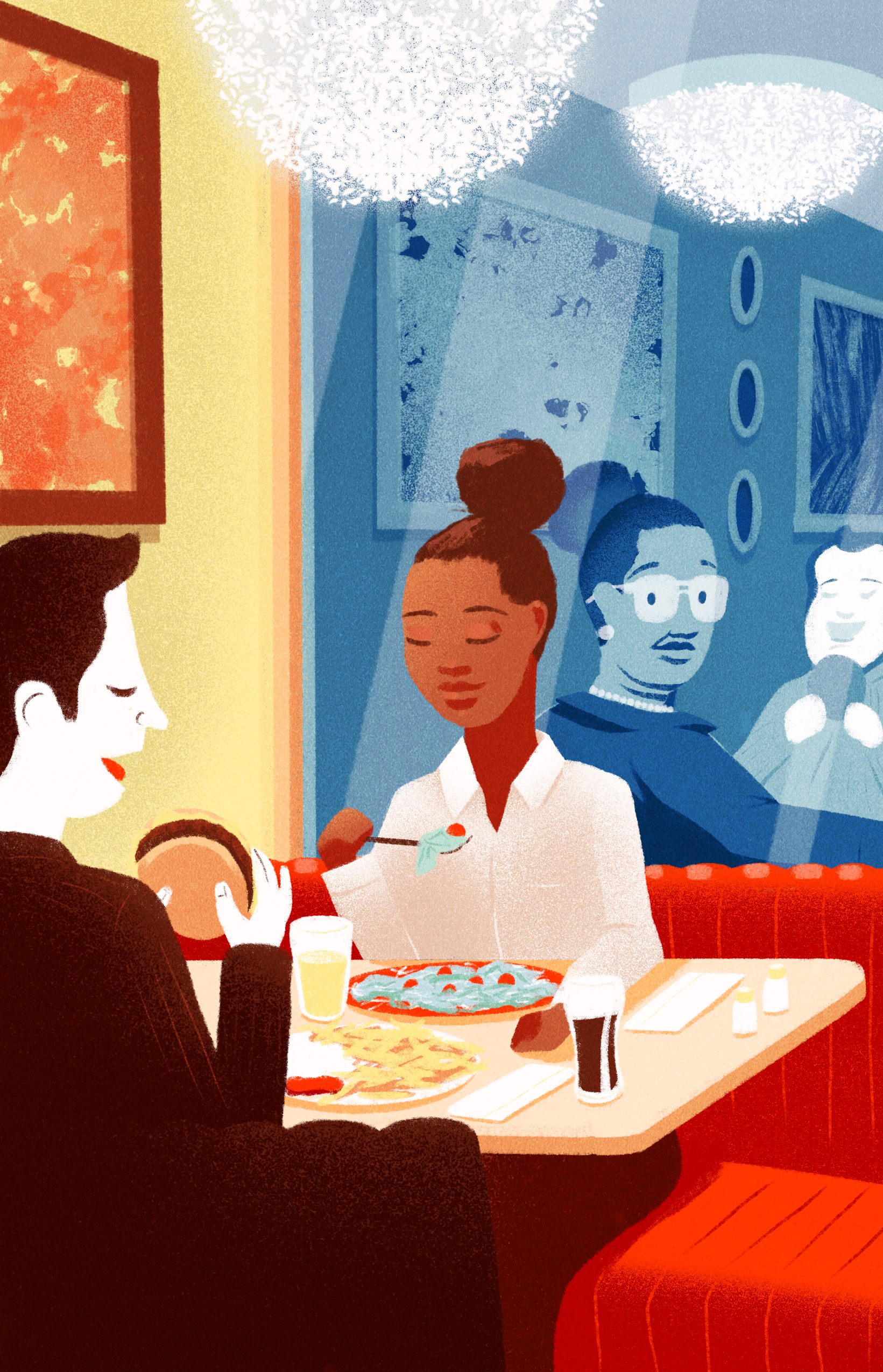
After years of documenting correlations between metabolic health and brain health, Haley recently decided to test whether improving the former might impact the latter. Could the risks posed by MetS be reduced or reversed?
Her lab first zeroed in on one possible mechanism for how MetS might harm the brain: Elevated liver fat can cause toxic levels of an associated neurochemical called glutamate. Then, as part of a formal study, Haley examined whether either of two healthy diets — one low in calories and one low in carbohydrates — could help middle aged subjects with MetS lower their liver fat and, by connection, their glutamate.
The results were exactly what she had hoped: After just two weeks on either diet, patients showed both decreased liver fat and decreased glutamate in the brain. What makes this exciting, Haley says, is that it suggests that we can reduce our risk of dementia by changing our habits, even in middle age.
And while her study focused on liver fat, she notes that the diets her subjects followed have the potential to improve other factors impacting cognitive health. For example, vascular dementia, the second most common form after Alzheimer’s, is caused by insufficient blood flow to the brain, and lifestyle changes like healthy eating and exercise can help prevent it.
Cognitive Reserve
Minimizing exposures that are linked to accelerated brain aging and dementia is one way of improving one’s odds of future brain health. Another is building “cognitive reserve.”
A somewhat fuzzy concept, the idea of cognitive reserve emerged in response to a surprising finding: The autopsies of some people who hadn’t exhibited any symptoms of dementia when they were alive revealed brains with signs of significant neurodegeneration, such as the abnormal protein buildup associated with advanced Alzheimer’s. Researchers don’t yet know why, but it seems that some brains can withstand more injury before cognition is impaired. In other words, they have a higher cognitive reserve.
But how do we build cognitive reserve? Chandra Muller, a professor of sociology, believes education may be the key. She has studied the impacts of education throughout her career, and about a decade ago, she teamed up with neuroscientists and sociologists at nine other institutions to explore if it could also predict cognitive aging outcomes.
Their process started with a collection of massive datasets tracking education and career outcomes compiled by the U.S. Department of Education. Beginning in 1972, the department has tracked groups of high school students through their first 15 years in college and the workforce to learn what impact their education had on their lives. Would certain school features improve students’ chances of attending college or landing high earning jobs?
While exploring these datasets with her collaborators, Muller started thinking about the two earliest cohorts of students, who were in high school in 1972 and 1980. Those people were getting older. How were they doing? Could she locate them and find out?
Muller contacted the Department of Education, which agreed to unearth files on tens of thousands of subjects so she and her team could follow up with them. With significant financial support from the National Institute on Aging, Muller and her team tracked down over 95% of the subjects and, in many cases, assessed their cognitive health using surveys, blood tests, and (for the 1972 cohort) even MRIs.
The dataset has been a windfall for Muller’s research. As part of the original surveys, the Education Department had gathered detailed information about high schools’ course offerings and resources and about the outcomes of students from a nationally representative sample of income levels and ethnicities. They had stopped following up after people had settled into careers, Muller explains, because they had assumed that the impacts of education were by that point fully evident. “Well, it turns out, not even close!” she says.
A good education may be predictive not just of a better job but of greater cognitive reserve decades down the road. “You can predict about 70% of people’s cognition at age 60 if you know their high school stuff,” including the quality of the schools they attended and the classes they took, Muller says.
Muller suspects the reason education is so important is that it “gives you a toolkit” that includes problem solving and critical thinking skills that make it easier to navigate life’s challenges. She also notes that while education in early life has the most significant impact, pursuing education later in life can also yield cognitive benefits. “We need to stop thinking of education as something we finish,” she says. Learning something new, whether you go back to school or read at home, can help expand your cognitive reserve at any age.
There are additional things we can do to build cognitive reserve. Umberson cites both social engagement and having a sense of purpose as beneficial to our brains and describes cognitive reserve as “putting money in the bank.” If we follow that financial analogy, we can imagine the exposures that increase dementia risk as inflation and unexpected expenses chipping away at our savings account. The more cognitive reserve we can add to that account, the more challenges we can withstand.
A Good Night’s Sleep
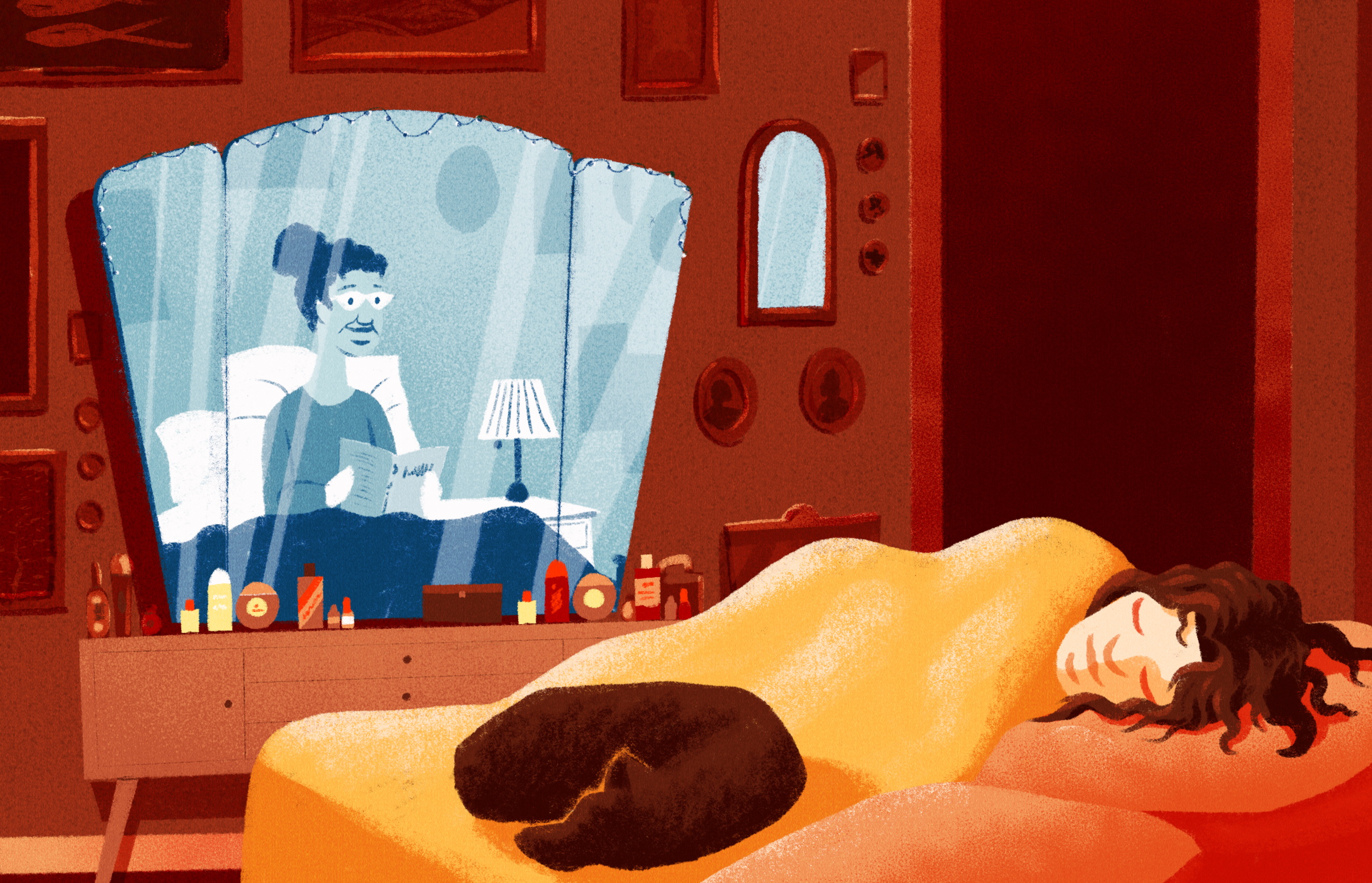
It’s hard to overstate the importance of sleep for cognitive functioning. As any college freshman coming off an all-night study session can tell you: without sleep, brain no work. But as we age, we encounter far greater impediments to sleep than final exams. Older adults are more likely to sleep restlessly, and they spend less time in slow-wave sleep, the stage where memory consolidation occurs. And while a single sleepless night makes it challenging to think clearly the next day, chronically poor sleep can be predictive of memory loss and cognitive decline.
That’s why sleep is one of the research interests at UT’s Memory and Aging Lab, which studies how memory changes throughout life. The lab, headed by psychologist Audrey Duarte, contains the usual array of computers, along with caps and wires used for EEGs — a test that measures the brain’s electrical activity — and a twin-sized mattress for research subjects to sleep on. But the most important piece of equipment is easy to miss. It’s a fabric strip the size and color of a Band-Aid, a novel piece of technology that will allow Duarte and her team to get more precise sleep data on more diverse populations.
Sleep studies, which can assess sleep quality by measuring brain waves, typically require a subject to stay at a lab overnight while wearing an EEG cap with wire sensors connected to a bulky machine. The study process is expensive, challenging to recruit subjects for, and may not even capture the most accurate sleep data. Unsurprisingly, many people find it hard to sleep in an unfamiliar space with a bunch of electrodes stuck to their head. But without a lot of reliable data about how well people are sleeping, it’s difficult for researchers to establish exactly how sleep affects memory as we age. That’s why the Band-Aid-sized strip — essentially a take-home EEG — is so valuable. Designed by researchers at Georgia Tech, where Duarte previously worked, it contains six flat electrodes that measure brainwaves during sleep and transmit them via Bluetooth to a tablet. All a subject has to do is affix the strip to their forehead before going to sleep in the comfort of their own bedroom.
The device’s ease of use means Duarte’s lab can reliably record a week’s worth of a subject’s sleep data rather than a single, often fitful, night. This is important because sleep quality varies, and having more data means greater certainty that the patterns observed in a subject are characteristic of how well they sleep and not just the result of an off night. Additionally, because it’s easier to recruit subjects for a study that doesn’t require sleeping in a lab, the research team can now include people who might previously have been excluded due to work and family responsibilities.
Broadening the population from which data is gathered is a central goal of Duarte’s lab because the quality of data is where research can fall short. In the work of untangling the many variables that shape cognitive aging outcomes, “our technology is not the limiting factor,” Duarte says. Science has good tools: MRIs to see what’s going on in the brain structurally; EEGs that can track brain activity in real time; AI modeling that might one day deliver personalized assessments of cognitive risk and targeted interventions. But models are only as good as the data they are trained on, and much of past neuroscience research was conducted on a narrow range of subjects — white, highly educated, from Western nations — that aren’t representative of the general population.
For this reason, Duarte and her team split their time between working in the lab — administering cognitive assessments and surveys or measuring subjects’ brain activity while they sleep or perform tasks — and leaving the lab to do community outreach. This outreach has, at times, impacted the direction of their research. Duarte says it was talking to people in the community that first pushed her to integrate a factor she had never thought to measure before — religiosity and spirituality — into her studies. She has since worked religion into study surveys and has found it to have a positive impact on aging outcomes, even mitigating some of the harms of poor sleep quality.
This doesn’t mean that those with a spiritual practice should ignore the importance of sleep. Duarte notes that many people wrongly assume that we need less sleep as we age simply because older adults tend to sleep less. While it’s true that children and teenagers require more sleep than adults, everyone over 18 should still be getting a minimum of seven hours a night if we want to keep our brains sharp.
Don’t Panic
Since starting this article, I’ve made an effort to get more sleep, the lack of which is easily my greatest vulnerability in terms of cognitive health. Unfortunately, it’s not going that well. It turns out that identifying a problem isn’t the same thing as solving it.
Habit change is hard, even under the best of circumstances, and as everyone I spoke to went to pains to point out, not everyone has the best of circumstances. Eating a Mediterranean diet, for instance, may be beyond some people’s means. Plans to get seven hours of sleep can be compromised by family obligations and other life stressors. We don’t get to choose our early education or the stability of our childhood family environments. And, of course, there is the ever-present influence of genetics, which sets the outer boundaries of our potential brain health and renders us more or less vulnerable to whatever risk factors we encounter throughout our lives. Despite what Orwell thought about wrinkles, nobody “deserves” dementia, and moving the needle on cognitive health will take more than just encouraging individuals to make healthier choices. It will require broader cultural change to make cognitive health a priority and ensure that everyone has access to the measures that can improve it.
It’s also useful to keep in mind that no single choice will either doom us to dementia or guarantee our entry into the pantheon of super-agers. When I ask Duarte if we should all be drinking more coffee — I read somewhere that caffeinated beverages are associated with reduced Alzheimer’s risk — she replies that while there is some correlational data to that effect, “it’s just one factor of many. I don’t want people to worry that they have to jump on every single thing they hear about.” This, she notes, is especially true for fad diets and any other buzzy miracle cure that hasn’t been rigorously studied.
Similarly, we shouldn’t despair if we sometimes fall short of our longevity-promoting goals. When I ask Haley to clarify what kinds of exercise we should prioritize, she recommends a combination of cardio and strength training but emphasizes that something is better than nothing. “If you can’t run a marathon, just get up and walk to the mailbox and go from there. Just keep putting one foot in front of the other.”