When people think of civic engagement, it is usually voting, campaigning, or holding public office that comes to mind. But for College of Liberal Arts students at The University of Texas at Austin, civic engagement can and does take many different forms.
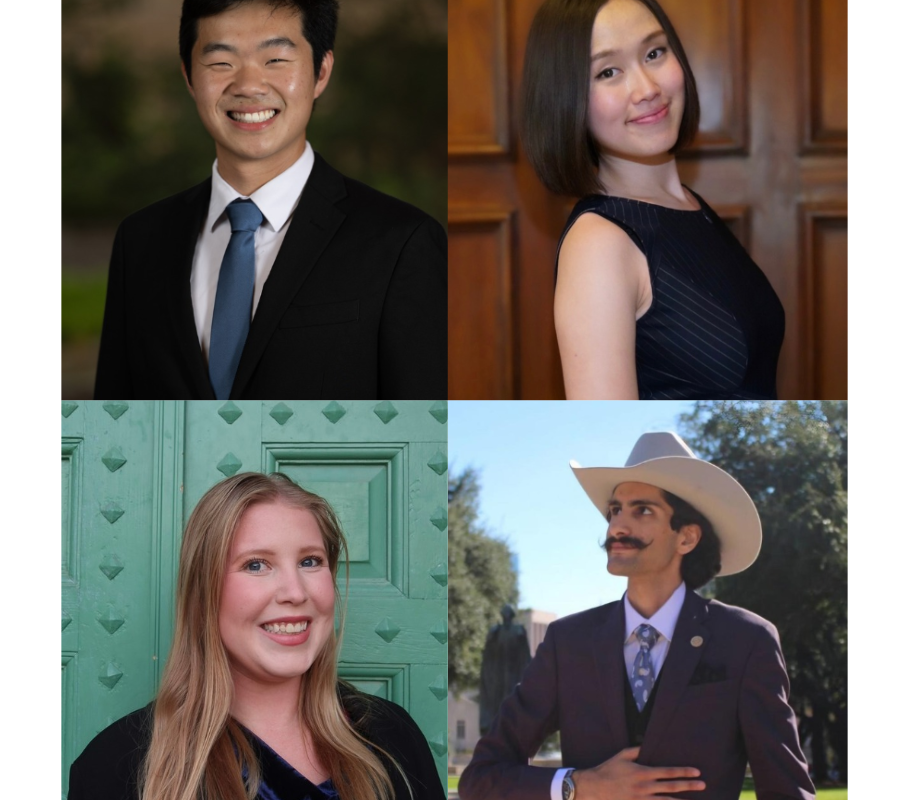
Take the work done by undergraduates Tommy Wan, Deborah Chu, Isabella Klement, and Arshia Papari as examples. Their stories, told below, exemplify both the variety of ways COLA students engage in their communities and the impact those students have on the world around them. By mentoring high schoolers in underserved communities, helping local governments navigate cybersecurity threats, connecting students with academic resources, and advocating for political change, these COLA students are already putting their education into action for their communities.
For these four, civic engagement is not limited to elections and voting. It’s also about identifying where people need support and finding ways to make a difference in the lives of those they serve.
Tommy Wan: Bringing Opportunity Back Home
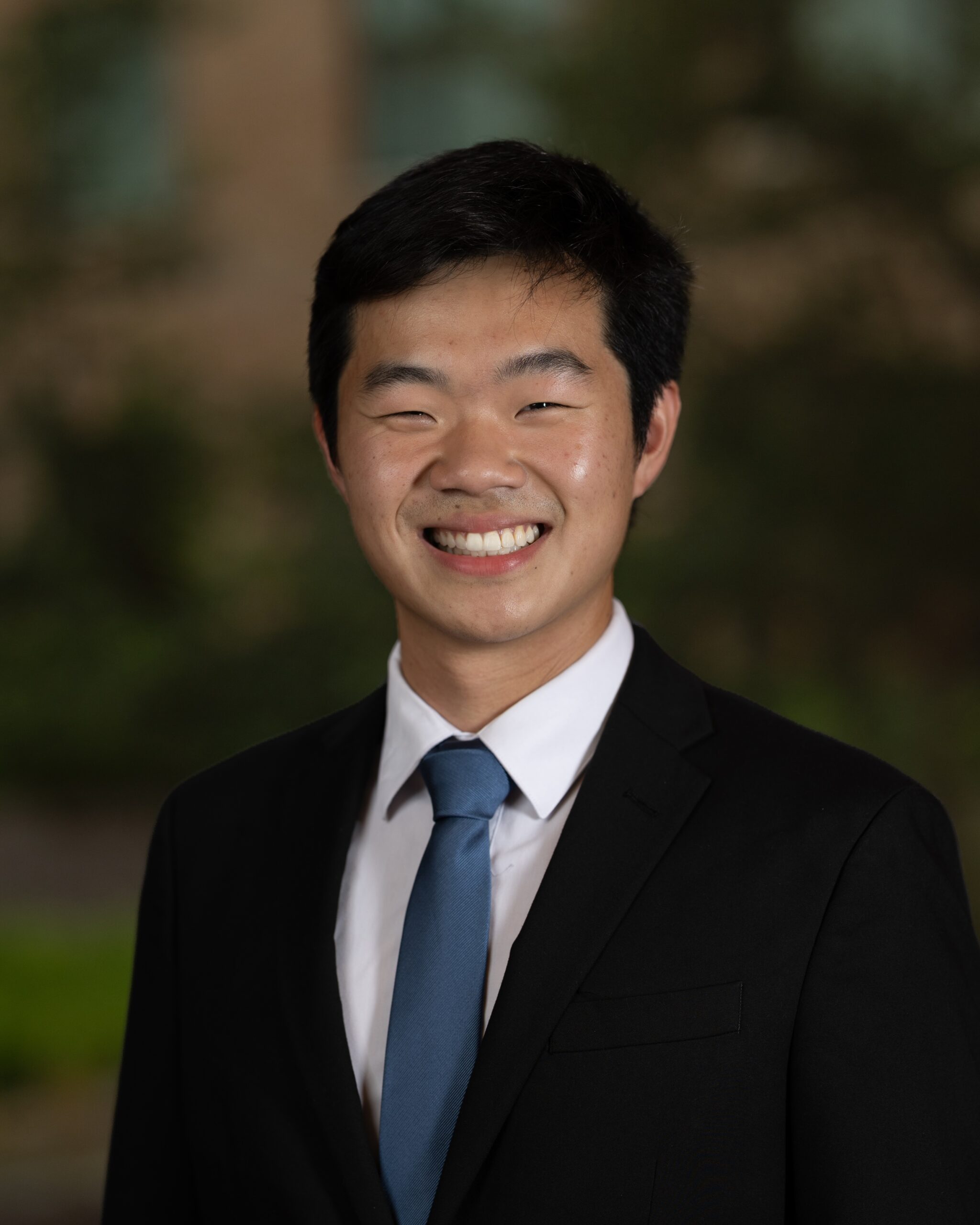
Tommy Wan’s commitment to serving underfunded areas began in Alief, the community in southwest Houston where he grew up. Alief is both a highly diverse area — Hispanic, Black, and Asian residents collectively make up more than 90 percent of its population — and comparatively low-income, with nearly half of households earning less than $50,000 a year. Through his mentorship of students in Alief Independent School District and through his nonprofit, AliefVotes, Wan hopes to provide his home community with access to resources and civic experiences he did not always have growing up.
Now a fifth-year student pursuing degrees in civil engineering, government, and Plan II Honors, Wan’s dedication to improving life for Alief students is shaped in part by his family’s experiences. When Wan was growing up, his parents, who immigrated to the U.S. from China and Hong Kong, were not particularly involved in politics and often viewed the government as inaccessible. Their experience wasn’t unusual, he said, because language barriers and unfamiliarity with government institutions can make it difficult for first-generation families to participate in local government. In addition, Wan’s brother, who immigrated to the United States at age 11, was unable to complete school after facing challenges in the Alief school system.
“Growing up in a diverse community and seeing the challenges we faced as immigrants is something that has always stuck with me,” Wan said. His desire to do something about those challenges started early: While he was still a student in Alief ISD, Wan began looking for ways to make a difference for the next generation. In 2022, he helped found AliefVotes to help local students develop leadership skills and take on more active roles in their community.
Wan’s introduction to local government and public service also came during his time as an Alief student. When he was in his senior year of high school, Wan completed an internship with Houston City Council District F. That experience, he said, sparked an interest in how engineering and public policy intersect, particularly in areas such as transportation and infrastructure.
“You cannot have meaningful discussions about infrastructure policy, the water supply, or the stability of our electric grid without the engineering side of things,” Wan said. “But you also cannot do all the engineering without asking the ‘so what’ in the public policy implementation of it.”
When Wan first enrolled at UT, he entered as a Plan II and aerospace engineering major. But while he had initially been interested in transportation and aviation, Wan continued to think about how infrastructure decisions affected local communities. After a year, he decided to change his focus to civil engineering and government.
Since then, Wan has pursued the intersection of engineering and public service in a variety of ways, including by serving as a legislative aide during the 88th and 89th Texas legislative sessions and working as a transportation policy research intern at the Brookings Institution in Washington, D.C.
But while those government and research positions have taken him from capital to capital, Wan’s most personal commitment has been to expanding civic engagement in Alief. Through AliefVotes, Wan focuses on building programming around civic education, youth leadership development, and community projects in his hometown.
One of the organization’s signature initiatives is the AliefVotes Fellowship, an annual program that brings together 25 students from five Alief-area high schools to develop their leadership skills and civic knowledge. During the program, fellows receive training in community organizing and nonpartisan government before using the resources and funding provided by AliefVotes to organize their own community events. The organization also hosts an annual youth conference and workshops that each draw more than 150 students, covering topics ranging from the Texas legislative process to environmental justice and disaster preparedness.
Beyond its educational programs, the organization also organizes voter registration drives at local schools and community projects, including tree plantings and green infrastructure initiatives. Since its founding, AliefVotes has hosted more than 125 events, engaged more than 10,000 students and stakeholders, and secured funding for neighborhood environmental projects.
“A lot of people, when they climb a proverbial ladder, they would take that ladder with them and I just don’t agree with that,” Wan said. “I’m most gratified when I am able to see others succeed.”
After graduation, Wan hopes to pursue a Ph.D. in civil engineering, focusing on community engagement in engineering research. Eventually, he plans to return to Houston and continue investing in the community that shaped him.
Deborah Chu: Closing the Knowledge Gap
For Deborah Chu, cybersecurity is about more than protecting computer systems. It is also about making sure people have the knowledge to recognize digital threats and protect themselves from exploitation.
Chu, a senior majoring in government and Plan II Honors, says her interest in cybersecurity traces back to an experience a friend of hers had with a scammer. Her friend, an immigrant who had recently become a naturalized U.S. citizen, was threatened with deportation by someone posing as an immigration official. The scammer stole thousands of dollars from him by exploiting his uncertainty about his immigration status.
“I was really upset because they basically preyed upon his status as an immigrant,” Chu said. After learning of the scam, she decided to learn more about cybersecurity and the ways digital threats can disproportionately affect vulnerable populations. Her interest soon focused on how policy could better protect people from similar scams and other forms of digital exploitation.

That interest has since shaped many of her academic pursuits and professional experiences both at UT and beyond campus. Through the Robert Strauss Center for International Security and Law’s Texas Cybersecurity Clinic, Chu has learned to apply cybersecurity practices to real-world situations. As part of the program, she served as a cybersecurity policy consultant for Comal County, leading a team that drafted cybersecurity and artificial intelligence policies. The policies she helped draft established guidelines for the county’s digital operations, affecting more than 900 employees and the data security of more than 200,000 residents.
Chu is also a fellow in the Strauss Center’s Brumley Next Generation Scholars Program, an initiative that provides undergraduate students with research and mentorship opportunities focused on international security, law, and civic engagement. There, she plans to examine legal gaps surrounding foreign access to U.S. civilian critical infrastructure and develop policy solutions to strengthen national security and resilience.
Beyond her work in technology and cybersecurity policy, Chu has pursued roles that allow her to work directly with people who need support. Her internship at the U.S. Attorney’s Office for the District of Columbia (USAO-DC) was one such opening. There she saw firsthand how legal advocacy can serve people in difficult situations. As an undergraduate legal intern, Chu helped six attorneys prepare for criminal trials; drafted legal memoranda, one of which was submitted to the D.C. Superior Court; and reviewed multiple hours of body-camera and surveillance footage.
While preparing cases and conducting research, Chu also observed court proceedings and witnessed families of crime victims seeking justice. She said those experiences gave her a better understanding of the responsibility and impact that comes with representing people navigating the legal system.
“You’re with these people on the worst days of their life a lot of the time,” Chu said. “And I think that’s super meaningful, that you get to advocate for them.”
Alongside her cybersecurity policy work with Comal County and the USAO-DC, Chu has expanded her digital safety advocacy into the community through the nonprofit CyberServe, which she co-founded while still a student. It provides cybersecurity and digital safety education to vulnerable groups including senior citizens, children, immigrants, and other underserved communities. The organization is now expanding beyond Austin, building chapters across the country.
“A lot of the difference between getting scammed and not scammed is often just having that knowledge gap filled,” Chu said. “So being able to be part of that solution is really impactful.”
After graduation, Chu plans to spend time working in Washington, D.C., in a legal or policy role focused on artificial intelligence, technology, or cybersecurity before attending law school. She ultimately hopes to become a federal prosecutor in the child exploitation and human trafficking section and the national security cybersecurity section at the USAO-DC.
Isabella Klement: Finding Change in Her Own Backyard
Isabella Klement did not initially picture herself pursuing a career in government. Instead, she came to UT as a psychology major who was interested in understanding people and the factors that shape their lives. But as she learned more, she began to want to make changes on a broader, institutional level.
“Psychology is a lot about learning how to understand people, and you help people, yes, but on a personal level,” Klement said. “[With psychology], it’s not as easy and there aren’t as many paths to make institutional change as there are within a strictly government space.”
Now a fourth-year student studying government and human dimensions of organizations, Klement has become particularly interested in local government and the ways policy decisions affect communities. She traces her interest back, in part, to early conversations with her mother, who followed politics closely while Klement was homeschooled during middle school.

“It was the 2016 election, and my mom was super into it, but she had no one else to talk to as a stay-at-home mom except her homeschooled daughter,” Klement said. “She got really into it and then by proxy so did I. She never sugarcoated anything or tried to make politics easier to understand, so that piqued my interest.”
At UT, Klement has put that interest into practice as president of Pi Sigma Alpha, the university’s government honor society. The organization provides nonpartisan academic and professional opportunities for government students, and as president Klement has focused on strengthening its relationship with the government department in COLA. She has expanded students’ access to academic and career resources by organizing career conversations, alumni events, and networking opportunities with government faculty and advisers.
Klement explained her role as “being the eyes and ears for what students are experiencing and what they need more of, and then finding out how to utilize the resources that we want to help us.”
In her academic endeavors, Klement has focused on local government and policy, and her professional experience has followed suit. In addition to being a full-time student, she also works as chief of staff at Smart City Policy Group, an Austin-based public affairs firm that helps cities and businesses navigate emerging technologies and local regulations. There she monitors Austin City Council and Travis County Commissioners Court meetings, relays updates to clients, and contributes to newsletters covering regional politics and policy innovation. That work has shown her how local decisions on topics ranging from transportation to the use of technology in city services can directly affect residents as much as, or more than, state or federal ones.
“So many people go into government thinking they’re going to be president or with the goal to go to Washington, D.C., and change the U.S.,” Klement said. “But the communities in our own backyards need just as much help and just as much representation.”
Through her coursework and professional experience, Klement has also realized that civic engagement does not require running for office or working at the capitol. It can begin with simply recognizing a problem in one’s community and figuring out who has the ability to fix it.
She used the sidewalks near her apartment as an example of this in practice. Rather than viewing their poor condition as something beyond her control, she began thinking about which local representatives could help make a change.
“The sidewalks by my apartment suck, and I was like, ‘Who could change this?’” Klement said. “If you see a world where things can be improved, that’s the first step to engagement. You don’t have to be the person that goes to the meeting and protests in front of the city council. You can just be the person that calls their rep once.”
With the rest of her time at UT, Klement hopes to continue building connections between the government department and students before pursuing a graduate degree at UT’s LBJ School of Public Affairs. But most importantly, she wants students to know that change does not have to happen on a national scale to make a difference.
“You don’t have to be president to get involved,” she said.
Arshia Papari: Putting Young Voices on the Ballot
For Arshia Papari, a senior studying government and Middle Eastern studies, civic engagement has become the bridge connecting his Iranian-American background, his understanding of Texas identity, and his commitment to political representation.
It’s that last commitment that led Papari to take his involvement in government a step further than most. In the 2026 elections, he ran for state representative in Texas House District 49 as a Green Party candidate, campaigning on issues including housing affordability, workers’ rights, environmental protection, and economic justice. While he lost the race to Democratic candidate Montserrat Garibay, Papari received about 10 percent of votes cast.
His platform included a proposed rent freeze to address rising housing costs, stronger labor protections for workers, supporting working-class families, and measures to reduce corporate influence in politics. Papari said he wanted to bring attention to issues that affect Texans’ everyday lives while encouraging more young people to participate in government. Beyond his political platform, Papari said he also hoped to show that Texas traditions can be embraced by people from different backgrounds and political perspectives.

His decision to run for office can be traced back to his experience witnessing the campus protests at UT Austin in April 2024. Papari said the demonstrations showed him how students from different backgrounds and political affiliations could come together around shared concerns. He described the experience as a turning point in how he viewed the role of student voices in public life, and said the protests reinforced the importance of young people participating in decisions that affect their communities.
Papari said that by running while still a student himself, he hoped to make political leadership more accessible to younger generations and encourage other students to see themselves as participants in government, not just observers.
“What keeps me going is the people that I meet that have heard of the campaign and have been inspired to get engaged and to make changes themselves,” Papari said.
Looking ahead, Papari hopes to continue advocating for policy changes while helping other young people pursue leadership positions. He said he wants to see more members of younger generations represented in government.
“Being able to develop that civic and political strength and skill as youth is so important,” Papari said. “But then also being able to leverage that to not only make a place for ourselves as young people in our society, but also to protect that for generations of other students and young people that come after us.”
His advice to students is to start by finding an issue that matters to them and identifying ways to participate.
“I think whatever the issue is, whether it’s freedom of speech, students’ rights, labor rights, or just general politics, there’s so much you can do, so just try to find your niche,” Papari said.