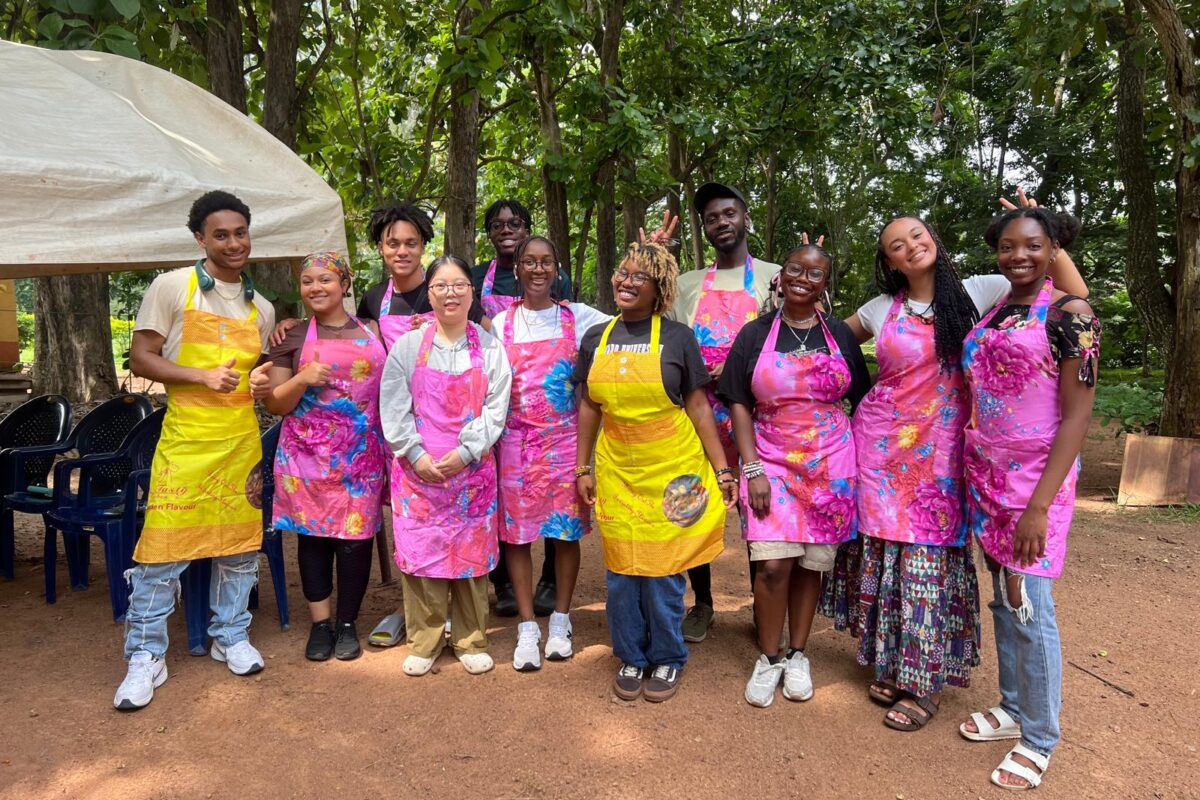
In the lead up to the summer of 2024, undergraduate student Deborah Oyawe had a decision to make. Should she stay in her native Texas and get an internship, perhaps something related to her new informatics major? Or should she spend two months studying Yoruba language and culture in Ibadan, Nigeria, as part of the prestigious Fulbright-Hays Yoruba Group Project Abroad?
“I didn’t know if I wanted to spend my whole summer abroad,” Oyawe remembers. “But I did want to become fluent in Yoruba. That was one of my biggest goals, because I am Yoruba. And Ibadan is where my family is from; it’s my ancestral home. So ultimately I was like, you know what, this is an amazing opportunity. There will probably never be another point in my life where I’m able to spend two months in Nigeria just studying this language and culture.”
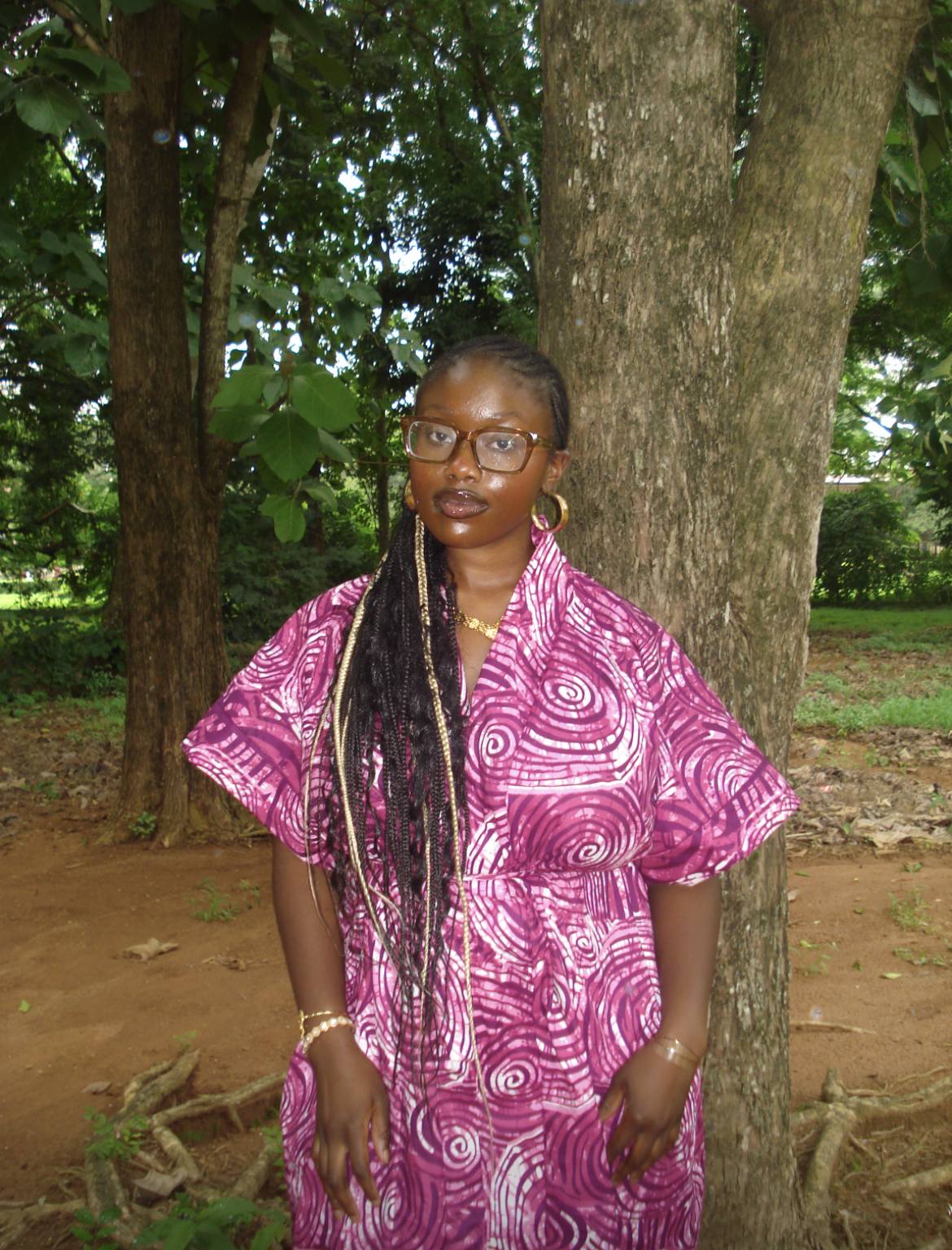
And so she went. Together with her fellow Fulbright-Hays students, Oyawe spent two months studying at Ibadan University while living with a host family and being immersed in Yoruba language and culture. She attended cooking classes, learned about traditional medicine and spirituality, and traveled with her peers across Nigeria’s Yorubaland. Even the moments of culture shock and difficulty — Oyawe remembers learning to successfully haggle in the city’s busy markets being especially challenging — ultimately proved to be the lessons that shaped her the most.
Altogether, Oyawe says, her summer in Ibadan was an incredible experience, and it grew directly out of her time in UT Austin’s unique Yoruba studies program.
Like the Fulbright-Hays project Oyawe joined, UT’s Yoruba program focuses on the language and culture of the Yoruba people, a West African ethnic group concentrated in Nigeria and parts of Benin and Togo with diasporic communities around the world. The university’s only sub-Saharan African language program, Yoruba studies is part of the Department of African and African Diaspora Studies (AADS) and features courses in the Yoruba language as well as subjects such as Nigerian history, Afro-Caribbean diasporas, and the Yoruba experience in Brazil.
The department’s decision to focus an entire program on Yoruba and its diaspora makes sense given AADS’ concentration on both African and diasporic studies, says Omoniyi Afolabi, a professor in the AADS department and the head of the Yoruba program. After all, it’s right there in the name.
“The strategic place of the Yoruba people of Nigeria in diasporic identity formations in Brazil, the U.S., Cuba, and Trinidad is what initially kindled the interest in a Yoruba language program,” he explains. “And in addition to the international efforts of UT, the Yoruba /African heritage students who were born in the USA often have a deep-seated desire to reconnect with their place of origin, hence the passion to take Yoruba and African courses in history, sociology, religious studies, and more.”
Afolabi is particularly qualified to speak on Yoruba’s diasporic links. Born and raised in Nigeria, he went on to specialize in the Yoruba presence in Brazil, and he regularly teaches courses on Yoruba, Brazilian studies, and the Afro-Brazilian diaspora. A large number of the students who take those courses, especially the introductory Yoruba language series, share elements of Afolabi’s diasporic background. Many come from Nigerian families who have settled in Texas, particularly in the Houston area, he says, and they often see the courses as offering them a way to reconnect with their families and heritage.
“There are people who are born in the U.S. but are children of Nigerian immigrants, and they come to the Yoruba program because they want to understand the language,” says Abimbola Adelakun, who taught in the program as an associate professor for many years before leaving UT Austin at the end of the spring 2025 semester. “Ninety percent of the time, they’ll tell you, ‘I want to be able to speak to my grandmother,’ or, ‘When my parents are talking to themselves, I want to know what they’re saying, because I have a feeling they’re talking about me.’”
Other students grew up in Nigeria but didn’t learn to speak Yoruba as children and want to learn now, Adelakun says, while some arrive at UT from other African countries or diasporic communities and want to learn an African language and culture, even if it isn’t that of their families or backgrounds.
“There was even one woman in my course who worked at the university,” Adelakun remembers. “She was going to marry a Yoruba man, and she wanted to learn the language to speak to her in-laws. This language brings in so many people with diverse interests and stories.”
The diverse interests of UT’s Yoruba students can be seen in their choice of major: many are pre-med, pre-law, or engineering students. But no matter what leads students to the program, Afolabi and Adelakun say they want students to take away more than just an understanding of the language.
Teaching students about Yoruba culture brings its own challenges, however. Foundational understandings around the respectful treatment of elders, for example, can be difficult for American students to internalize yet are integral to the Yoruba way of life.
Yoruba culture also differs from American culture in its emphasis on what Afolabi calls “collective spirit” rather than individualistic pursuits and achievements. This, he says, is why he regularly has students in his advanced Yoruba course prepare a play for public performance.
“To successfully produce a play, students learn the need for team spirit and collectivity,” Afolabi explains. The play also gives students an opportunity to understand the Yoruba value of respect, which he says, “comes with learning to greet and acknowledge people around us, learning wisdom and survival skills in ambiguous situations, and striving to promote the best in each other through the collective spirit of winning.”
For students who complete AADS’ two-semester Yoruba language sequence and want to go further in their study of the language, there are opportunities to move far beyond UT campus, including the Fulbright-Hays Group Summer Abroad Project in Nigeria that Oyawe participated in. She’s not the only UT student to join the project — over the last 15 years, several others have won a place in the competitive program and spent a summer studying in Ibadan. For UT students who are accepted to the program, AADS and the university’s John L. Warfield Center for African and African American Studies often offer financial support for expenses not otherwise covered.
Oyawe says her Yoruba studies and study abroad experience in Nigeria taught her more than just a language. “I really learned how to adjust under different circumstances,” she says when reflecting on her time in Ibadan. “This year, when I was interviewing for my summer internship, I was asked which of my experiences at UT helped me the most, and I said my study abroad in Nigeria because it taught me how to adapt. I learned how to accommodate myself and maximize opportunities to the best of my ability, and I think that’s really important.”
In late April, the Yoruba program held its annual celebration, Yoruba Day. A crowd of students, staff, and faculty members gathered in the UT’s Gordon-White Building for an afternoon of Yoruba food, music, and performances — and to hear a presentation by Oyawe on her time in the Fulbright-Hays Program. Shortly after she concluded, students in Afolabi’s intermediate Yoruba course performed this year’s play, Moremi Ajasoro, which tells the story of a 12th-century Yoruba heroine. Finally, Halifu Osumare, professor emerita in UC-Davis’ Department of African American and African Studies, closed out the day with a guest presentation on “Afrofuturism and the Black Diaspora.”
Ultimately the celebration was, like the program that hosted it, more than the sum of its parts. It offered an important opportunity for the UT community to come together and celebrate a shared heritage, language, and culture — and to share the joy of Yoruba with anyone interested in learning more.