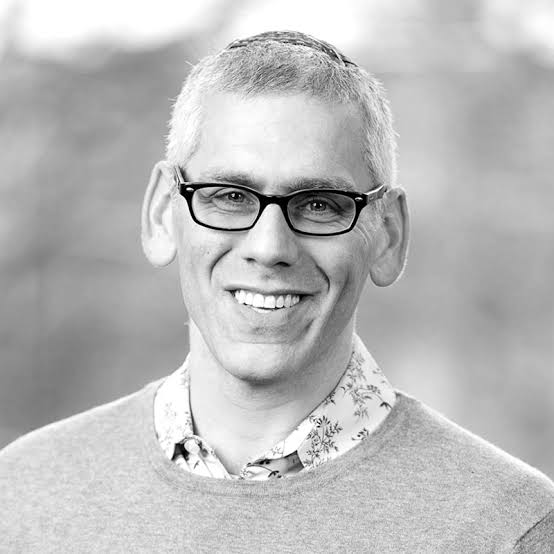
In July 2026, the Schusterman Center for Jewish Studies at The University of Texas at Austin announced Phillip Lieberman would join the center as its new director. A historian of medieval Judaism with a particular focus on the legal and economic interactions and experiences of Jews in Muslim lands, Lieberman comes to UT after 17 years at Vanderbilt University. With previous lives as an options trader and a military chaplain in Africa, but also an M.A. in Talmud and rabbinics from Jewish Theological Seminary of America, and an M.A. and Ph.D. in Near Eastern studies from Princeton University, his background is exceptionally multidisciplinary.
Earlier in October, we talked with Lieberman to learn his plans for the Schusterman Center and what makes teaching Judaism at UT so special.
Phil, thank you for talking with Life & Letters. You’ve just arrived at UT, and you have this quite unusual educational past. Given your broad background, why academia? Why Jewish studies? What led you to make this choice?
The fact is that when I connect with historical documents about merchants in the medieval Mediterranean, I feel very connected to them personally. I can see the problems that they face. For example, someone will be in Egypt, and his partner will be in Syria or in India or in Spain trying to cheat him, and I’ll realize this is something that I dealt with when I was in the marketplace. I think that the job of the historian is to take the materials that we have about individuals and to say something about broader society and the world. I’ve always liked working on these kinds of problems. And as an options trader, I was working on how to value and hedge various complex products at the time traded on exchanges. But the difference between working in the field of finance and writing about the financial activities of Jews in the medieval Mediterranean is that, in the latter, I can also have this personal connection.
I love what I did in finance — I find the financial regulatory structure in our own marketplace to be super interesting and intellectually challenging — but my work now feeds me personally because of the tradition that I’m a part of. And I think whenever you study anything in the way that academics do, it’s natural to develop that kind of a personal connection. I have a background not just in Jewish studies but also in Islamic studies, and I feel a real connection with those materials and those people, too. This work resonates with me on a deeper level than just working in the financial markets.
How did you come to this work?
I grew up in a somewhat traditional home in the Conservative Jewish movement, and my uncle was an Assyriologist, so we had a scholar in my family. It’s funny; in our world, we don’t necessarily think so much about following in the professional footsteps of our family. But the people that I’ve gotten to know in the military, many of them had a family member in the military. It is sort of unusual to be a first-generation military person. And I think in academia as well, if you have or had a family member who was in academia, you know the game a little bit. In my case, my uncle got a lot of respect in my family for being a scholar.
But look, getting a Ph.D. takes a lot of sitzfleisch. You have to be able to sit down and just work on one project for a while. And it’s not that I’m a generalist — I’ve tried to dig deep into a few different areas — but I still love to work on regulatory stuff in the financial markets. I’m giving a talk at a conference next month on our regulatory agencies and the fines that they levy against bad actors and those trends across time. I just still find that stuff incredibly fascinating. So, I’m not just in this little corner of Jewish studies. I love the challenge.
Thinking back to your own research, which focuses on Jews in the Muslim world, and what you’ve been saying here about the way Jews occupy all these other worlds: What are some opportunities you see for interactions now between these two religious communities?
For one thing, I think it’s critical for folks in Islamic studies to see the Cairo Geniza [a collection of over 400,000 Jewish manuscript fragments from between the 6th-19th century, found in a synagogue storeroom in Cairo] as a resource for their work. The Geniza comes from the medieval Islamic world. And there are more fragments in the Cairo Geniza than there are fragments on papyrus in Arabic by a factor of probably five.
I’ve got an article coming out in Zion journal that tries to identify differences between the way that scholars working in Israel and scholars working outside of Israel do Geniza studies. Because it’s my conjecture that Israeli scholars, not all of whom were trained in Israel, have tended to focus more on the internal history of Jewish communities. They look for internal explanations, or they write about the Jewish community itself. Whereas some of us trained in and working in America are thinking about how the Jews connect with the broader Islamic world. And I think here at some point I’ll be able to teach a course where I teach Arabic readers the Hebrew alphabet, and then 15 minutes later they’ll be reading Geniza documents. That’s a longer-term project.
As a historian, I’m always trying to think about how the Geniza speaks to the broader world. I also think it’s important for Jewish studies to be thinking how the Muslim experience shaped Judaism and how it’s different from the Jewish experience in Christian Europe. I’ve written a few articles about how rabbis write legal opinions, what that process is and what’s really going on there. And one thing that I argue is that the teshuvot, rabbinic legal opinions, are really not dispositive statements of the law but are advocacy pieces. Someone comes to a rabbi and says, “Hey, here’s my case. Can you write me a legal opinion?” And then a month later, someone from the other side comes to the same writer, and the opinions are different. So, it’s not that the rabbi is sitting there outside of the world. The rabbi is really mired in that society, in daily life. And of course, that interaction with the broader Muslim world informs these processes too, because Islamic law has the same structure in that fatwas are advisory opinions. They’re not just dispositive statements of law.
Why does Jewish studies matter at a place like UT? What does the Schusterman Center offer both students and the field?
For one thing, the University of Texas at Austin has resources that many smaller institutions don’t have, which means, for instance, we can teach the classical languages that it takes to do Jewish studies well but that not everyone can offer. At a smaller, even elite, institution, they just don’t have the size and breadth of offerings. That’s one piece.
The other thing is that because we have a real strength in classical languages, classical texts, and cultures, I think we can redirect the field of Jewish studies over time in a really positive way. In recent decades, some of the field has tended towards the political, and what that has meant is that when those folks go out into the field, they train graduate students and those graduate students don’t have the classical training that it takes to do the work of our field really well. Even leading scholars of modern Jewish literature who work on someone like Hayim Bialik or Shai Agnon haven’t always had the classical training necessary to recognize the rabbinic allusions in those authors’ texts. So, not only can we provide foundational training to students who may go on to terminal degrees somewhere else, but they’ll always take that training with them. I think we can even be providing master classes to scholars who are out there in the field.
One of our professors, Adrien Smith, who teaches Yiddish, has a large first-year Yiddish class, and in the summer she teaches at the Yiddish Book Center in Massachusetts. And she says that her students in Texas and her students in Massachusetts are completely different. Many of the Massachusetts students are grad-school bound and interested in a scholarly way. But for the folks in Texas, many of them are in the fraternity and sorority system and it’s really an important piece of their identity. They are personally connected to what it is they are studying.
Jewish studies naturally captures the interests of heritage students. That provides a core, and then you build on that core. Then you can offer the classes because of the heritage interest, but you get to reach beyond that heritage interest to folks who don’t have that. our scholars can show how Jewish studies is a really interesting piece of the American story, or, in the case of what I do, the Mediterranean story, or the European story. It is a piece of a broader picture because doing Jewish studies demands knowing another field as well and thinking about how those fields interact.
Another thing I think that Jewish studies can contribute more broadly — having spent some time in law school — is that law students are taught that there are two types of legal systems: civil law and common law. We derive our American legal system from common law, coming from Britain, as opposed to the French who rely on civil law and a statute system. But the Jewish legal system, known as halakha, which covers sacred and civil matters, is neither of these. So, when we teach about the Jewish experience, we’re opening an aperture to a world that students are not otherwise exposed to.
In your military service, you were stationed in East Africa. How did that experience inform your approach to academic leadership?
As a naval officer, I was mobilized to Djibouti in the Horn of Africa, right across the Red Sea from Yemen. And Rambam’s brother [Rambam is widely regarded as one of the most influential Torah scholars of the Middle Ages], on his second trading voyage to India, died in a shipwreck basically right there. So, I got to live in a part of the world that I’ve been writing and thinking about for a long time. That was super cool.
But being in the Navy in Djibouti also changed something for me. I realized I wanted to devote more of my efforts to serving my institution in leadership roles, because that’s what I did there. I had a team of chaplains — we had a Protestant chaplain, a Catholic chaplain, a Greek Orthodox chaplain — and there weren’t just Navy chaplains, but also Air Force and Army religious ministry teams. And I got to manage this team at the American military’s only permanent installation in Africa, Camp Lemonnier. When you serve in the Navy, especially if you’re on a ship, it’s like a small town, and this base was like a small town too. I felt like a small-town preacher, which I loved. And managing this team and figuring out what innovative projects we were going to take on was really interesting.
At one point, there was a resurgence of COVID, and everybody on my team except for me was in quarantine. I just said to my team, “That’s fine. If we don’t have religious services, then we can open up a televangelist TV station. We’ll use the closed-circuit TV system, and I’ll put a camera in your room, and you’ll be preaching to our people who will watch it on TV.” We didn’t ultimately end up having to do that, but just figuring out how we were going to respond to those circumstances was a lot of fun.
I feel like UT is also its own little town. We have our own notaries and our own mailing system — all these things that are required to run a civil society exist within this campus. So that experience likely lent itself well to a move to UT!
Now that you’re here, what are your first priorities as you settle in at Schusterman?
It’s important to me to figure out what our mission and vision is. We have a mission statement, but I think it can be broader. I’m also trying to reengage our advisory board. I want them to understand that their input is important. I think that there are many advisory boards out there — and I’ve sat on some of them — that meet twice a year and it’s pro forma. But I really care about the input of our advisory board. Building that mission and vision statement with them and figuring out what our central lines of effort are going to be, that matters to me.
Our center has an executive committee as well that consists of UT faculty, and I want them to connect with the advisory board too; I want to really enhance communication. When we produced our High Holiday card, it wasn’t just a generic card — it was a photo of us, the Center’s scholars, because I wanted our donors to recognize we’re people. And when our people produce books, I want copies to go out to our advisory board so that they see the scholarship that their work is supporting.
At many institutions, donors see the university as a black box. They give money to it because they know it’s important, right? And the academics are happy with that because they take the work in the direction that they want. But I think there needs to be a real dialogue, and I’m trying to build that.
The other thing that I’m trying to gently augment is what our people do to get their scholarship out to the broader world. I know from my royalty statements that scholarly books often reach relatively small audiences, so for me to write an editorial or for our people to be giving talks in the community, that all makes a difference. The Maccabi Games are coming to Austin in July, so we’ll have a series on Jews in sports. The Austin Jewish Film Festival is coming in November, so having our scholars introduce those films shows the broader Austin community that we have something to add to the discourse.
Who are you excited to work with and collaborate with, either in your own center or affiliated departments or elsewhere at the university?
It’s only since I arrived that I realized how expansive Schusterman really is. Most of the faculty members I knew when I arrived are in Middle Eastern Studies or in Religious Studies, but we have folks across UT well beyond the College of Liberal Arts. There’s a guy named Noah Isenberg, for example, from Moody College of Communication. Noah runs UTNY, and he’s got a book coming out on Jewish film. It’s like everywhere you turn there’s someone who is working on something of Jewish substance. And as I’ve pulled the string with who our people are, I’ve discovered such rich connections. Everyone has something to add. It’s not just those traditional core disciplines within Jewish Studies — in literature, in history, in religion. Schusterman really connects people across the university.
Any religious studies faculty you’re excited about?
There’s a whole Institute for the Study of Ancient Christianity in the Department of Religious Studies that I’m excited about. Geoff Smith, who runs the institute, and Tony Keddie — these are antiquities folks. Matt Larsen is a new hire here. I’m hoping, maybe in summer 2027, to create an institute where Geoff Smith teaches Koine Greek, maybe Brent Landau teaches New Testament, and we also have a Dead Sea Scrolls class. And then we have some core Jewish classes: Hebrew, Intro to Rabbinic Literature, Survey of the Hebrew Bible.
How are you feeling as you take on this new role at a new institution?
I’m interested to see what the next chapter is. There is a new core curriculum coming, and change can be difficult. There’s a famous adage from the ancient rabbis that “all beginnings are difficult.” But we’ll figure it out. One thing that I learned about professional rabbinics at JTS is that the community leader needs to be a non-anxious presence. That’s really important, and I’m here to do that.